TAIT, Elizabeth Xavier: Convert from India and Survivor of Willie Handcart Company

0 1
Read Time:3 Minute, 47 Second
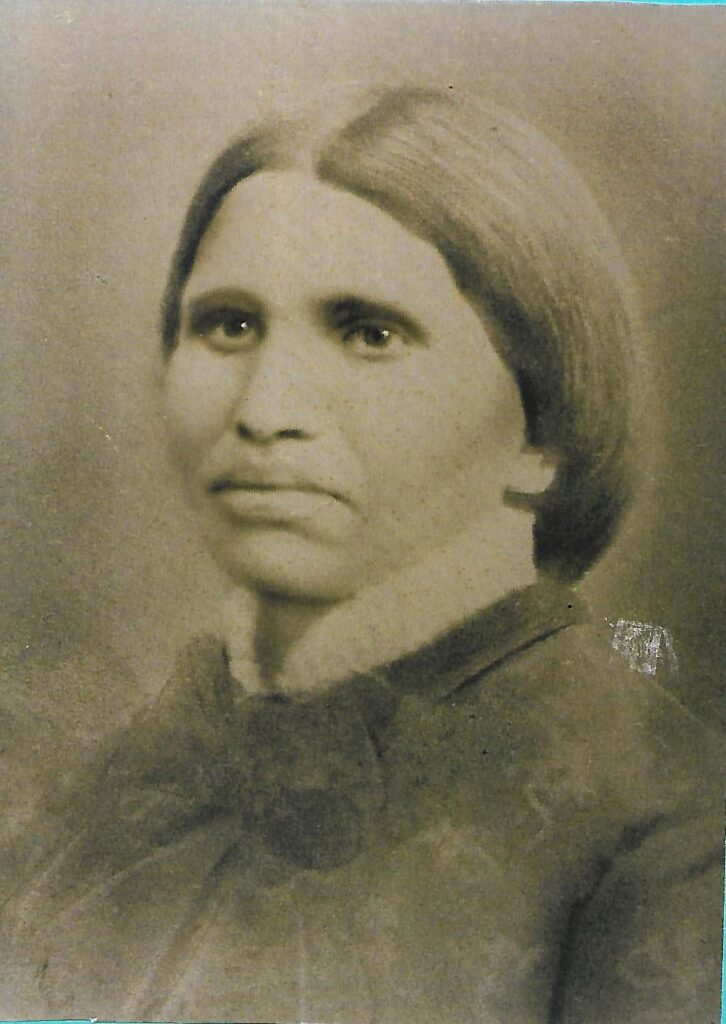
Elizabeth Xavier Tait (1832-1914)

Elizabeth Xavier Tait was born in Mumbai (Bombay), India in 1833. Her family was part of the nobility, and she was raised in luxury and comfort. Gifted with intelligence, she entered college very young and graduated when she was 14. At age 19, she joined the Church of Jesus Christ of Latter-day Saints, having married an LDS convert from Ireland two years earlier. They lived together in India for several years. There they had three children—two boys and a girl. Eventually, her husband, William, and their son sailed to San Francisco, leaving Elizabeth behind in India due to her poor health. His goal was to reach Utah, build a house for the family, and prepare a place for them to come. He and his eldest son walked overland from California to Southern Utah and made a homestead there while he waited for his family to arrive.

Elizabeth grew anxious to be reunited with her husband and son. Sadly, during the year that Elizabeth remained behind in India, tragedy struck, and her second son died of cholera. With only her young daughter remaining, Elizabeth grew more determined than ever to be with her husband and son. Her family in India, who were not members of the Church, begged her to stay and told her it was foolish for her to go halfway around the world and live in poverty when they could care for her and her daughter if she would only let them. Notwithstanding their pleadings and insistence, she booked passage to England and then to America. Her little daughter, Mary, barely one-year-old, could not withstand the rigors of the journey, and she also died en route.

In July 1856, Elizabeth was outfitted in Iowa to cross the plains by handcart with Captain James G. Willie, leader of the ill-fated Willie Handcart Company. The journey was long and hard. The handcarts were hard to pull. Elizabeth recalled the day the company stopped for lunch along the hot trail. She and a female companion with whom she traveled, lay down to rest in the shade of large sagebrush. They were sleeping so soundly that when the company assembled to continue the journey, they did not hear the others leave. After a while, they awoke to discover they had been left behind. Frightened, they quickly followed the tracks of the handcarts in hopes of catching up. They shouted and called, but no one was in sight. Night came, and it was dark. They heard wolves and coyotes howling and barking. They were afraid, but they kept going, silently praying that Heavenly Father would send them aid. Eventually, they came to a stream and, feeling sure the company had crossed there earlier, began to call out and scream. Soon they heard a voice from the other side of the stream. Two men from the camp had gone back to search for the two missing women. Soon they reached the camp safely and were thankful they had been rescued.

Early snows forced the members of the Willie company to struggle against horrific odds. Elizabeth, who herself had delicate health, suffered along with everyone else. She had thrown all her personal belongings away, including her clothes and valuable jewelry she had brought with her from India, all to reduce weight and ease the journey. Poorly dressed and lacking provisions, many in the company died along the trail. In Utah, the saints had heard of the plight of the Martin and Willie companies. A rescue party was organized to take relief to the struggling saints. Unbeknownst to Elizabeth, her husband, William, was amongst the rescuers, and she was overjoyed to see him again. When the rescuers arrived with food, the starving saints were so weak that they would only allow them to eat a spoonful of food so as not to make them ill from eating. Reunited with her husband, he took her to Salt Lake City, and they arrived on the 9th of November. She spent three weeks recuperating from the arduous journey before they headed south to Cedar City.

Elizabeth and William spent the rest of their lives in Cedar City. In her life, she gave birth to a total of 10 children, seven of whom grew to be adults. Today she has a posterity numbering in the hundreds or possibly in the thousands. She became a widow in 1896, and for 18 long years, she was again alone. On September 7, 1914, she died, still firm in her faith.

Happy
Happy
0 %
Sad
Sad
0 %
Excited
Excited
0 %
Sleepy
Sleepy
0 %
Angry
Angry
50 %
Surprise
Surprise
50 %
You May Also Like

ANDERSON, Editha Morgan

Whatever else she was, Edith, like many other mature single Latter-day Saint Women, had internal strength and strong religious beliefs sufficient to tolerate an environment that was unsympathetic toward mature single women, as exemplified by Stout’s comments.Editha established a private school in her small log cabin that was located on 1st North and about 70 West in American Fork. It served as a bedroom, living room, and a tightly packed class room. The dwelling featured one door, one window, two beds, a wood stove, and a rest facility located out back of the cabin. Her rudimentary school attracted a dozen or so students, about the same number of youngsters as attended another school that met in a community-owned building that served as a place of worship and education.
View Post

ATKIN, Thomas

Mary became seriously ill with a "rupture" in her side. The doctors could do nothing to help her. Thomas, watching her suffer, resolved he would be more devoted in serving the Lord, if only the prayers and desires of his heart and those of his children regarding his beloved wife would be granted. Eventually, Mary was healed. He did not forget the resolution and promise he had made with the Lord and commenced in earnest to inquire of his spiritual advisors.
View Post

RIDING, Christopher Lister: Tinsmith

Christopher's skills were needed in St. George because the temple was under construction there and he was the only sheet metal worker in the Dixie mission at that time. However, there was not enough business in St. George to provide him work, so he secured a little four-wheeled cart and an ox. He loaded the cart with tin ware and tools and visited all the towns in southern Utah, exchanging his ware for flour, potatoes, butter, cheese, etc. He made most of his wares from waste cans as it was difficult to ship in sheet tin. People saved empty cans and metal ware of all kinds for him. His store of wares consisted of buckets, milk pans, tin cups and plates, lamps, canteens, coffee pots, wash boards, etc. The ball on the St. George temple and the one on the St. George tabernacle are Christopher Riding's work, as is the metal work on all the public buildings erected before his death. The tin-covered sphere on the temple remained until October 25, 1994, when it was replaced with a fiberglass model as part of a renovation project. Christopher was a loyal member of the church although he was never active in public affairs due to the fact that his work kept him away a great deal of the time. He was a great reader, spending every evening in this way.
View Post

George Alley

They traveled by "steam cars" to upper New York state, by canal boat to Buffalo, by lake boat to Cleveland, Ohio, by "steam cars" again to Portsmouth, by river boat down the Ohio and up the Mississippi to Quincy, Illinois, and thence by hired teams to Nauvoo. The exultation felt by George upon their arrival there is expressed by a note he made in his Bible at this time:
View Post

WALLACE, George Benjamin

July 4 Sunday – Rain this morning. Public meeting. Elders P. P. Pratt, Taylor and Father Smith spoke against growing cold and careless, and neglecting to pray. They urged all to give thanks to God, who is blessing us all the time. They also spoke against swearing and taking the name of God in vain. They gave strong warning and spoke of some of the law which will be put in force hereafter. They exhorted to union, obedience, etc. and exhorted the fathers concerning their children, how to bring them up, etc. They said if we forgot God it would go with us as it did with the Lamanites, etc. We must not set fire to the prairie for it is a signal for the Indians to gather together. We have now come 175 miles. The conclusion is to travel each company of 50 by itself and to have it encamp and herd by itself.
View Post

WRIGHT: John Pannell

In conversation with Bishop Maughan they were advised to try to find a suitable location on the Logan River, and accordingly set out again the 5th of June. They next formed a camp near the site of the old Brigham Young College and here they decided to remain. A survey of the land was immediately begun and the brethren cast lots for their locations. This was the beginning of our beautiful city of Logan, June 1859. Although John Pannell Wright was a member of the second group to locate on the site of Logan in June 1859, he is generally given credit by old historians as having been the father of our city. Apparently it was he who did the first surveying here and who designated the little settlement by the name of Logan. Apparently after Brother Wright and his son had surveyed a few blocks of land, which they did by only measuring with a tape or chain, there was a drawing or lottery for the purpose of acquiring home sites. ) They also helped build a bowery under which they held their meetings. They harvested their grain on Summit Creek (Smithfield). They often carried their guns in one hand and their shovels in the other. They succeeded in yielding good crops, as high as forty bushels of wheat to the acre. Mr. Wright left his tracks in the snow while cutting the last of the grain.
View Post