ROBERTS, Brigham Henry: Stuck in a Molasses Barrel

0 1
Read Time:3 Minute, 24 Second
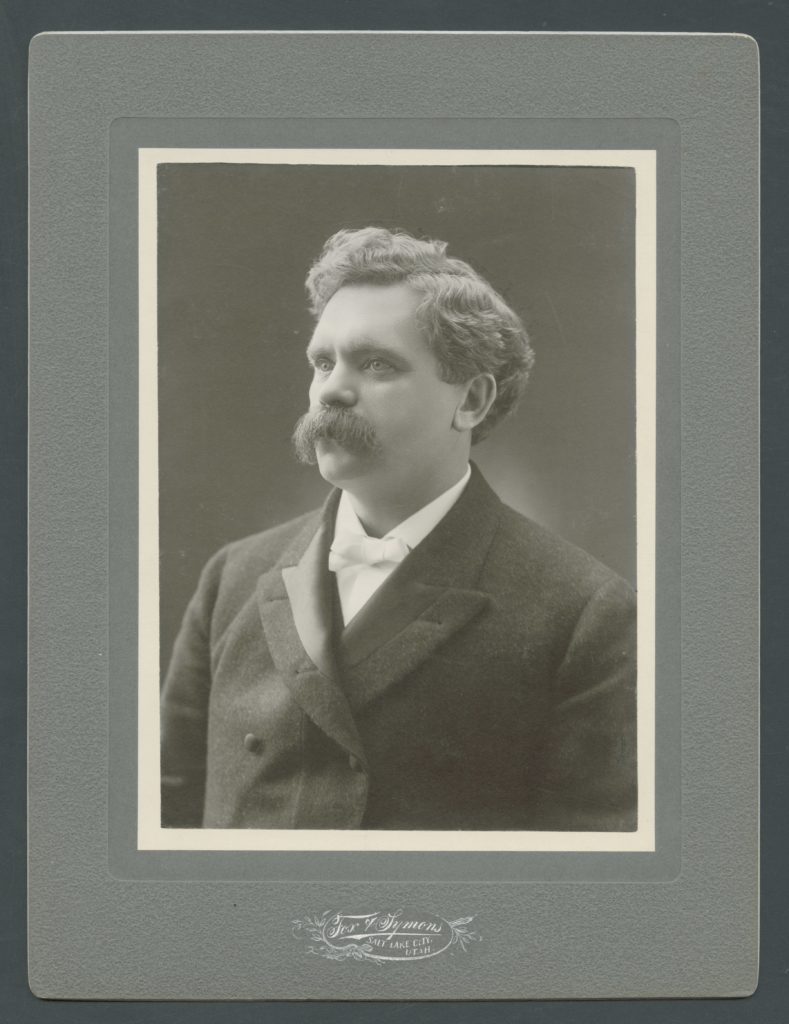
Courtesy of Church History Library Fox and Symons Photography Studio) First Council of the Seventy

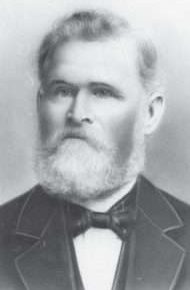
Born in 1857, B.H. Roberts became a historian, and politician, and would serve as President of the First Council of Seventy.

But every famous man was also once a boy, and sometimes boys do the strangest things.

When Brigham Henry was nine years old he emigrated to Salt Lake from England with his sixteen-year-old sister, Polly, as his family companion. That was the year 1866.

Their mother had come to Utah without her husband and settled alone in the Salt Lake Valley four years earlier. She was anxiously awaiting the arrival of her children.

The brother and sister duo joined a wagon train in Nebraska and walked barefoot most of the way to the Salt Lake Valley. For the young Roberts, the journey West was something of an adventure. He enjoyed picking berries, scouting for Indians, and swimming in streams and rivers along the way. One unforgettable experience occurred when their wagon train had to make a night trek. The exhausted young boy sought a hiding place inside one of the wagons where he could hunker down and spend the night.

Of that experience, B.H. later wrote,

“On one occasion a night drive was necessary, and a young man was entrusted with the freight wagon team. The young teamster was unusually devoted to helping the young ladies, especially on this night, so I ran in behind the ox on the near side and climbed up on the seat that had been arranged in the front of the wagon by the regular teamsters. The seat consisted of a broad plank placed across the open head of a large barrel. The day had been hot and the hours of the journey long, and I was decidedly tired, nearly to exhaustion. Fearing that my riding, which was ‘agin’ the law’ would be discovered, I slipped the broad board from the barrel head and conceived the idea of dropping down in the barrel, secure from the eyes of those who might oust me from my seat in the wagon if I were found. To my surprise, if not amazement, I discovered when I let myself down in the barrel that my feet were into about three or four inches of a sticky liquid substance which turned out to be molasses.”

Brother Roberts continued,

“The smarting of my chapped feet almost made me scream with pain, but I stifled it. To tired to attempt to climb out, I remained and gradually slipped down and went to sleep doubled up in the bottom of the barrel with such results as can well be imagined. It was daylight when I woke up. There began to be the usual camp noises and teamsters shouting to each other to be prepared to receive the incoming team driven from the prairie by night herdsmen. As I crawled out of the uncomfortable position, and with molasses dripping from my trousers, I was greeted with yells and laughter by some of the teamsters and emigrants who caught sight of me. I crept away as fast as I could to scrape off the syrup, which added to the weight and thickness of shirt and trousers, for there was no change of clothing for me, and so bedaubed I had to pass on until dusk and drying somewhat obliterated the discomfort.”

B.H. Roberts characterized his youth this way:

“My childhood was a nightmare; my boyhood a tragedy.”

Yet in spite of his difficult upbringing, and in part perhaps because of it, he attained significant success in his adult life. He had a distinguished political and military career. He was a remarkable writer and historian. He became a prominent and enthusiastic Church leader. As borne out by these many remarkable accomplishments, he lived a life of destiny and is well remembered in the early annals of Utah history. As Leonard J. Arrington put it, B.H. Roberts was “the intellectual leader of the Mormon people in the era of Mormonism’s finest intellectual attainment.”

Happy
Happy
50 %
Sad
Sad
0 %
Excited
Excited
0 %
Sleepy
Sleepy
0 %
Angry
Angry
0 %
Surprise
Surprise
50 %
You May Also Like

ALLEN Jr., Daniel: A Life of Consecration

Having completed their assignment, Daniel and his committee returned to Nauvoo, only to find buildings burning, mobs raging, and the saints gone. Daniel hurried to his home to find that his family was still alive, but his wife Mary Ann had just had a new baby and was very ill. He pled with the mob to let him stay a few days so his wife could recover, but they said they would kill them all if they weren’t gone by the next day. They hurriedly loaded what they could in the wagon and made a bed for Mary Ann and the baby. The Allen wagon was one of the last three to leave Nauvoo. They traveled together for a short distance, but couldn’t keep up because of Mary Ann’s grave condition. Being left alone with only one other wagon, they trudged through the mud and snow as best they could until they reached the head of Soap Creek (it looks like this might be less than 100 miles from Nauvoo). Mary Ann had struggled so valiantly, but could endure no more, so she whispered her last words to her loving husband…”We’ll meet again dear love in a better world and I shall wait your coming”. She died on the trail in May, 1846, along Soap Creek, Davis County, Iowa with no one but her family and the angels in heaven to mourn her passing.
View Post

YOUNG, John Ray: Experiences

John R's mother was ill and stayed in Winter Quarters, but John R and his brother Franklin W ( 8 ) left soon after the advanced party, in the Jedediah M Grant Company. In his book John R. states that they were no ones responsibility, but everyones chore boys. It is heart renching to me to picture a sick mother sending a 10 year old son on a 1000 mile treck through wild country with an 8 year old in tow. One morning when they were camped on Hams Fork near Ft Bridger, in what is now Wyoming, a cow was sick and would not get up. John was left behind to try to get her up and bring her to the next camp site. It is terrible to think of the fear he felt as the last dust settled from the wagons as they faded from view. While tending the cow he saw an Indian across the river, and he decided to leave the cow and head for camp. The next morning several men returned to the previous camp site, and found that the cow had been butchered by Soux Indians 'on the war path after Shoshones', This band raided Ft Bridger, but left the Mormon train alone except for one sick cow.
View Post

BAGLEY, Edward Alma

Alma was seven years old when his family, along with the S.M. Blavis Company of Saints, left Mormon Grove on June 18, 1855. This was the start of their long trek across the plains, by ox team. Just two days later, on the 20th of June, Alma’s mother, Julia Ann, died of cholera. She got up that morning, cooked breakfast for her family, and before sundown she had died and was buried by the side of the trail along with others. Seventy-five years later, when Alma was eighty two, he described his feelings the day his mother died. He said that the wolves howled and the mourning doves mourned, and then he cried just like he did when he was a seven year old boy.
View Post

ASHCROFT, Henry

In those days, the Saints in each settlement were instructed by the General Authorities to have dramas and other amusements for entertainment. In the field of music and drama, Henry was especially gifted. He was a member of the first dramatic organization of Hyde Park. He, Rachel Seamons (Hancey), and Eliza Seamons (England) received much praise for their stage work. Henry had a wonderful bass voice and sang in the choir.
View Post

STEPHENS, Evan

This article originally appeared in Vol.50, No.1 (2003) of Pioneer Magazine. by Janet Peterson Evan Stephens‘s philosophy of Mormon music, “that which breathes optimism and not pessimism, “1 permeates the…
View Post