0
0
 1
1
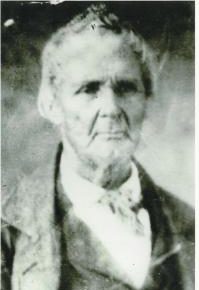
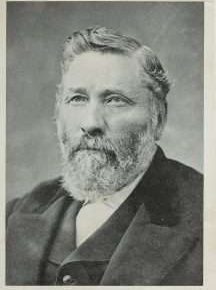
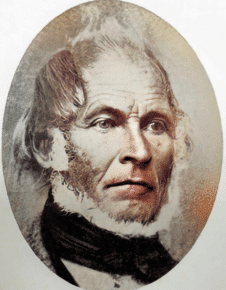
My great great grandfather John Ray Young was born 100 years before me. I was born April 13 1937, and he was born April 30 1837 in Kirtland Ohio. His parents were Lorenzo Dow, and Persis Goodall Young. Lorenzo is the youngest brother of Brigham Young, and the son of John and Abigail Howe Young. When John R. was one year old the family moved to Far West Missouri, and a year later were driven out of Missouri at the threat of death with all Mormons after Governor Liliburn Boggs issued his infamous extermination order. The family lost their home, and many of their belongings, and traveled to Illinois and settled in Nauvoo.
John R. was a sickly child, with many health problems, and spent much time indoors. I will now quote from his book, ‘Memoirs of John R, Young Utah Pioneer 1847’, which was published in 1920 by the Deseret News Press when he was 83 years old,
“One day father took me for a walk, to give me air and sunshine. We met Joseph and Hyrum Smith and Sydney Rigdon. Father shook hands warmly with Joseph, and Hyrum, but he merely bowed to Brother Rigdon. Joseph asked if I was the child father requested the Elders to pray for. Being answered in the affirmative, the prophet removed my hat, ran his fingers through my curly locks, and said, “Brother Lorenzo, this boy will live to aid in carrying the gospel to the nations of the Earth. His words thrilled me like fire, and from that hour I looked forward to the day when I should be a missionary. “
At the time of this prophesy John R was 7 years old, and not expected to live long. He died on September 15 1931 in Provo Utah Just 5 years before I was born, at the age of 94.
At age 16 (1854) he was called on a mission to the Sandwich Islands ( Hawaii ) I was called to serve a mission to Hawaii 104 years later in 1957 at the age of 20. John R also served missions to England and Wales, to further fulfill the prophesy of Joseph Smith when he was 7 and very sick. When John R. returned home from his first mission (4 years ), Johnsons Army was arriving in Utah, and most of Salt Lake had been evacuated to Utah County. On January 1 1859 he married Albina Terry, the oldest daughter of William Reynolds, and Mary Phillips Terry, and settled in Payson. Two years later (1861) Brigham Young called them and 10 other families to sell their homes and go to the Uintah Basin to establish a new settlement.
They sold their farm, and bought a team and wagon and loaded their belongings and their son, and went to Salt Lake City. When they arrived John R went to see Uncle Brigham fo instructions, and to visit, and was told that because of Indian problems in the Basin that he should return to Payson and buy a farm. In accord with the directions of the prophet, John R. Albina and baby John Terry returned to Payson sold the wagon and bought a house and 10 acres and took up farming again. Also in 1861 John R married my great great grandmother Lydia Knight, daughter of Newell and Lydia Golthwait Knight. I am presently living in Spring Lake Utah a small village between Payson and Santaquin, with a 5 acre farm, it is amazing that my ancestors would pick up and move any time they were asked. They were later called to Dixie (Santa Clara) and then to Orderville.
I would like now to back up 14 years to 1847 when John R. was 10 years old. His family was living in Winter Quarters, and in the spring the ‘pioneer’ company was making plans to blaze a trail to the Rocky Mountains. President Young asked Lorenzo to go with the advanced party, as he was an expert teamster, hunter, and mountain man. He agreed to go if he could take his wife Harriet Wheeler Young. Brigham was planning to only take men, but decided to take one of his wives, and a child, so Lorenzo took one of his sons.
John R’s mother was ill and stayed in Winter Quarters, but John R and his brother Franklin W ( 8 ) left soon after the advanced party, in the Jedediah M Grant Company. In his book John R. states that they were no ones responsibility, but everyones chore boys. It is heart wrenching to me to picture a sick mother sending a 10 year old son on a 1000 mile trek through wild country with an 8 year old in tow.
One morning when they were camped on Hams Fork near Ft Bridger, in what is now Wyoming, a cow was sick and would not get up. John was left behind to try to get her up and bring her to the next camp site. It is terrible to think of the fear he felt as the last dust settled from the wagons as they faded from view. While tending the cow he saw an Indian across the river, and he decided to leave the cow and head for camp. The next morning several men returned to the previous camp site, and found that the cow had been butchered by Sioux Indians ‘on the war path after Shoshones’, This band raided Ft Bridger, but left the Mormon train alone except for one sick cow.
While I was on my mission serving on the Island of Kauai I read the book written by John R. and was very interested in the missions to Hawaii. I read about one of his companions named William W Cluff, and my companion at the time was Devar Cluff. I asked my companion if he knew a W.W. Cluff and he told me no, but he would ask his mother . She wrote back and told him it was his great great grandfather.


 Brother Joseph