 0
0
 1
1

from Whitney’s History of Utah Vol. 4
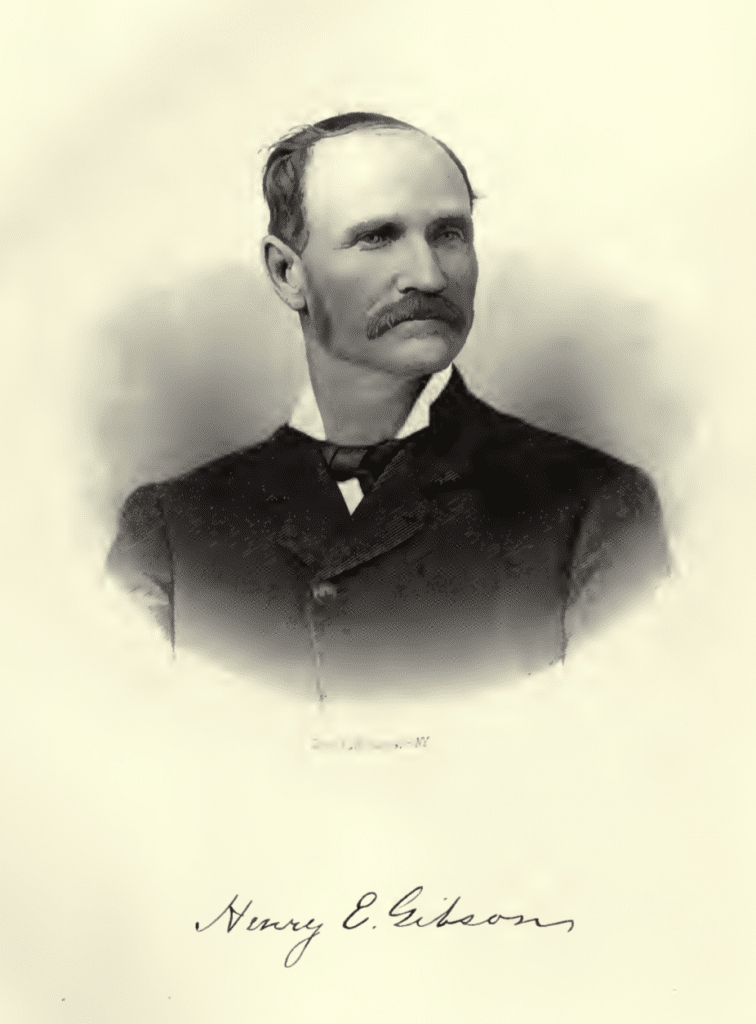
A native of New York State, born in the town and county of Otsego, January 14, 1827, and a corner to Salt Lake Valley in the fall of 1848, Mr. Gibson is at present a prosperous and respected citizen of Davis County. He was one of the earliest settlers of Cache Valley, has been a colonizer in various parts,and after a long and active business life, has retired to his farm, at Clearfield, to pass his remaining years.
With his parents, John and Elizabeth (Wade) Gibson, he spent his early boyhood at Wheatland, Monroe County, New York, where he attended until fourteen years old, the district school, working on farms and in a woolen factory during vacations. His father was a miller, running a country grist-mill, and also, with the help of his boys, cultivating a small piece of land.
At the age of seventeen Henry went to Michigan, and in the spring of 1S45 became a sailor on the Great Lakes. He was naturally inclined to mechanism, and after a varied experience he returned to his native State, and worked in a carriage factory at Attica. The occupations named, with those of grocer’s clerk, hotel clerk and teamster, made up the sum of his employments until his removal west.
He became a Latter-day Saint March 29. 1847, and started on April 20, 1848, from Batavia, New York, for Salt Lake Valley. By rail, steamer and canal boat, he made his way in an independent company to Winter Quarters, where he joined the general Mormon emigration, leaving there early in June. He traveled first in Heber C. Kimball’s company, but the latter half of the journey he was in the company led by President Brigham Young. He mentions, among the incidents of the journey, the trouble with the Indians on the Elkhorn, in which Thomas Ricks and Howard Egan were wounded. The date of Mr. Gibson’s arrival at the Old Fort in Salt Lake Valley was the 20th of September.
Shortly before leaving his native State he had married Eliza M. Gibbs, the date of the wedding being January 1, 1848. His wife accompanied him to the Valley. Settling on East Mill Creek, he remained there until October 12, 1849, when he went with General Charles C. Rich to California, returning to Utah January 27, 1851. With the opening of spring he settled on a farm in Ogden, where he remained two years, teaching school the second winter, and in the spring of.1853 moved back to Mill Creek. There he manufactured lath and shingles, and resided until 1856.7, when he engaged in farming at Willard.
Four years later he moved to Richmond, building there the first shingle mill in Cache Valley. Later, with Thomas Hillyard and W. C. Lewis, he built a saw mill in High Creek canyon, and helped to build the first flouring mill in Richmond. He continued farming and also resumed mechanical work. In 3873 he went into the lumber business, having as partners David Eccles and W. D. Van Noy. This partnership continued seven years. After it dissolved Mr. Gibson conducted a merchant’s lumber yard until 1886, when he sold out and moved onto a small farm in the suburbs of Ogden.
He furnished the capital for a produce and shipping business, conducted by D. G. Nelson, who died three years later, and Mr. Gibson then continued the wholesale produce business with C. A. Smurthwaite. Two or three years later this firm dissolved, and he continued alone in the business until 1896, when he retired to his farm.
Mr. Gibson’s official record includes the adjutancy of a company of militia under Colonel C. W. West,with whom he served in northern Utah and Echo canyon in 1857; he was elected justice of the peace at Richmond, and was a member for two terms of the first city council at that place. He served one term in the Ogden city council during Mayor Brough’s administration.
He was president and general manager of the Layton Mill Company, which he organized, building the mill and putting in the machinery. This was in 1890. After two years he gave up the management on account of failing health.
Mr. Gibson is the head of two households. By his first wife, who has been named, he is the father of ten children, and by his second wife, Isabell V. Kerr, whom he married April 12, 1869, he is the father of seven. He was in his seventieth year when he retired to his Davis County farm. It contained eighty acres. He has an orchard of twenty acres, and is still at work, though now seventy-seven years of age, improving his land and managing his affairs.


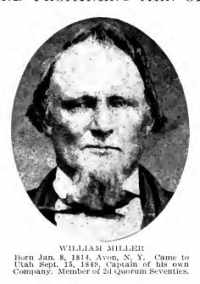
 Brother Joseph
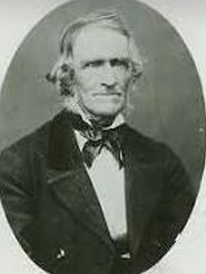
 Pioneer John