HUMPHREYS, Samuel – Imprisoned in Idaho for his faith

0 1
Read Time:3 Minute, 55 Second

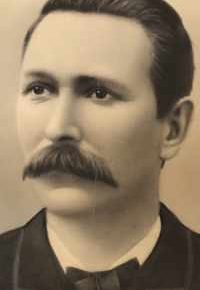
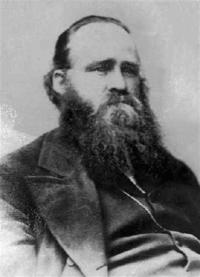
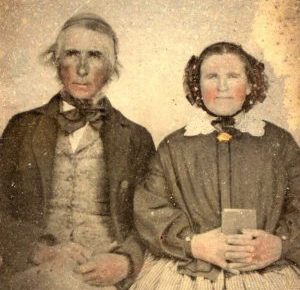
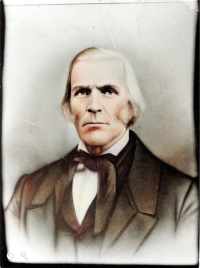
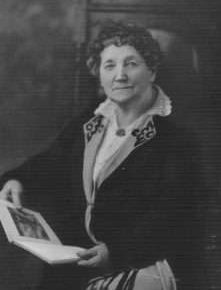
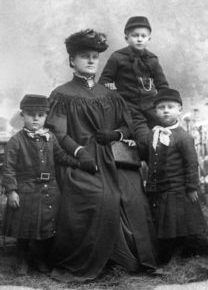
Samuel Humphries 1846-1928.  Samuel Humphreys was born in Mansfield, Nottinghamshire, England, Jan. 31, 1846. His parents, Thomas, and Mary Sudbury Humphreys joined the church and left England to join the Saints in Salt Lake City, arriving in St. Louis on July 13, 1853. In November of that same year Thomas died of cholera leaving Mary with seven children, Samuel age 7, and no means of making the journey from St. Louis to Utah. 

Orson Spencer, also a member of the church and residing in St. Louis, was ill and knew he would soon pass away. Wanting to be buried in Salt Lake City, Orson struck an accord with the widowed Mary Humphreys, providing a wagon, team of oxen and supplies to Mary if she would transport his body to Salt Lake to be buried. During the journey to Salt Lake Sam’s bed at night was in the wagon atop the wooden casket containing the body of Orson Spencer. The family arrived in Salt Lake October 1, 1856.

In 1864 the family was called to settle in the Bear Lake Valley, at Paris, Idaho. They arrived  in November of that year, spending their first winter in a dugout. The only food they had was a small quantity of wheat, which they ground in a coffee mill and baked into cakes on a shovel over the fire. Sam was 18 at this time and he and his older brother made several trips on snow shoes, each pulling a sled, from Paris, Idaho to Logan, Utah for supplies. The trip would take from 3 to 6 days depending on weather and snow conditions. As a young man Sam also made many of these “snowshoe” trips to Franklin county Idaho carrying the mail. On one such trip he departed just before a huge blizzard blew in. Because of the severity of the storm he was thought to have perished in the storm, and that his body would be found the next Spring in the mountains. He showed up a few days later to the surprise of everyone, counting the whole event as “just an experience.” 

At age 22, Sam was called on a “mission” to be a drover for an “out and back” company, delivering supplies, and to then return with immigrants to the Salt Lake Valley. His skills as a horseman, cattle driver, and hunter qualified him for this exciting adventure. On the way out, in June of 1868, while attempting to ferry cattle across the swollen Green River in Wyoming, the ferry overturned and 6 men and several cattle were drowned. Sam ended up swimming his horse across the river to lead the cattle into the water and swim across. 

Sam spent several seasons logging in the Logan canyon, getting out timber for the construction of the Logan temple. 

Sam Married Mary Anne Clifton on Oct. 2, 1876, on Sep. 3, 1884 Sam Married Mary Anne’s sister, Hannah Martha Clifton. Sam farmed, raised cattle, ran a diary, and made cheese. In May of 1886 Sam was arrested by a U.S. Marshal and imprisoned at the penitentiary in Boise, Idaho for illegal cohabitation. While in prison he received a letter from Salt Lake City calling him to preside as Bishop in Dingle, Idaho when he was released from prison. He moved his family from Paris to Dingle, where he presided as Bishop for 28 years, during which time he supervised the construction of the church house still in use at Dingle. While Bishop, his home was always open to the visiting church authorities and many happy hours were spent with them  in renewing old acquaintances. In time of sickness or need, he would go to administer to the stricken ones, no night too dark or stormy, no distance too long, for him to travel if he was needed. He was released as Bishop in 1814. He was the father of 17 children and was preceded in death by both Mary Anne and Hannah. In his latter years he enjoyed temple and genealogy work and spent several winters in Salt Lake engaged in that labor. 

Grandpa Sam enjoyed very good health up until his death which occured at the home of his oldest daughter, Mary, at Wardboro, Idaho, on Nov. 23, 1929. At His funeral an old pal spoke of Sam, calling him “brave and true and faithful.”

Like Sam Humphries, each of us must be faithful, obedient and persevere throughout our lives if we hope to live forever in the presence of God.  As the scripture reminds us, “And, if you keep my commandments and endure to the end you shall have eternal life, which gift is the greatest of all the gifts of God.”

Happy
Happy
0 %
Sad
Sad
0 %
Excited
Excited
0 %
Sleepy
Sleepy
0 %
Angry
Angry
0 %
Surprise
Surprise
100 %
You May Also Like

ALLEN, Elihu Moroni

About 1863 the Allen family settled in Huntsville, Weber, Utah where the last 7 children were born. Their first home in Huntsville was a two-story log house. Elihu made a lot of the furniture they used. He made chair frames from pine trees and made the seats from braided leather that he cured to a very soft pliable seat.
View Post

HILL, George Washington: Stalwart Convert and Missionary to the Indian People

The missionaries were "to labor among the Indians in Oregon country." They were instructed leave their homes and families and " to settle among the Flathead, Bannock or Shoshone Indians….teach the Indians the principles of civilization; teach them….to live in peace with each other and with the whites;….to settle down….to build houses…" (7) This mission became known as the Salmon River Mission.
View Post

ORR, Robert Ustain: A Short Biography

Robert Orr was quite the character on the stage, taking mostly comedy roles. Adept at showing the humorous side of life, he was a good pantomime and had plenty of chances to use his talent. When they were able to have a stage curtain made, he was in charge of running the curtain up and down and kept the coal-oil lamps all clean and filled. The first play they put on was called "Ten Nights in a Bar Room", which Robert had a part. This play was a favorite for many years and they played it at the opening of each season. They also took their plays over to Camp Floyd, Eureka and Tooele.
View Post

POND, Stillman Pond

On February 2nd 1846 the migration west began. Stillman and his family remained in Nauvoo until after the battle of Nauvoo in September 1846 when they were driven at the point of a bayonet across the river. Tribulations and hardships were many as the winter set in early and the Mormon refugees were without the proper food, clothing and shelter. The camp was ravaged by malaria, cholera, and consumption. The Pond family fell victim of all of these diseases. Stillman’s wife, Maria, became consumptive and all the children were afflicted with malaria. Snow fell early on the plains of Iowa and along the way Stillman and Maria buried their son Lowell Anson in September of 1846 on the plains of Iowa. Maria’s body wracked with pain and bowed down with grief for the loss of her son; was unable to walk and was confined to her bed in the back of the wagon with the fever of malaria. In this condition she gave birth to twin boys Joseph and J. Hyrum, the later part of September and the twins died a few days later and were also buried along the trail in Iowa.
View Post

JOHN, Thomas & Margaret Thomas

The first three nights on the trail were spent on the banks of the Elkhorn River, which was not far out of Winter Quarters. The river had many fish in it and some of the company fished a good deal while camped at that location. Others spent time harvesting grapes which were in abundance along the banks of the river. The company saw many buffalo herds and abundant antelope, deer, and elk along the trail. They only harvested one buffalo, but had many deer and antelope along the way. This journey was made before the white man exterminated the buffalo by shooting thousands and then leaving the carcasses to waste.This was not the end of the influence of the white man. Henry John documented the following: “The horse and the cow were soon to take the place of the buffalo; sheep were to replace the elk, deer and antelope. Domestic fowl claimed the place of the wild turkey; grouse and little prairie dogs were given wheat saturated with poison in order to move them out of the way so fields of grain could be raised. Wild plums and bending branches of wild fruit were to be rooted up and the more luscious fruits- peaches, pears, apples and others- were to take their place. The Indian wigwams were to be moved; white man’s cottages and beautiful residences were to take their places (2).” Henry Miller had a very stern reputation and lived up to that reputation on this journey as well. When the company came to the Green River, Captain Miller told them all to get out of the wagons and ford the stream on foot. The river was ice cold and one old man that had been very sick and worn out climbed on a mess box that was bolted on the back of a wagon. When Captain Miller saw this, he jumped into the river and pulled the old man off and threw him into the cold river. Twenty eight people died on the trip and many thought a good portion of those fatalities were attributable to Captain Miller’s harsh, unforgiving supervision
View Post