PERKINS, John Henry: A Pioneer Educator Brings Understanding

0 1
Read Time:3 Minute, 15 Second

This article originally appeared in the Summer 2001 issue of Pioneer Magazine

by Dr. H. Alan Luke

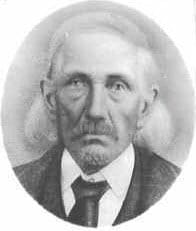
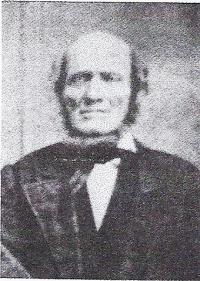
John Henry Perkins, a genuine pioneer, was born in London, England, on the last day of 1773. Some might question whether he qualified as a pioneer. He never explored a wilderness, crossed a desert, or encountered an uncivilized population. He sailed no ocean and, in fact, never left his beloved homeland. What John Henry did do was become known as a great innovator in the field of education, a pioneer of the kind we need more of.

John Henry became famous not only throughout his own country but in much of Western Europe, He received credit for many important innovations in teaching methods. Leaders in his profession honored him for his accomplishments.

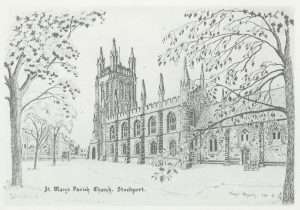
St. Mary’s Parish, Stockport, Cheshire, England. John Henry LUKE and Ann HARVEY were married in St. Mary’s Parish Church 1792.

The early 1800s saw the real beginning of the industrial revolution in Europe, which brought large populations into the vicinity of factories in cities, such as Manchester, where the Perkins family had moved from London. Most of the growth consisted of low-paid, unskilled laborers.

“The working population were very badly housed near the centre of the town and suffered a heavy mortality rate due to dangerous sanitary conditions,” reports Harry Perkins, a descendant of John Henry, in his book, The Family Tree. The vast majority of people in the poverty-stricken areas were uneducated and, thus, illiterate.

This was not true of the Perkins family, however.

“The fact that . . . John Henry Perkins was a man of good education, suggests that his father was a man of some affluence, since education at that time was very expensive,” The Family Tree reports. “The only education available to the poor was offered by charity schools.”

Community leaders decided to set up a full-time school. Advertisements were published for a schoolmaster, and John Henry Perkins was chosen. The school opened on October 25, 1809, but “proved to be totally inadequate for the 793 children who presented themselves for education.” A larger building was constructed, success mushroomed, and the school soon attracted the attention of even the leading townspeople.

The school’s budget was small, but Schoolmaster Perkins’s techniques were remarkable. Paper supplies were meager, so Perkins used sand, which was spread in a thin layer over the wooden tables. The students learned to write by using their fingers to mark letters in the sand. Many other economic measures were also contrived, and the results were prompt and astonishing.

“The school was only for children whose parents could not afford to pay, but in view of Perkins’s success, many of the wealthier people asked him to provide private education for their sons,” notes Harry Perkins. Eventually John Henry established a private school in addition to the public facility. His methods brought a flood of attention, first from all over England, and then other countries in Europe began taking note. Scholars visited from France, Germany, and Poland.

John Henry’s family members became involved as assistants; my great-great-grandmother Emma (one of John Henry’s daughters) wrote about the schools in letters to her husband, who had joined the LDS Church and moved to America. Harry was not a member of the LDS Church, but his concluding remarks in the book are ones that all SUP members identify with.

“I have lived a long life,” he said in effect. “But the time is now at hand for me to meet my maker. There is much to be thankful for, and I have but one regret—Had I known then what I know now about my noble ancestry, it would have changed my life and how I felt about myself. I would have understood far better who I am and given more meaning to all I did.”

Happy
Happy
0 %
Sad
Sad
0 %
Excited
Excited
0 %
Sleepy
Sleepy
0 %
Angry
Angry
0 %
Surprise
Surprise
100 %
You May Also Like

ALLEN Jr., Daniel: A Life of Consecration

Having completed their assignment, Daniel and his committee returned to Nauvoo, only to find buildings burning, mobs raging, and the saints gone. Daniel hurried to his home to find that his family was still alive, but his wife Mary Ann had just had a new baby and was very ill. He pled with the mob to let him stay a few days so his wife could recover, but they said they would kill them all if they weren’t gone by the next day. They hurriedly loaded what they could in the wagon and made a bed for Mary Ann and the baby. The Allen wagon was one of the last three to leave Nauvoo. They traveled together for a short distance, but couldn’t keep up because of Mary Ann’s grave condition. Being left alone with only one other wagon, they trudged through the mud and snow as best they could until they reached the head of Soap Creek (it looks like this might be less than 100 miles from Nauvoo). Mary Ann had struggled so valiantly, but could endure no more, so she whispered her last words to her loving husband…”We’ll meet again dear love in a better world and I shall wait your coming”. She died on the trail in May, 1846, along Soap Creek, Davis County, Iowa with no one but her family and the angels in heaven to mourn her passing.
View Post

JENKINS, Jane: A Widow Supporting Her Family

In order to support herself and her family of small children, Jane made cookies, cakes, and bread which were put into small home made baskets and the children would sell them to regular customers and at the Southern Down Resort. In order to have a variety of cakes, the mother and children would go down to the seashore when the tide was out and gather larva from the rocks. This substance looked somewhat like lettuce. They washed the sand from it and put it into baskets and buckets. It was later baked as part of the cakes. These children thought nothing of walking three or four miles and selling this food for a schilling a pound. Sometimes Cecilia and Ann worked as nurse girls and as ladies maids.
View Post

BLAIR, Seth M.

The following biography was previously submitted to www.pioneerstories.com Spouse: Cornelia Jane Espy, Harriett, Sarah Pioneer Type: Early Pioneer Seth was raised in Tennessee along the banks of the Mississippi River…
View Post

ANDERSON, Editha Morgan

Whatever else she was, Edith, like many other mature single Latter-day Saint Women, had internal strength and strong religious beliefs sufficient to tolerate an environment that was unsympathetic toward mature single women, as exemplified by Stout’s comments.Editha established a private school in her small log cabin that was located on 1st North and about 70 West in American Fork. It served as a bedroom, living room, and a tightly packed class room. The dwelling featured one door, one window, two beds, a wood stove, and a rest facility located out back of the cabin. Her rudimentary school attracted a dozen or so students, about the same number of youngsters as attended another school that met in a community-owned building that served as a place of worship and education.
View Post

HATCH, Meltiar

Submitted by Will Allphin, Chapter member.  This information came from:  The Hatch Genealogical Society, Prominent Men of Utah, Family histories. Meltiar Hatch was born in Farmerville, New York, July 15,…
View Post

TWITCHELL, Ephraim & Phoebe Melissa Knight

One day Branch President Ephraim Twitchell was traveling from Sacramento a long way by wagon. The last day of his journey he was traveling late, after dark. He did not stop because he was almost home. He was alone in his wagon, when suddenly there was a man sitting beside him on the spring seat. He just appeared from nowhere. He told Ephraim that he should take his family from San Juan Bautista and go to San Bernardino. Ephraim responded that they had not been in San Juan very long and that his children had their friends there. He noted that he did not think he could get them to go with him. The man beside him replied, "Yes, you can, and you must go to San Bernardino or you will lose them." When Ephraim turned to answer him he was not there. He had disappeared just as he had appeared -it seemed like just out of thin air. Ephraim knew the gospel very well and remembered their story in the Book of Mormon about the three Nephites. He thought this must be the answer-the messenger was one of the three Nephites. He then saw a beautiful new coat that the messenger had left on the spring-seat beside him. He thought the messenger had really been there-that he had not just imagined or fantasized. Ephraim went home and told his wife, Melissa. They talked about the move. They prayed about it for a couple of days. They knew they must go to San Bernardino, California. Every one of their children and one nephew, John Newton Twitchell, the oldest son of Jasper Twitchell went with them. Anciel Ephraim's oldest son came a year later.
View Post

HURST, Philip

This biography originally appeared on pioneerstories.org Philip Hurst wrote the following to the “Salt Lake Herald” concerning Indian affairs in Sanpete County.  It was published on 1  January 1873.  Indian…
View Post

George Alley

They traveled by "steam cars" to upper New York state, by canal boat to Buffalo, by lake boat to Cleveland, Ohio, by "steam cars" again to Portsmouth, by river boat down the Ohio and up the Mississippi to Quincy, Illinois, and thence by hired teams to Nauvoo. The exultation felt by George upon their arrival there is expressed by a note he made in his Bible at this time:
View Post

HIGGINS, Nelson: Through it All

Prior to leaving Nauvoo, Daniel Allen, Nelson Higgins, and Samuel Shepherd were called as a committee to sell properties belonging to the saints in the Bear Creek area. They were successful in collecting a good deal of money for the saints, but when they returned, the mobs had hit Nauvoo and the exodus had already begun (4). This is the first thread we find that ties the families of Nelson Higgins and Daniel Allen in their dedicated struggle for survival. Their relationship must have been a close one because Daniel’s daughter, Diantha, married Nelson’s son, Alfred. We know Daniel was one of the last three families to leave Nauvoo, so there is a good possibility that the other two wagons were those of Nelson & Samuel. Also, Daniel went to Manti to set up a tannery in 1854, and the two children were married in 1858, so their friendship must have lasted a lifetime.
View Post

BINGHAM, Erastus

Erastus Bingham stood up on his wagon wheel and talked to the Saints, telling him that he proposed to obey the council of president Brigham Young, that he and his family would remain until Spring and invited all to join with him in accepting the invitation of the Indians to share their camping ground. About one half of the company remained with Erastus Bingham; the others decided to attempt the journey Westward with their commander, Bishop Miller. They pushed on Westward but met with a great many losses. The Indians stole some of their animals; and they suffered from the cold and lack of food and were compelled to return, some of them camping near Erastus Bingham’s camp. The Ponca Indians were very kind to the families who were sharing with them their camping ground, even bringing meat for some of the most destitute families. They wintered with the Ponca Indians, living in their wagons and a wickiup the friendly Indians provided for them.
View Post