WEBSTER, Francis – Stop the Criticism

0 1
Read Time:2 Minute, 3 Second

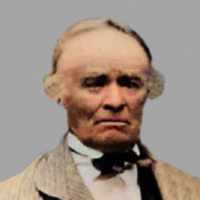
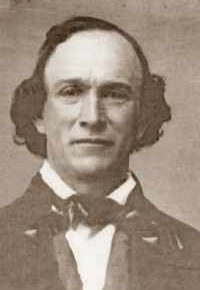
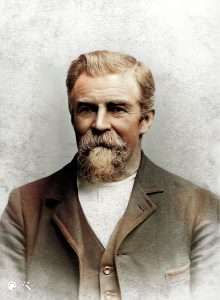
Francis Webster was attending Sunday School.  A group of adults criticized the Church for letting the Martin Handcart company suffer on their 1856 trek.  Old Brother Webster stood up and said:

“I ask you to stop this criticism. You are discussing a matter you know nothing about. Cold historic facts mean nothing here, for they give no proper interpretation of the questions involved. Mistake to send the Handcart Company out so late in the season? Yes! But I was in that company and my wife was in it, and Sister Nellie Unthank whom you have cited here was there, too. We suffered beyond anything you can imagine and many died of exposure and starvation, but did you ever hear a survivor of that company utter a word of criticism? Every one of us came through with the absolute knowledge that God lives for we became acquainted with Him in our extremities!…I have pulled my handcart when I was so weak and weary from illness and lack of food that I could hardly put one foot ahead of the other. I have looked ahead and seen a patch of sand or a hill slope and I have said, I can go only that far and there I must give up for I cannot pull the load through it. I have gone to that sand and when I reached it, the cart began pushing me! I have looked back many times to see who was pushing my cart, but my eyes saw no one. I knew then that the Angels of God were there…Was I sorry that I chose to come by handcart? No! Neither then nor any minute of my life since. The price we paid to become acquainted with God was a privilege to pay and I am thankful that I was privileged to come in the Martin Handcart Company.”

Elder Dallin H. Oaks said,

“It is not enough to study or reenact the accomplishments of our pioneers. We need to identify the great, eternal principles they applied to achieve all they achieved for our benefit and then apply those principles to the challenges of our day. In that way we honor their pioneering efforts, and we also reaffirm our heritage and strengthen its capacity to bless our own posterity and those millions of our Heavenly Father’s children who have yet to hear and accept the gospel of Jesus Christ. We are all pioneers in doing so.”  

Happy
Happy
0 %
Sad
Sad
0 %
Excited
Excited
0 %
Sleepy
Sleepy
0 %
Angry
Angry
0 %
Surprise
Surprise
100 %
You May Also Like

WRIGHT: John Pannell

In conversation with Bishop Maughan they were advised to try to find a suitable location on the Logan River, and accordingly set out again the 5th of June. They next formed a camp near the site of the old Brigham Young College and here they decided to remain. A survey of the land was immediately begun and the brethren cast lots for their locations. This was the beginning of our beautiful city of Logan, June 1859. Although John Pannell Wright was a member of the second group to locate on the site of Logan in June 1859, he is generally given credit by old historians as having been the father of our city. Apparently it was he who did the first surveying here and who designated the little settlement by the name of Logan. Apparently after Brother Wright and his son had surveyed a few blocks of land, which they did by only measuring with a tape or chain, there was a drawing or lottery for the purpose of acquiring home sites. ) They also helped build a bowery under which they held their meetings. They harvested their grain on Summit Creek (Smithfield). They often carried their guns in one hand and their shovels in the other. They succeeded in yielding good crops, as high as forty bushels of wheat to the acre. Mr. Wright left his tracks in the snow while cutting the last of the grain.
View Post

ATKIN, Thomas Jr.

When the call came in late 1857, for men to defend the church against Johnston's army, Thomas and other Tooele men responded. The Tooele contingent, under the command of Major John Rowberry, was sent to Echo Canyon, October 10. They remained in Echo Canyon until December 1.
View Post

BELLISON, James Thomas and Louisa

Before many days, an incident occurred which tells a lot about James' attitude toward draft animals. His granddaughter, Pearl Allen Read, tells of the company coming to a bog of mud in the trail which caused many wagons to get stuck. As each team came to the bog, the Captain standing there would join the drivers in whipping the animals to get them through.When it was his turn, James forbade the Captain. "These are my animals and no whip is to be used on them." Although James' team pulled through the bog successfully, the Captain was angry and thereafter continued to find fault with this independent member of his company.James Thomas' life-long insistence that his animals be treated well was admired by those who knew him and was learned and perpetuated by his children throughout their lives.
View Post

RUCK, Elizabeth Collett

That is the date when Wilford Woodruff was at Leigh (about 9 miles from Redmarley) baptising Thomas and Ann Oakey (Elizabeth’s sister) among others (9 in all) when the dog was thrown in the pool as recorded by Wilford Woodruff himself.
View Post

STEPHENS, Evan

This article originally appeared in Vol.50, No.1 (2003) of Pioneer Magazine. by Janet Peterson Evan Stephens‘s philosophy of Mormon music, “that which breathes optimism and not pessimism, “1 permeates the…
View Post

TAYLOR, Allen: Captain

Allen’s company of 445 people was twice as large as any of the other four companies that traveled that year. Apparently, Allen had earned his reputation as an effective leader when he had led rescue teams and wagons back to Nauvoo to rescue stranded saints who could not go on by themselves. There were two groups of wagons and Allen’s group traveled twice as fast as the other.
View Post

BINGHAM, Erastus

Erastus Bingham stood up on his wagon wheel and talked to the Saints, telling him that he proposed to obey the council of president Brigham Young, that he and his family would remain until Spring and invited all to join with him in accepting the invitation of the Indians to share their camping ground. About one half of the company remained with Erastus Bingham; the others decided to attempt the journey Westward with their commander, Bishop Miller. They pushed on Westward but met with a great many losses. The Indians stole some of their animals; and they suffered from the cold and lack of food and were compelled to return, some of them camping near Erastus Bingham’s camp. The Ponca Indians were very kind to the families who were sharing with them their camping ground, even bringing meat for some of the most destitute families. They wintered with the Ponca Indians, living in their wagons and a wickiup the friendly Indians provided for them.
View Post