RICHAN, John

0 1
Read Time:3 Minute, 21 Second
Date of Birth
24/Dec/1799
Place of Birth
Sunderland, Durham, England UK
Date of Death
21/Sep/1878
Place of Death
Pleasant Grove, Utah, Utah USA
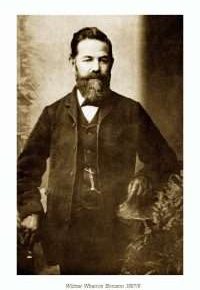
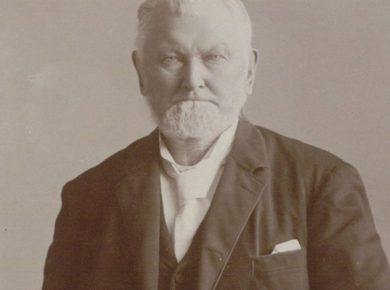
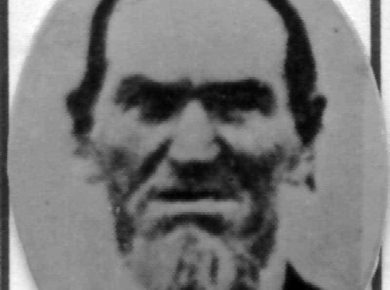
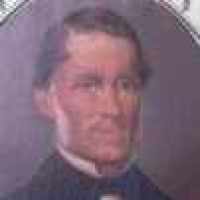
John Richan, a Pioneer Tinsmith John Richan was born on 24 December 1799 in Sunderland, Durham, England. At the age of twelve he was indentured as an apprentice to learn the art of a tinsmith.

A tinsmith, sometimes known as a tinner, tinman, tinplate worker is a person who builds and repairs things made of tin or other light metals. A tinsmith will fabricate cold metal items like candle holders, pitchers, forks and spoons that won’t rust. John, as an apprentice, receive a fair education and along the way learned about music. He also became a voice music teacher. At the age of seventeen he became a journeyman tinsmith.

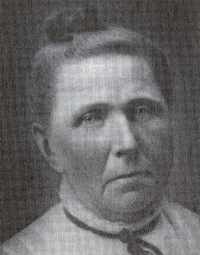
John married Mary Ann Henderson in 1832. Mary Ann and her baby boy died during childbirth. John then married Margaret Rayne Wardell in 1838. They had two girls and the three boys who became tinners like their father.

Elders from the Church of Jesus Christ of Latter-day Saints met and taught the Richan family in London, England. John was 51 years old, Margaret (41), Canute (13), Caroline (8) when they were baptized in 1851. Bordecia had died earlier and William and Frederick were three and two years old.

The Richan family were active in the church for many years with a desire but they did not have the money to migrate to Zion in the United States of America. Sadly, Canute died in 1859. The Richan family decided to participated in the Perpetual Emigration Fund (PEF). Because of finances, they sent their oldest child Caroline (20) in 1863 to Utah to earn money to help the rest of the family.

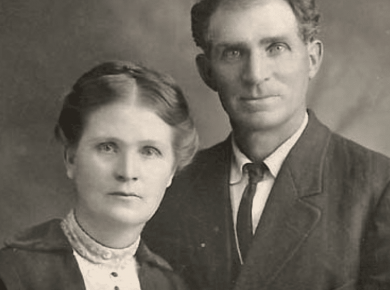
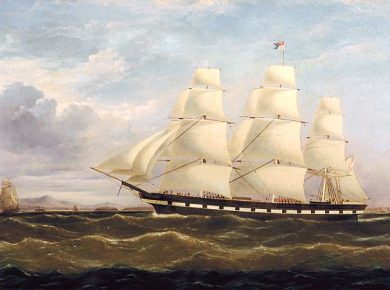
Next William (17) came to Salt Lake City in 1864 and established his own tin shop. In order to open a shop William had to purchase tinplate sheets from iron rolling mills in the eastern United States and have the sheets shipped to his shop. Finally, John, Margaret and Frederick came to New York City by ship in 1866.

They continued to travel by train to Wyoming, Nebraska and joined an ox-train company of 375 Saints led by Capt. William Henry Chipman. The Company, while camped near the Platte Bridge, Indians stole about 100 head of cattle. Without the cattle to pull the wagons the Company was stranded.

Another wagon train led by Capt. Arza Hinckley stopped and rescued them by providing 40 sacks of flour and enough cattle to pull the wagons. The family finally arrived in Salt Lake City in Sep. 1866. John and Frederick went to work in William’s tin shop in Salt Lake City for a time.

John then moved to Pleasant Grove, Utah where he opened his own tin shop. Frederick worked with William in Salt Lake City for a while longer then bought a farm and went into farming. William later moved his business to American Fork, Utah and opened a tin shop there.

John and Margaret were sealed in the Endowment House in Salt Lake City on 1 November 1868. John was now 68 years old and Margaret was 58. John continued to work as a tinsmith until he was quite old. He served as the music chorister in the Pleasant Grove Ward until his death in 1878.

One of his joys was teaching music to children. Rose Brown Hayes (a music student of John when she was 8 years old wrote)

“It seemed his greatest delight was to tone down and train into harmony the croaking voices of young children”.

John Richan died on 21 September 1878 in Pleasant Grove, Utah at the age of 79. Margaret died fifteen years later on August 26, 1893, at the age of 83. They are both buried in the Pleasant Grove City Cemetery, Pleasant Grove, Utah. John and Margaret were valiant and faithful pioneers.

Compiled by Daniel K Adams, third great maternal grandson of John Richan

Happy
Happy
0 %
Sad
Sad
0 %
Excited
Excited
0 %
Sleepy
Sleepy
0 %
Angry
Angry
0 %
Surprise
Surprise
100 %
You May Also Like

ALLEN, Joseph

Joseph was one of the Pioneer teamsters who went east to assist immigrants to come to Utah. He was also engaged in the freighting business. He hauled freight from Corinne, Box Elder, Utah to Montana and Idaho.
View Post

William Henry Adams, Jr.

In 1853 when the grasshoppers took the crops, he and his family subsisted on boiled thistles, mushrooms, or any kind of roots or segos. He apprenticed as a stone and brick mason with his father. They built an adobe house in Pleasant Grove, as well as many other buildings there.
View Post

CHAPMAN, Julia Ann

With the coming of spring, the brethren made a concerted drive to get all the Saints out of Kanesville. Other than for Julia’s health, Isaac was well equipped to travel. In the heat of the late spring, Julia gained some weight and felt pretty well. Deciding that they could safely make the trip, Isaac loaded the wagon
View Post

ROBERTS, Owen: Welsh Convert

On Friday, May 20th, they started on the railroad for St. Joseph, Missouri where they arrived safely; from thence they proceeded on their way up the Missouri River on the steamboat “St. Mary”. Here they were treated roughly by the crew and others. They had no where to sleep or sit, but were almost constantly compelled to stand on their feet night and day until May 26th where they landed on the banks of the Missouri River below Florence, Nebraska at which place they lodged for a while so they could fit up their teams and baggage to cross the plains to the Rocky Mountains.
View Post

Daniel Rapalyea Allen

Daniel Rapalyea Allen operated flour mills in Flushing, New York, St. Louis, Kanesville and Perryville, Iowa, West Jordan, American Fork Canyon along with a saw mill, and American Fork City (600 North 150 East, just south of current Star Mill). The mills in the latter two locations were owned by him. Following several floods which destroyed the canyon mills and associated bridges, he returned to West Jordan.
View Post

RIGBY, William Frederick Littlewood: A Great Pioneer Colonizer

Strangely, it was the arrival of Johnson’s Army and the establishment of Camp Floyd that enabled William and other pioneers to begin a move to prosperity. The building of the camp with Government money gave support to scores of laborers and mechanics. The soldiers with their paychecks were also liberal in their spending. William was able to buy oxen, a wagon, and new clothing with his higher earnings.
View Post

TWITCHELL, Ephraim & Phoebe Melissa Knight

One day Branch President Ephraim Twitchell was traveling from Sacramento a long way by wagon. The last day of his journey he was traveling late, after dark. He did not stop because he was almost home. He was alone in his wagon, when suddenly there was a man sitting beside him on the spring seat. He just appeared from nowhere. He told Ephraim that he should take his family from San Juan Bautista and go to San Bernardino. Ephraim responded that they had not been in San Juan very long and that his children had their friends there. He noted that he did not think he could get them to go with him. The man beside him replied, "Yes, you can, and you must go to San Bernardino or you will lose them." When Ephraim turned to answer him he was not there. He had disappeared just as he had appeared -it seemed like just out of thin air. Ephraim knew the gospel very well and remembered their story in the Book of Mormon about the three Nephites. He thought this must be the answer-the messenger was one of the three Nephites. He then saw a beautiful new coat that the messenger had left on the spring-seat beside him. He thought the messenger had really been there-that he had not just imagined or fantasized. Ephraim went home and told his wife, Melissa. They talked about the move. They prayed about it for a couple of days. They knew they must go to San Bernardino, California. Every one of their children and one nephew, John Newton Twitchell, the oldest son of Jasper Twitchell went with them. Anciel Ephraim's oldest son came a year later.
View Post