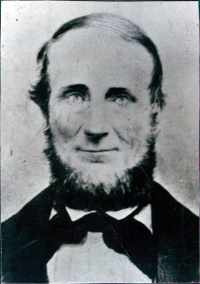
CHAPMAN, Julia Ann

With the coming of spring, the brethren made a concerted drive to get all the Saints out of Kanesville. Other than for Julia’s health, Isaac was well equipped to travel. In the heat of the late spring, Julia gained some weight and felt pretty well. Deciding that they could safely make the trip, Isaac loaded the wagon
0 1
Read Time:4 Minute, 11 Second

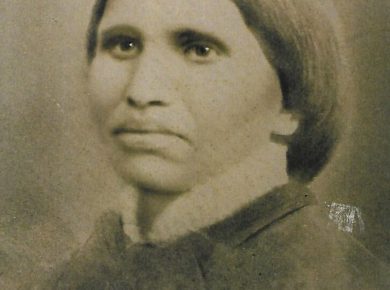
Julia Ann Chapman was born on August 20, 1825, in Eugene, Vermilion County, Indiana, to Isaac Benjamin Chapman and Solona Brown Chapman. She married Isaac Lee and had three daughters: Mariette, born in 1846, Elizabeth Ann, born November 20, 1848; and Eliza Ann, born December 20, 1850.
Isaac helped build the Nauvoo Temple. He was a member of the Nauvoo Martial Bank. He started west with his father’s family in 1849, but his wife, Julia Ann, became ill on the trail, which delayed his return. She died July 10, 1852, at Loops Fork, leaving him with three small daughters. He arrived in Utah in 1852 (the same year Isaac Moroni Chapman arrived in the valley with his three remaining sisters).

When Isaac Lee was forced to pull his wagon out of Brother Benson’s train because of his wife’s illness, he camped for a few days to allow her to recover. Even though she was rested and had fresh meat, she remained weak. Her cough was sometimes violent.

Having concluded that they could not make the trip West that summer, they turned back and, by easy stages, made their way to Loup’s Fork. With good milk and the tender care of the sisters living there, Julia partially recovered. Feeling that his wife, during the winter, might have a better chance to recover back in Kanesville, Isaac made a bed for her in the wagon box. Slowly and carefully, he returned to Missouri.

While they were dismantling the houses at Winter Quarters, Isaac got a place there for temporary shelter. Immediately, Isaac set about finding a home. He was an experienced sawmill man. He found employment immediately.

Leaving Julia in the hands of a few women still living in Winter Quarters, he began looking for a more personal place to live. He was unwilling to take her into Kanesville, for it was often ravaged by malaria and cholera. Finally, he found a farm on the east bench above the river, which had been abandoned by one of the Saints leaving for the West. He moved onto this farm, hauled one of the log houses from Winter Quarters, and set it up in a protected ravine filled with trees and shrubs. Here, Julia felt more at home.

Realizing that Julia was pregnant again, they both did everything possible to strengthen her for the ordeal. The baby came on a chilly night on November 19, 1850. For a time, whether Julia would make it was touch and go. The baby was farmed out to a big, healthy Scandinavian woman who nursed it along with her own child. As the spring came, Julia ate dandelion greens, drank milk, and lay stripped to the skin in a protected place until her body was tanned like leather. During this summer, Isaac raised a crop on the land he occupied. Although she was not well, Julia lived comfortably through the winter of 1851, doing as little as possible, allowing her body to heal.

With the coming of spring, the brethren made a concerted drive to get all the Saints out of Kanesville. Other than for Julia’s health, Isaac was well equipped to travel. In the late spring heat, Julia gained some weight and felt pretty well. Deciding that they could safely make the trip, Isaac loaded the wagon, making a special bed for his wife. At first, she did very well, cheerful that they could finally go West and be with their relatives. But as the trip continued, the strain began to tell. Some mornings, she was unable to get up. When they crossed Loup’s Fork, they again pulled out of the line, getting one of the elders who lived at the Fork, Isaac and he administered to her. She seemed to relax and feel better, but she lapsed into her last long sleep during the night.

After they buried her, Isaac was so grief-stricken that he sat for days, staring in front of him, felled by his tragedy.

James Walsh came to his fire one evening and said,

“I have seen many tragedies along the trail, and I respect your grief. Now you owe your little ones an even greater responsibility than before. Now you must be both a father and a mother to them. Crying tears of anguish over your lost wife is right and proper, but you must never allow your grief to immobilize you. What would Julia want you to do? You have begun a great quest, which she was too weak to finish. Now you must finish it for her.”

Out in the night, Isaac walked for hours, asking why? Why? But with the coming of midnight, a peace enveloped him like a cloud. His beliefs taught him that although her body was dead, she was still alive and would wait for him. He must not fail her. The following day, July 10, 1852, he gathered a bunch of wildflowers and placed them at the base of the rude plank marker. They yoked up the oxen and started West.

Happy
Happy
0 %
Sad
Sad
0 %
Excited
Excited
0 %
Sleepy
Sleepy
0 %
Angry
Angry
0 %
Surprise
Surprise
100 %
You May Also Like

HILL, George Washington: Stalwart Convert and Missionary to the Indian People

The missionaries were "to labor among the Indians in Oregon country." They were instructed leave their homes and families and " to settle among the Flathead, Bannock or Shoshone Indians….teach the Indians the principles of civilization; teach them….to live in peace with each other and with the whites;….to settle down….to build houses…" (7) This mission became known as the Salmon River Mission.
View Post

JACKSON, Elizabeth Horrocks: Handcart Pioneer of 1856

“It will be readily perceived that under such adverse circumstances I had become despondent. I was six or seven thousand miles from my native land, in a wild, rocky, mountain country, in a destitute condition, the ground covered with snow, the waters covered with ice, and I with three fatherless children with scarcely nothing to protect them from the merciless storms. When I retired to bed that night, being the 27th of October, I had a stunning revelation. In my dream, my husband stood by me and said, 'Cheer up, Elizabeth, deliverance is at hand'. The dream was fulfilled.”
View Post

The Life Story Of Albert Clements And Ada Winchell

Taking the baby's hand from covering his mouth he asked eagerly – "Was President Rigdon there in his place and did he take up the reigns of government and start the good work speeding on with new force & vigor?" "Why do you ask a thing like that, Albert?" Ada questioned, with a look and in a tone that would indicate she almost felt it sacrilege for her husband to have given utterance to such thoughts. "Yes," she continued, "Sidney Rigdon was at the meeting, but he was no better prepared to take the leadership among our people than this baby of ours is.
View Post

CARLISLE, Richard & Jane Field

Members of the family were baptized at various times in 1849 and 1850. Richard became the Presiding Elder of their branch. In 1851, on the “Good Ship Ellen,” they emigrated to America, except for their oldest son, Thomas, who came a year later. On their way up the Mississippi River, Jane died in St. Louis on 24 June 1851. She had done the washing for a woman afflicted with the dreaded cholera, so common among emigrants on that river. Jane caught the disease and died almost immediately. It must have been very difficult for Richard to manage his large family during the years following Jane’s death. First he had to get the whole family across the Plains, then provide a home for them in a new land. The bereft father and his motherless brood stayed to work in St. Louis during the remainder of the first year. The youngest son, Richard, hired out to a Mormon family and came west with them, the first of his own family to arrive in the Valley. The oldest son, Thomas, had by then joined the rest of the family in St. Louis.
View Post

ALLEN Jr., Daniel: A Life of Consecration

Having completed their assignment, Daniel and his committee returned to Nauvoo, only to find buildings burning, mobs raging, and the saints gone. Daniel hurried to his home to find that his family was still alive, but his wife Mary Ann had just had a new baby and was very ill. He pled with the mob to let him stay a few days so his wife could recover, but they said they would kill them all if they weren’t gone by the next day. They hurriedly loaded what they could in the wagon and made a bed for Mary Ann and the baby. The Allen wagon was one of the last three to leave Nauvoo. They traveled together for a short distance, but couldn’t keep up because of Mary Ann’s grave condition. Being left alone with only one other wagon, they trudged through the mud and snow as best they could until they reached the head of Soap Creek (it looks like this might be less than 100 miles from Nauvoo). Mary Ann had struggled so valiantly, but could endure no more, so she whispered her last words to her loving husband…”We’ll meet again dear love in a better world and I shall wait your coming”. She died on the trail in May, 1846, along Soap Creek, Davis County, Iowa with no one but her family and the angels in heaven to mourn her passing.
View Post

WOOLSEY, Thomas: Mormon Battalion Volunteer

On 15 Jun 1856 they left their all to overtake the first covered wagon train of Mormons, to cross the plains that year. The oldest daughter was sick with chills and fever when the journey began, and had to be carried from the house to the wagon. Her father's brother who did not belong to the LDS church and was opposed to their leaving their home, predicted she would not live to go far, but Elder Hickerson promised her she would not have another chill, and she never did.
View Post

Elihu Marcellus Allen

Elihu and his family experienced severe persecution while living in Missouri because of their religion. Elihu executed an affidavit on 18 May 1839 in Quincy, Adams, Illinois itemizing a bill of damages against the State of Missouri for $1,000 for property lost and expenses incurred during the expulsion.
View Post

MITCHELL, James Jr. & Anne Hull

Up north in the Upper Snake River Valley, the virgin soil was bringing forth bounteous crops. This land could be had almost for the asking, so James took advantage of the pre-exemption rights of the Homestead Act and secured 360 acres of virgin soil just two miles north of Shelley, Idaho. So it was that in 1885, James came to Idaho.
View Post

ANDERSON, Editha Morgan

Whatever else she was, Edith, like many other mature single Latter-day Saint Women, had internal strength and strong religious beliefs sufficient to tolerate an environment that was unsympathetic toward mature single women, as exemplified by Stout’s comments.Editha established a private school in her small log cabin that was located on 1st North and about 70 West in American Fork. It served as a bedroom, living room, and a tightly packed class room. The dwelling featured one door, one window, two beds, a wood stove, and a rest facility located out back of the cabin. Her rudimentary school attracted a dozen or so students, about the same number of youngsters as attended another school that met in a community-owned building that served as a place of worship and education.
View Post