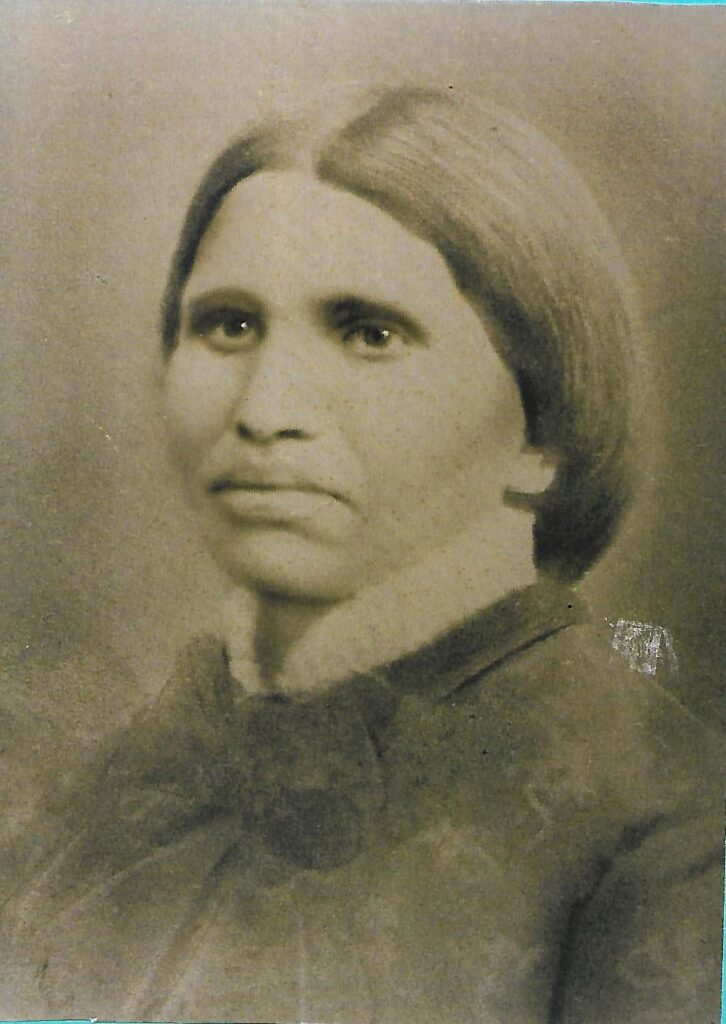
TAIT, Elizabeth Xavier: Convert from India and Survivor of Willie Handcart Company

0 1
Read Time:3 Minute, 47 Second
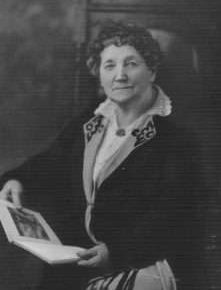
Elizabeth Xavier Tait (1832-1914)

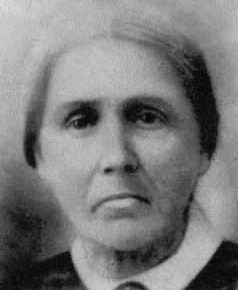
Elizabeth Xavier Tait was born in Mumbai (Bombay), India in 1833. Her family was part of the nobility, and she was raised in luxury and comfort. Gifted with intelligence, she entered college very young and graduated when she was 14. At age 19, she joined the Church of Jesus Christ of Latter-day Saints, having married an LDS convert from Ireland two years earlier. They lived together in India for several years. There they had three children—two boys and a girl. Eventually, her husband, William, and their son sailed to San Francisco, leaving Elizabeth behind in India due to her poor health. His goal was to reach Utah, build a house for the family, and prepare a place for them to come. He and his eldest son walked overland from California to Southern Utah and made a homestead there while he waited for his family to arrive.

Elizabeth grew anxious to be reunited with her husband and son. Sadly, during the year that Elizabeth remained behind in India, tragedy struck, and her second son died of cholera. With only her young daughter remaining, Elizabeth grew more determined than ever to be with her husband and son. Her family in India, who were not members of the Church, begged her to stay and told her it was foolish for her to go halfway around the world and live in poverty when they could care for her and her daughter if she would only let them. Notwithstanding their pleadings and insistence, she booked passage to England and then to America. Her little daughter, Mary, barely one-year-old, could not withstand the rigors of the journey, and she also died en route.

In July 1856, Elizabeth was outfitted in Iowa to cross the plains by handcart with Captain James G. Willie, leader of the ill-fated Willie Handcart Company. The journey was long and hard. The handcarts were hard to pull. Elizabeth recalled the day the company stopped for lunch along the hot trail. She and a female companion with whom she traveled, lay down to rest in the shade of large sagebrush. They were sleeping so soundly that when the company assembled to continue the journey, they did not hear the others leave. After a while, they awoke to discover they had been left behind. Frightened, they quickly followed the tracks of the handcarts in hopes of catching up. They shouted and called, but no one was in sight. Night came, and it was dark. They heard wolves and coyotes howling and barking. They were afraid, but they kept going, silently praying that Heavenly Father would send them aid. Eventually, they came to a stream and, feeling sure the company had crossed there earlier, began to call out and scream. Soon they heard a voice from the other side of the stream. Two men from the camp had gone back to search for the two missing women. Soon they reached the camp safely and were thankful they had been rescued.

Early snows forced the members of the Willie company to struggle against horrific odds. Elizabeth, who herself had delicate health, suffered along with everyone else. She had thrown all her personal belongings away, including her clothes and valuable jewelry she had brought with her from India, all to reduce weight and ease the journey. Poorly dressed and lacking provisions, many in the company died along the trail. In Utah, the saints had heard of the plight of the Martin and Willie companies. A rescue party was organized to take relief to the struggling saints. Unbeknownst to Elizabeth, her husband, William, was amongst the rescuers, and she was overjoyed to see him again. When the rescuers arrived with food, the starving saints were so weak that they would only allow them to eat a spoonful of food so as not to make them ill from eating. Reunited with her husband, he took her to Salt Lake City, and they arrived on the 9th of November. She spent three weeks recuperating from the arduous journey before they headed south to Cedar City.

Elizabeth and William spent the rest of their lives in Cedar City. In her life, she gave birth to a total of 10 children, seven of whom grew to be adults. Today she has a posterity numbering in the hundreds or possibly in the thousands. She became a widow in 1896, and for 18 long years, she was again alone. On September 7, 1914, she died, still firm in her faith.

Happy
Happy
0 %
Sad
Sad
0 %
Excited
Excited
0 %
Sleepy
Sleepy
0 %
Angry
Angry
50 %
Surprise
Surprise
50 %
You May Also Like

William Henry Adams, Jr.

In 1853 when the grasshoppers took the crops, he and his family subsisted on boiled thistles, mushrooms, or any kind of roots or segos. He apprenticed as a stone and brick mason with his father. They built an adobe house in Pleasant Grove, as well as many other buildings there.
View Post

BOOTH, Edwin

This biography originally appeared on pioneerstories.org 1833 – 1906 Edwin Booth was born in the English town of Blackley Lancashire England on September 12, 1833. His parents joined the “Mormon”…
View Post

WARNICK, Anders Peter: Stalked by Cholera in 1866

From 1863 to 1875 cholera swept through Europe. The Austro-Prussian War in 1866 accelerated its spread. That fateful year 250 thousand people died from the lethal disease in Prussia and Austria, 90 thousand perished in Russia, and 113 thousand succumbed the next year in Italy. Hungary, Holland, and Belgium were similarly hard hit by the disease. Little wonder, then, that the virulent bacteria made its way on board the ship that the Anders Peter Warnick family boarded in Hamburg, Germany on June 1, 1866.
View Post

RIGBY, William Frederick Littlewood: A Great Pioneer Colonizer

Strangely, it was the arrival of Johnson’s Army and the establishment of Camp Floyd that enabled William and other pioneers to begin a move to prosperity. The building of the camp with Government money gave support to scores of laborers and mechanics. The soldiers with their paychecks were also liberal in their spending. William was able to buy oxen, a wagon, and new clothing with his higher earnings.
View Post

YEARSLEY Sr., David Dutton: Giving His All

The Yearsleys made their way through the bitter cold winter weather to Winter Quarters. The hardships were so extreme that some entire families were buried along the way. “Thus, from day to day, slowly and wearily traveling, went the exiled Saints across the undulating surface of snow-covered Iowa. The Roads were very bad, the weather cold and stormy, and the streams, now frozen, now swollen by spring freshets, almost and at times quite impassable. Again and again they were obliged to double teams on the heavily loaded wagons, to drag them through deep streams and miry marshes on their line of travel. Some days three or four miles would be the extent of their journey. Many a halt was made, at times for weeks (5).”
View Post

BARLOW, James and Ann Crompton

Ann Crompton Barlow was an English Mormon Emigrant, who felt the desire to bring her three youngest children, John (17), Jane (15) & Joseph Smith (7), to the Utah Territory to gather in "Zion" with the Saints. She was a widow, with meager means, thus was chosen to use the Perpetual Emigration Fund by the leaders of the Manchester Branch.
View Post

KARTCHNER, William Decatur: Man of Steel, True to the Faith

The only time for any kind of play was at night, and on one occasion in the Spring of 1836 he stayed at play until after nine p.m. When he went to the house the doors were locked so he had to sleep in the hay in the stable. In the morning he went with the other hands to breakfast and to his surprise Mr. Miles, the old boss had prepared a large whip which he used on William’s back so unmercifully that it raised a solid scab half the length of his back. His cries were heard by all the neighbors, and then he was sent to work without breakfast. His oldest brother, Peter, came from the western country to visit him. Upon hearing his grievances, they laid a plan for William to run away and go with Peter. William had saved up five dollars and asked Peter if that was enough to bear his expenses. Peter told him that he could go without a cent.
View Post

COX, Orville Southerland

Occasionally, the monotony of the bellows was broken in other ways. For example: At one time, oxen were brought to the shop to be shod that had real hard hoofs, called “glassy hoof.” Whenever Deacon undertook to drive a nail in, it bent. Cox straightened nails over and over, as nails were precious articles in those days, and must not be discarded because they were bent. After a while, the boy said, “Let me.” He shod the ox without bending a nail. Thereafter, Cox shod all the oxen with one and all that came to the shop.
View Post