HAMBLIN, Jacob: Peacemaker

0 1
Read Time:3 Minute, 8 Second

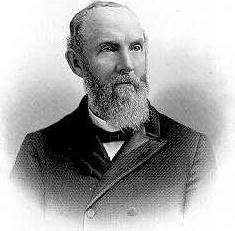
Jacob Hamblin was born 6 April 1819 in Ashtabula County, Ohio. His parents were farmers, and he learned to farm as a youth. In 1836 his family moved to Wisconsin Territory and homesteaded at a place, called Spring Prairie. Hamblin’s father told Jacob when he was nineteen that he had been a faithful boy and that it was time for him to go into the world and do something for himself. Hamblin then traveled more than a hundred miles west and went to work in the Galena mines. After working for a few months, he barely escaped a rock fall that killed his co-worker. The incident gave him an aversion to mining, and he never returned to the mines. Collecting his wages, he returned to Wisconsin and paid for the land he had helped homestead.

In the autumn of 1839, he married Lucinda Taylor and settled down to start a family. However, in February 1842 he heard that Mormon elders were preaching nearby. After listening to the Mormon preaching, he joined the Mormon Church on 3 March 1842. Hamblin started missionary work almost immediately and became known as a faith healer, showing the signs of “those that believe,” in his words. The next year he moved to Nauvoo, Illinois, where the Mormon Church headquarters were located.

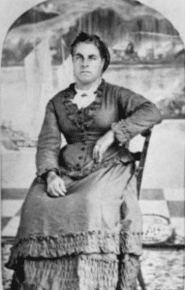
The anti-Mormon sentiment was building and Hamblin and his family received their share. At that time he met and married Rachel Judd as his second (that is, plural) wife. His families moved west with the Mormons. He settled in Tooele Valley and became acquainted with local Indians who knew him as a friend. In 1854 Hamblin was called as a missionary to the Indians in southern Utah.

Again, he became known for his influence with Native Americans because of his integrity and his willingness to be friends with them. He had many spiritual experiences that caused the Indians to consider him invested with godly powers. After serving in his Indian mission for more than a year, Hamblin moved his family from Tooele to what is now Santa Clara. He then became president of the southern Utah Indian mission.

In the fall of 1857, Hamblin went north to confer with Brigham Young in Salt Lake City. On the way he encountered the Fancher Party of emigrants, California bound from Arkansas and Missouri. They asked him about the road and places to camp. He directed them to Mountain Meadows on the old Spanish Trail, about three miles from his home. He later expressed horror and repugnance at the news of the massacre of the Fancher Party at Mountain Meadows. His wife Rachel helped care for the massacre survivors at the ranch.

Hamblin continued to serve as a missionary to the Native American tribes in the Southern Utah area. Following enactment of Edmunds Act of 1882, an arrest order was issued naming Hamblin and others known to practice polygamy. Hamblin moved his families from Utah into Arizona and New Mexico and some even moved into Chihuahua, Mexico. Until his death on 31 August 1886, Hamblin was usually moving from one family to another to evade federal officers and see to the needs of his widespread family. He had four wives: Lucinda Taylor (married April 1839, separated February 1849); Rachel Judd (married 30 September 1849); Sarah Priscilla Leavitt (married September 1857); Louisa Bonelli (married 16 November 1865). He fathered twenty-four children and had several adopted children. His lasting legacy was as a missionary and friend to the Native Americans, helping smooth relations between them and the more recent arrivals to the land.

See: Paul Dayton Bailey, Jacob Hamblin, Buckskin Apostle (1961); Juanita Brooks, Jacob Hamblin: Mormon Apostle to the Indians (1980); and Pearson Harris Corbett, Jacob Hamblin: The Peacemaker (1952).

Happy
Happy
0 %
Sad
Sad
0 %
Excited
Excited
0 %
Sleepy
Sleepy
0 %
Angry
Angry
100 %
Surprise
Surprise
0 %
You May Also Like

COX, Amos

Sister Brady Englestead has told me of how her sister who was about 14 years old had been sick for months, and got so she wouldn’t eat, and although they had the elders administer many times, still she seemed to get worse. One day she said “If you will have Amos Cox administer to me I think I will get well.” Father was only 17 years old at the time and had never administered to anyone in his life, but they sent for him out in the field where he was scything grain. He said he was dumb founded, but told them he would come. There in the field he asked Heavenly Father what to say and said he believed it was one of the most humbling experiences of his life. He went to the house, washed his hands, and sealed the anointing. He promised the girl that she would get well, then when he looked at her and saw how frail and pale she looked, he was scared and so weak that he sat down.
View Post

Life of James Kippen

Mr. Kippen was a firm believer in the teachings of his church regarding work for the dead, doing work along this line in the temple for members of his family who had died out of the faith of the Mormon Church, believing that by this means he would be able to save their souls. He passed all through the scenes of hardships and difficulties which the settlement of Utah made a matter of history, and during the Johnston Army troubles, he served as a guard in the Green River country and in Echo Canyon.
View Post

History of Clarinda Huetta Johnson Winget, Utah Pioneer of 1847

One evening in the little one-roomed home, after all were asleep but Huetta, she arose, lit the lamp and began turning the pages of the calendar. Her husband, being awakened asked, “Mother, what are you doing?”Alphonzo, the second child, remembered hearing her answer, “I have just been told that in sixteen weeks, something will happen which will cast a gloom on this household. In counting it up, it will be the 22nd of June.”
View Post

WRIGHT: John Pannell

In conversation with Bishop Maughan they were advised to try to find a suitable location on the Logan River, and accordingly set out again the 5th of June. They next formed a camp near the site of the old Brigham Young College and here they decided to remain. A survey of the land was immediately begun and the brethren cast lots for their locations. This was the beginning of our beautiful city of Logan, June 1859. Although John Pannell Wright was a member of the second group to locate on the site of Logan in June 1859, he is generally given credit by old historians as having been the father of our city. Apparently it was he who did the first surveying here and who designated the little settlement by the name of Logan. Apparently after Brother Wright and his son had surveyed a few blocks of land, which they did by only measuring with a tape or chain, there was a drawing or lottery for the purpose of acquiring home sites. ) They also helped build a bowery under which they held their meetings. They harvested their grain on Summit Creek (Smithfield). They often carried their guns in one hand and their shovels in the other. They succeeded in yielding good crops, as high as forty bushels of wheat to the acre. Mr. Wright left his tracks in the snow while cutting the last of the grain.
View Post

HINTON, John Nock: Furniture Maker

This story is told by Edith Alice Hinton Gibson and Wilhelmina B. Hinton. They were respectively John Nock’s daughter and daughter-in-law, and had 1st hand knowledge of him. This short history is located in the Archives and Special Collections area of the library at Utah State University in Logan, Cache, Utah.
View Post

BARNEY, Lewis

He discovered that the Mormons were a religious people, however, at that time he cared nothing for religion. “The Methodists and the Presbyterians had been trying to convert me to their faith. I came to the conclusion that religion of every kind was a hoax, and that none was right, and that all preachers of religion were hypocrites, and were preaching for money and popularity.”
View Post