HARRIS, Silas: YOU WILL NOT HAVE TO FIRE A GUN

0 1
Read Time:2 Minute, 6 Second

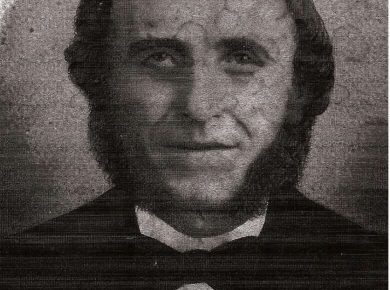
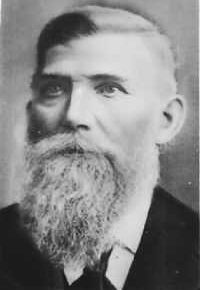
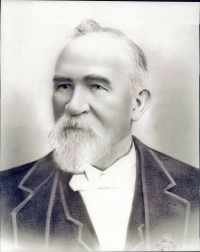
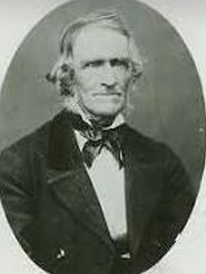
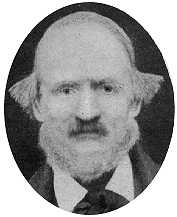
Silas Harris was born in Lawrence County, Indiana, on October 14, 1824.  He was the son of Moses and Fanny Smith Harris.  He was baptized a member of the CHurch of Jesus Christ of Latter-day Saints at Far West Missouri when he was 14 years old.  When he was 22 years of age his family headed West for the Salt Lake Valley.  When the company arrived at Council Bluffs, Silas tells  us in his own words what happened next. 

“Two or three days before our arrival at Council Bluffs, the news reached us that a battalion of our people had been called by the government to join the U.S. Army to fight Mexico, which country was threatening some of our territory.

Without any serious thought on the subject, I said I was going. The saying uttered lightly, proved prophetic. 

I joined Company B under Captain Jesse Hunter and was with the Battalion sharing its fortunes until disbanded at Los Angeles in 1847.  

At Fort Leavenworth I was taken sick with mumps. Rather than go on the sick list in the hands of an unfriendly doctor, I marched in the ranks, taking such care of myself as I could under the circumstances, and taking the advice of my Uncle William Hawk. 

I did not recover until the Battalion reached Santa Fe. Much of the time during the march I acted as teamster. 

Before we left for our long journey, President Brigham Young promised the Battalion boys, that if they would be faithful and not unnecessarily destroy property belonging to others as they passed through, and not destroy life, they would not have to fire a gun. This promise was realized by our Mormon boys.”

Silas returned to Utah in 1848.  He went on to marry and have a large family.  He served as a church leader.  He establish Zion wherever he went.   His faith to follow the counsel and guidance of a living Prophet is a testimony that the Lord will bless us when we obey.  

Silas remained faithful to the Church and to the prophet Brigham Young. He learned, as we all must, the significance of what the Lord meant when He said, “What I the Lord have spoken, I have spoken, and I excuse not myself; and though the heavens and the earth pass away, my word shall not pass away, but shall all be fulfilled, whether by mine own voice or by the voice of my servants, it is the same.”  (Doctrine and Covenants 1:38)

Happy
Happy
0 %
Sad
Sad
0 %
Excited
Excited
0 %
Sleepy
Sleepy
0 %
Angry
Angry
0 %
Surprise
Surprise
100 %
You May Also Like

BLANCHARD, Amelia Jane Davis

The Davis family, being among the first settlers to Cache Valley, suffered untold privations and hardships. Amelia remembered the trials they had with the Indians, and how frightened she was. They would come to the door begging for food and no one dared to turn them away. As Ann H. fixed food for them, the Indians would play with the white children. When coming out of the house with food one day, Ann H. discovered the Indians had exposed her children to the black smallpox. The twins soon came down with the illness. The settlers were all so frightened of the deadly disease that a log shelter was hurriedly built a short distance north of the Logan Cemetery. The Davis family, including the stricken twins, moved there in isolation. Amelia told of rats, mice, and snakes so thick that the healthy children took turns with willows, brushing the snakes from the beds of the sick children. Their beds located on the floor were made with a straw tick. The weather was severe coming through the open cracks of the shelter. The family was badly neglected and almost starved to death. Remarkably, the twins recovered from the smallpox epidemic, but after being home only a short time, diphtheria struck, taking the lives of both twins, Henry and Catherine. Childhood days were very strenuous and hard. These early settlers had lots of troubles, yet they had some thrilling and good times too. Amelia often told stories of the exciting sleigh rides, dances and house parties they enjoyed. How she loved her church activities! Amelia's greatest desire was to do good for others and scatter sunshine wherever she went.
View Post

JAMESON, Charles: Haun’s Mill Survivor

Charles Jameson was one of the Haun’s Mill victims that survived. “Oh, what a time that was! [Charles Jameson] was shot several [4] times. He crawled into the brush. The men followed him. One said, ‘Shoot him.’ Another said, ‘No, let him suffer. He’s dying anyway.’ But he did not die; he lived to go to Utah and lived to a good old age (6).” They were able to extract one bullet, but Charles carried the other three slugs with him for the rest of his life.
View Post

ALLEN, Joseph

Joseph was one of the Pioneer teamsters who went east to assist immigrants to come to Utah. He was also engaged in the freighting business. He hauled freight from Corinne, Box Elder, Utah to Montana and Idaho.
View Post

ANDERSON, Neil

One day, when it was soon time to harvest the beets, he called the boys together to show them how to top the beets. When he had them all around him he took a big beet and his best knife and toped the beet and at the same time he cut the end of his finger off. Then he said, "Boys, that will never do. Don't do it that way!"
View Post

TAYLOR, Allen: Captain

Allen’s company of 445 people was twice as large as any of the other four companies that traveled that year. Apparently, Allen had earned his reputation as an effective leader when he had led rescue teams and wagons back to Nauvoo to rescue stranded saints who could not go on by themselves. There were two groups of wagons and Allen’s group traveled twice as fast as the other.
View Post

PETERSON, Charles Sreeve

Mr. Powell, tried to persuade him to give up his faith or otherwise he would have to surrender his work position. He flatly told him no, as to deny his knowledge that he had received would be the greater sin. In his words, “I knew it would be a great sacrifice to me to give up my employment and the comfortable home which I appreciated so much, but to give up the principles which I had received and which I knew to be true would be a far greater sacrifice, and of the two I would choose the lesser … no position, wealth or earthly honor could move me from my convictions and purposes at that time…”
View Post