 0
0
 1
1
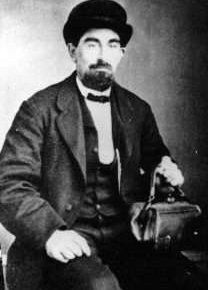
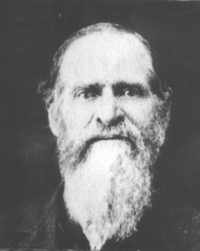
Van Nelson of the Morgan chapter submits this history of his fifth great-grandfather Charles Sreeve Peterson.
Edward William Tullidge comments on the beautiful Morgan Valley.
“This hamlet lies about a half-mile south of the Weber, on a spur of the foothills. It is watered by a small stream, which has its source in the mountains above the town. The name it now bears was given in honor of its pioneer settler, Charles S. Peterson.”
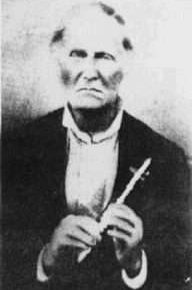
 Charles Sreeve Peterson was my fifth great-grandfather. He was born on July 28, 1818, at Mt. Holly, Burlington County, New Jersey. He died on September 26, 1889, in Mesa, Maricopa County, Arizona. He showed a great work ethic and was a hard worker, had a powerful testimony of the Church of Jesus Christ of Latter-Day Saints (LDS), trekked across the plains with the Saints in 1849, and was pivotal in paving the first road through Weber Canyon and settling Morgan County.
Peterson’s family was poor. Early in his life, it was necessary for him to work in order to help provide for the family of ten children. At the age of ten, Joseph Stokes hired him to carry and lay bricks, or “off-bearing. Peterson was required to do this approximately two thousand times a day as well as turn over the two thousand bricks from the day before so they could properly dry. He commented on this being particularly hard on his young back. Along with that, he worked with his father in the winters to chop wood. When he was fourteen he apprenticed for Aaron Gaskill, a blacksmith. This again was extremely vigorous labor and he continued with this for two years. When Mr. Gaskill changed his profession, Peterson worked for a Quaker of the Hixite profession. He manufactured edged tools, but that soon went out of business. Next, he worked for Joseph K. Rogers on his farm and he would continue to farm for various men for the next few years. He only earned a measly $10 a month, but he was still able to support his family. While living in Nauvoo, Illinois, Brigham Young personally asked him what he could contribute to the Temple. He replied with only the labors of his hands. He then proceeded to donate one day in ten to working on the construction of the Temple; he specifically labored at the quarry. His work ethic and determination would be critical in his future challenges.
Peterson gained an unshaken strong testimony of the Church of Jesus Christ of Latter-Day Saints. While hauling coal, he met Matthew Ivory. Ivory had previously been to Illinois and described a “strange people” whom he had recently visited. Ivory had been converted to their religion. He proceeded to tell Peterson of the principles they believed in. Peterson could not seem to think about anything else. He commented on having “strange, though pleasing and happy feelings”. Although his parents had been religious, he and not been. When he saw Mr. Ivory again, Ivory said he had some pamphlets for him to read that were from the “Mormons”. He took them home and he and his wife read them together. He testified that the Holy Ghost bore witness to them that everything they were reading was true and came from God. A short time later, he and his wife were baptized. Before this, however, he was widely known as an honest and respectable man, but now he was hated and shunned by almost everybody. His employer at the time, Mr. Powell, tried to persuade him to give up his faith or otherwise he would have to surrender his work position. He flatly told him no, as to deny his knowledge that he had received would be the greater sin. In his words, “I knew it would be a great sacrifice to me to give up my employment and the comfortable home which I appreciated so much, but to give up the principles which I had received and which I knew to be true would be a far greater sacrifice, and of the two I would choose the lesser … no position, wealth or earthly honor could move me from my convictions and purposes at that time…” Peterson truly believed in honoring what he thought was right. He himself stated that nothing could move him from his convictions and beliefs. He had learned for himself that the gospel was true. This decision would bless the lives of his future family forever so they could enjoy the wonderful blessing of the Gospel of Jesus Christ.
Following that experience, he made preparations to move his family to Nauvoo, Illinois, to be with the Saints. After only a few years of peace, the Nauvoo Saints were driven from their home in Illinois by mobs. “Soon after arriving home, trouble commenced.” Peterson, however, did not join the rest of the Saints in their trek west. One of Peterson’s sons writes, “He, in obedience to a call made by President Brigham Young, gave his team and wagon to assist the first company of Saints on their journey, and he remained behind to help make wagons to carry the rest of the Saints to a place of refuge”. This required great sacrifice. He could have easily chosen to be selfish and keep everything for himself because a wagon and teams were hard to come by. Finally, in 1849, he and his wife were able to join the Saints in Zion. He had the courage, bravery, and selflessness to give up his own possessions to others and remain behind in Nauvoo, he aided other Saints and they most likely would not have been able to move west if he had not been willing to serve and follow the counsel of the Prophet of the Lord.
After crossing the plains, Peterson settled in Alpine, Utah. Around 1848, his friend Thomas Jefferson Thurston came across a beautiful valley that he described as being “well-watered with lots of timber on its streams which were all well stocked with fish…”. He immediately wanted to move his family there, but there was no entrance to the valley other than a small trail by the river used by Ute Indians. Thurston finally persuaded Peterson to go with him to the valley and investigate. All through the winter of 1855-56, they labored tirelessly in order to pave the first road through Weber Canyon. The work was mostly accomplished by hand labor. They also had use of picks, shovels, crowbars, and one small plow. In order to complete this intense project, they had to loosen rocks from the sides of the canyons and roll them into the river in order to create a solid foundation for the road. In the early spring, the road was completed. Peterson, his sons, and son-in-law moved and settled in the lower part of the valley. They were the first white settlers in the valley and along with that came all the challenges of pioneering a new city. “Mr. Peterson appears to have been well adapted to pioneering in this primitive time…He greatly assisted the development of the country”. When they first settled the valley, he named it Weber City, but in 1872 it was changed to Peterson in his honor. He manufactured leather and was the valley’s first postmaster. On January 17, 1862, by Act of the Territorial Legislature, Morgan County was organized officially out of a part of Davis County. Peterson became the first local leader of the brand new county. He also was the first probate judge in the area. He served in many leadership positions in the LDS church, including serving as bishop for eighteen years.
Charles Sreeve Peterson was more than a pioneer who trekked across the plains. He was pivotal in the settling of the west, paving the first road through Weber Canyon, settling Morgan County, and bringing the Church of Jesus Christ of Latter-Day Saints to his family. He had an incredible work ethic and knew how to do things the right way. He heeded counsel, obeyed those who were in authority, and faithfully served in all he was called to do. Those who now live in this great valley that he settled long ago thank him for his determination and courage to try something new. A piece of him is forever in the valley that I, and so many others call home.


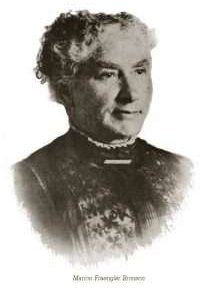
 Brother Joseph