 0
0
 1
1
Submitted by David Smith
- Born: 26 March 1847, Manchester, Lancashire, England
- Died: 8 August 1919, Cedar City, Utah
Originally published as “Active Useful Career Is Ended,” Iron County Record, 8 Aug 1919

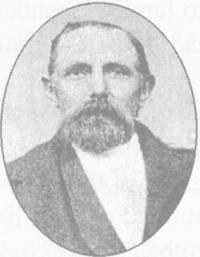
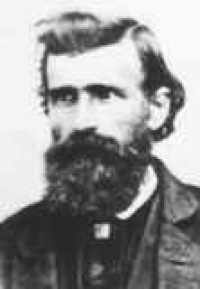
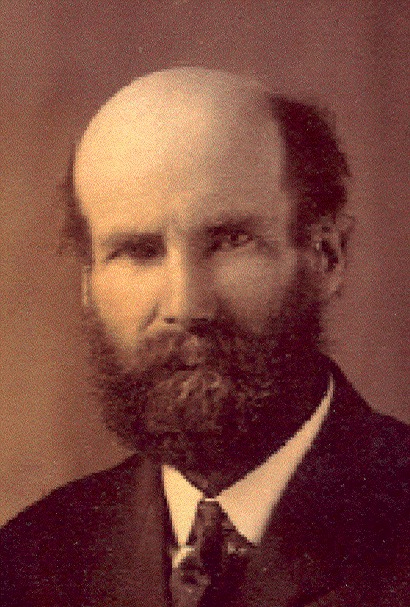
Joseph T. Wilkinson, one of Cedar’s aged and most respected citizens, passed peacefully away at an early hour this morning. In his demise, the community and the church of his adoption lose a unique and useful character.
Joseph Thomas Wilkinson was born in Manchester, England, on March 26, 1847. He, in connection with his parents and other members of the family, became members of the Church of Jesus Christ of Latter-day Saints and emigrated to Utah when Joseph was nine years of age. From this early period, he has been associated with the Mormon people in all their struggles and hardships in establishing themselves in this country.
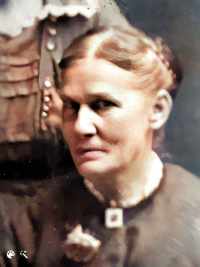
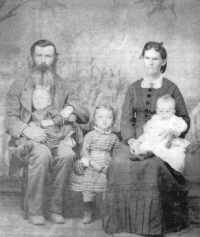
December 31, 1868, he was married to Elizabeth Emily Wells in St. George, Utah. To this union five children were born, four of whom still survive. These are Mrs. Emily Mc Connell, Mrs. Sadie Buckwalter, and Editor Charles S. Wilkinson, all of Cedar City, and Joseph T. Wilkinson, Jr., of Cane Beds, Arizona.
In July 1880, his wife died and was buried in Leeds, Utah, which was then the family home.
Later Bro. Wilkinson married Jane S. Wells, a half-sister of the first wife, and with her, he has been blessed to live out the remainder of his days. Nine children have been the result of this union, eight of whom still live. They are Dr. H. H. Wilkinson, Percy N. Wilkinson, Gerald Wilkinson, Elizabeth Wilkinson of Cedar City, Raymond A. Wilkinson of St. Joseph, Arizona, Stephen R. Wilkinson of Milford, Utah, Janes W. Wilkinson of Salt Lake City, and Marion Wilkinson of Hurricane, Utah.
From the two unions, he leaves behind him a large and respected posterity to perpetuate his name on the earth.
Bro. Wilkinson lived an active and useful life. Civilly and ecclesiastically he has filled many important and responsible positions and his duties have always been discharged with fidelity and ability. He possessed a legal mind and was admitted to the Bar of Utah. Before coming to Cedar City he served as justice of the peace for years in Leeds, through the turbulent days of Silver Reef. In his court many a lawless character was given his lesson in respect for the majesty of the law. He permitted nothing but the orderly processes of law and when the bully attempted to override the proper regulations of his court he departed from it a sadder but a wiser man.
Since his residence in Cedar [City] he has held the positions of mayor of Cedar City, justice of the peace, prosecuting attorney for Iron county, city recorder, and others.
Ecclesiasticall[y] he was the first counselor to Bishop Crosby in Hebron and afterward held the same position to the same Bishop in Leeds, Utah. He was for a long time Sunday School superintendent in Leeds and held the same position in Cedar after his removal here.
He was also a faithful and beloved member of the High Council of the Parowan Stake for a number of years, only resigning from that office a year ago on account of his rapidly declining health. Perhaps, however, it was as assistant stake superintendent of Sabbath Schools, associated with Jos. H. Armstrong, that he became best acquainted with the people, and particularly the children, of the Parowan Stake. In church circles, he is revered for his faithful devotion to [] and for his conspicuous ability as an exponent of church doctrines. As a logical and thoughtful public speaker, he had few equals.
It can truly be said of Bro. Wilkinson that he was “a self-made man;” and I might go a step further and say that he was a self-educated man. The only scholastic training he received was in the schools of England prior to the time he was eight years of age, and six weeks spent when a young man in a private night school. Yet when eight years of age had read the Bible from cover to cover to his mother who unfortunately lacked this ac[c]omplishment, and before his death had accumulated a library second to none in the county and was perhaps the most copious reader in Cedar City, possessing a world of information on nearly every subject. Books were his hobby, and he would deny himself anything else to obtain the works he coveted. Notwithstanding the fact that he had so little schooling, he was himself a very successful school teacher for a number of years in Leeds, and it is related of him that his pupils never failed to make rapid progress in their studies. A sequel to this progress may have been found in the ample hickory stick which was never lacking his desk, and was marked “exhibit one.” Yet while he was exacting in the discipline within his school, on the playground he never failed to lead the boys in their athletic sports, such as ball, steal-sticks, “old sow” guinea pig.
Failing health has ripened him for the separation which death must inevitably bring, but has not effaced the recollections of happy days spent with a fond and indulgent parent, who could play as well as work, from the minds of his family.
The funeral services over the remains of Bro. Wilkinson will be held in the Cedar City tabernacle next Sunday afternoon at 2 o’clock.


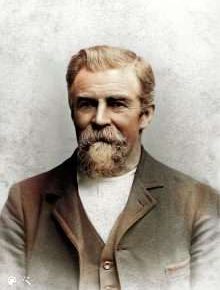
 Brother Joseph