IVINS, Anthony Woodward – The LDS Colonies in Mexico

0 1
Read Time:2 Minute, 49 Second

This article originally appeared in Vol.65 No. 1 of Pioneer Magazine.

By Thomas G. Alexander

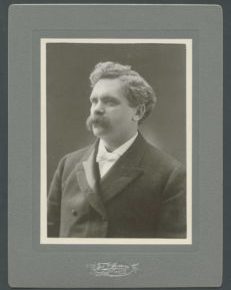
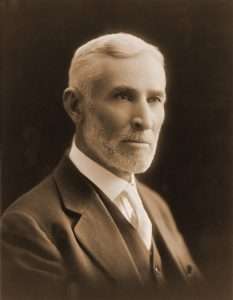
Anthony W. Ivins, who served as a member of the Quorum of the Twelve from 1907 until 1934, was intimately connected with the LDS colonies in Mexico from their beginning. Accompanied by a party of experienced settlers in 1875, Ivins explored the Arizona-Mexican border region for possible colonization sites.

Anthony W Ivins
(1852-1934)

Church leaders then sent him into Mexico from October 1877 to June 1878 to explore for colonization opportunities. His party noted several valleys that offered good prospects and reported those to church leaders. From 1882 to 1884 Ivins served as acting president of the Mexican Mission. In 1885 LDS settlement began in northern Mexico.

In 1895, the First Presidency called Ivins as president of the Mexican Mission. He constructed a home for his family at Colonia Juarez and organized the Juarez Stake and served as its first president. Working with others, Ivins negotiated land purchases and supervised surveys for settlement and irrigation.

He met with the Mexican government’s colonization minister, and with President Porfirio Diaz on behalf of the colonists. He worked with others to establish rules for harvesting timber and distributing irrigation water and contended with people who made claims to land that he had purchased for the colony.

As stake president Ivins also conducted normal stake business.This included resolving disputes between members, visiting and speaking in wards and branches, organizing leadership, conducting stake conferences, and founding the Juarez Academy. He also regularly returned to Salt Lake City for general conferences.

Pres. Ivins also became involved in the vestiges of plural marriage. In 1890 President Wilford Woodruff announced his intention to end plural marriage and to encourage others to do the same. However some church leaders continued to approve new plural marriages between 1890 and 1904. LDS members who visited Mexico during those years sometimes carried a letter from President George Q. Cannon or another church leader to Pres. Ivins.

Though a monogamist himself, Ivins performed plural marriages for these people as instructed by these letters. In 1904, President Joseph F. Smith ruled that the church would try Latter- day Saints for their church membership if they entered into new plural marriages, substantially ending this practice.

In 1907, Pres. Smith called Ivins to the Quorum of the Twelve Apostles, but his connection with Mexico did not end. Following the outbreak of the Mexican Revolution in 1910, the First Presidency sent Ivins to advise the colonists. Ivins strongly supported Porfirio Diaz, the long-time president of Mexico, but Diaz quickly lost power and resigned on May 25,1911. Despite Diaz’s resignation the revolution did not end, and violence in the areas around the Mormon colonies increased.

The First Presidency authorized Elder Ivins to use necessary funds to evacuate the Mormons from Mexico if it became necessary. In July 1912, in part with funds supplied by Ivins, the colonists from Dublan and Juarez began to flee for El Paso, Texas under the leadership of Stake President Junius Romney. By August 11 Saints from other colonies had joined in the flight. On October 10,1912, the First Presidency released all stake and ward officers and told the colonists they could choose to return to Mexico or remain in the United States.

Members did both.

Happy
Happy
0 %
Sad
Sad
0 %
Excited
Excited
0 %
Sleepy
Sleepy
0 %
Angry
Angry
0 %
Surprise
Surprise
100 %
You May Also Like

History of Robert Wiley and Sarah Darling Wiley

Later Sarah decided to give up her business in Liverpool and join her family in Utah. Sarah had the means enough for a very comfortable trip across the plains. She had three teams and wagons fixed up for her trip. She brought many nice things from England. For herself she rode in a carriage across the plains.
View Post

WOOLSEY, Jacob C. & son Joseph H. : 1848 Pioneers

Jacob C. Woolsey is the "brother-in-law who dug Abigail Lee's grave" at the "9th or Last Crossing of the Sweetwater" on 2 Sep 1848. Abigail Schaeffer is the widow of the above Joseph Woolsey and eight of her twelve children joined the Church and came to Utah! She was married to John D. Lee "for her protection and for convenience of traveling."
View Post

WRIGHT: John Pannell

In conversation with Bishop Maughan they were advised to try to find a suitable location on the Logan River, and accordingly set out again the 5th of June. They next formed a camp near the site of the old Brigham Young College and here they decided to remain. A survey of the land was immediately begun and the brethren cast lots for their locations. This was the beginning of our beautiful city of Logan, June 1859. Although John Pannell Wright was a member of the second group to locate on the site of Logan in June 1859, he is generally given credit by old historians as having been the father of our city. Apparently it was he who did the first surveying here and who designated the little settlement by the name of Logan. Apparently after Brother Wright and his son had surveyed a few blocks of land, which they did by only measuring with a tape or chain, there was a drawing or lottery for the purpose of acquiring home sites. ) They also helped build a bowery under which they held their meetings. They harvested their grain on Summit Creek (Smithfield). They often carried their guns in one hand and their shovels in the other. They succeeded in yielding good crops, as high as forty bushels of wheat to the acre. Mr. Wright left his tracks in the snow while cutting the last of the grain.
View Post

BARLOW, James and Ann Crompton

Ann Crompton Barlow was an English Mormon Emigrant, who felt the desire to bring her three youngest children, John (17), Jane (15) & Joseph Smith (7), to the Utah Territory to gather in "Zion" with the Saints. She was a widow, with meager means, thus was chosen to use the Perpetual Emigration Fund by the leaders of the Manchester Branch.
View Post

ARMSTRONG, Thomas Kirk

Thomas Kirk Armstrong was instrumental in developing the Utah territory with his team and wagon, his sawmill work, and in the sheep business at a location about seven miles east of Park City, Utah. He also maintained a dipping vat that all sheepmen used to dip their sheep in. They used a solution of tobacco and sulphur
View Post

COX, Orville Sutherland

Being successful in disposing of their chairs, and securing loads of bacon and corn, they were almost home when an Iowa blizzard, or Hurricane, or cyclone, or all in one, struck them. Clouds and Egyptian darkness settled suddenly around them. They had no modern "tornado cellars", to flee into and no manner of shelter of any kind. The cold was intense; the wind came from every direction; they were all skilled backwoodsmen and knew they were very close to their homes; but they also knew that they were hopelessly lost in that swirling wind and those black clouds of snow. They and their oxen were freezing, and their only hope of life was in making a fire and camping where they were.
View Post