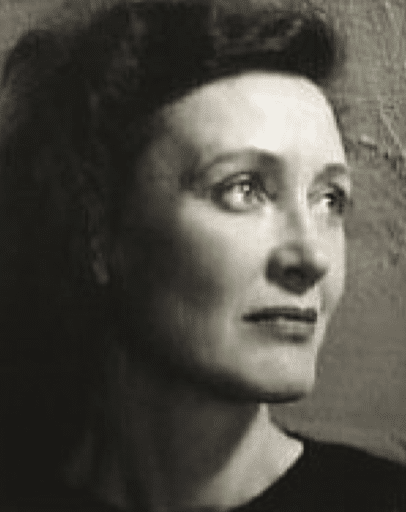
HAMLIN, Edith Anne & Maynard Dixon

0 1
Read Time:1 Minute, 31 Second

Edith Hamlin was born in 1902, in Oakland, California, where she later studied art at the California School of Fine Arts, and she then studied at the Teachers College at Columbia University in New York.

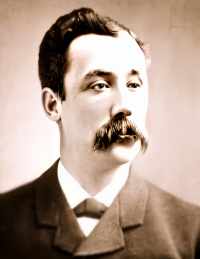
Born on a ranch near Fresno, California, in 1875, Maynard Dixon became a noted illustrator, landscape, and mural painter of the early 20th-century American West, especially the desert, Indians, early settlers, and cowboys.

In the spring of 1937, Maynard met with Herald R. Clark, the dean of Brigham Young University’s School of Business, and agreed to sell 85 paintings, sketches, and drawings from the span of his entire career for $3,700. BYU has the largest museum collection of Maynard Dixon lifework paintings. 

In September 1937, Edith Hamlin married Maynard Dixon (29 years her senior), and in 1939 they moved to Tucson, Arizona. They also purchased 20 acres, set in a grove of cottonwood trees, in the small town of Mount Carmel, Utah, where they built a log-style home. Mount Carmel was their summer retreat from the Arizona desert heat. At this location they spent many days painting the beauty of the region and the pastoral scenes of the area’s numerous farms.

Maynard Dixon wrote,

“Big news is we are going to quit Calif. & build us a log house in Utah, far from any large town. Mormons are simple honest farming people. We like them.”

Together, Maynard Dixon and Edith Hamlin painted western scenes in Arizona and Utah until Maynard Dixon’s death in 1946. After his death, Edith Hamlin returned to San Francisco, where she continued to paint landscapes and murals for the remainder of her life.

[su_divider top=”no”]

This article originally appeared in Vol.59 No.1 of Pioneer Magazine.

For more information, see www.maynarddixon.org and www.edithhamlin.com

Happy
Happy
0 %
Sad
Sad
0 %
Excited
Excited
0 %
Sleepy
Sleepy
0 %
Angry
Angry
0 %
Surprise
Surprise
100 %
You May Also Like

TWITCHELL, Ephraim & Phoebe Melissa Knight

One day Branch President Ephraim Twitchell was traveling from Sacramento a long way by wagon. The last day of his journey he was traveling late, after dark. He did not stop because he was almost home. He was alone in his wagon, when suddenly there was a man sitting beside him on the spring seat. He just appeared from nowhere. He told Ephraim that he should take his family from San Juan Bautista and go to San Bernardino. Ephraim responded that they had not been in San Juan very long and that his children had their friends there. He noted that he did not think he could get them to go with him. The man beside him replied, "Yes, you can, and you must go to San Bernardino or you will lose them." When Ephraim turned to answer him he was not there. He had disappeared just as he had appeared -it seemed like just out of thin air. Ephraim knew the gospel very well and remembered their story in the Book of Mormon about the three Nephites. He thought this must be the answer-the messenger was one of the three Nephites. He then saw a beautiful new coat that the messenger had left on the spring-seat beside him. He thought the messenger had really been there-that he had not just imagined or fantasized. Ephraim went home and told his wife, Melissa. They talked about the move. They prayed about it for a couple of days. They knew they must go to San Bernardino, California. Every one of their children and one nephew, John Newton Twitchell, the oldest son of Jasper Twitchell went with them. Anciel Ephraim's oldest son came a year later.
View Post

SMOOT, Doug: Modern-day Pioneer of Technology

After completing 42 years at BYU, Doug now (2008) is a principal in Combustion Resources Co., continuing his work in energy, fossil fuels and combustion A member of several professional organizations, he has published approximately 200 technical articles, eight invited review articles, and four books on combustion. He received the first Governor’s Medal for Science and Technology in Utah in 1987. Two of his books (written with others) have been translated into Chinese. An internationally recognized authority in energy, combustion, and fossil fuels, Doug has consulted with over 100 organizations in the U.S., Mexico, China, Japan, India, Egypt and several European countries.
View Post

THOMSON Jr., Moses

Combined with the guarding that was surely required of Moses, we also learn from George Thomson’s biography that “Moses pushed and pulled on a handcart with a sick man in it for many days. Their rations got slimmer . . . When they got to the Sweetwater [River] near Devil’s Gate, Moses died with seven others the same night. . . . they were buried in shallow graves and covered with snow. This tragedy was a terrible blow to George and he did not get over it for years.”
View Post

GLEASON, John Streator: The Martyrdom of the Prophet

“The scene through which I have been called to pass since I arrived in this place from the East has almost alienated me from my country. Almost one continual round of mobocracy by night and by day. When I contemplate the scene it almost makes me shudder, and my blood run cold in my veins. I have been an eye witness to almost the whole scene from the beginning. My life has been exposed—threatened from time to time. . . when they were filled with wrath …. About a week before the assassination of Joseph and Hyrum Smith I was arrested—marched to jail by a band of the desperate and could not even lay there in peace—was aroused about 12 o’clock by a rush of men into the yard and a loud rattleing [sic] and hallooing at the door of the jail. One of our men went down and opened the door, when they rushed up stairs and caroused about a while, and left us.”
View Post

ADAMS, Arza Madsen

A muggy evening added to Arza’s discomfort with the chills and fever. Malaria had driven him to bed for several days, even though he had much work to do on his farm located just north of the village of Carthage, Illinois. It was dusk when William and John Barnes, two non-Mormon acquaintances, knocked on the cabin door with devastating news: Joseph Smith and his brother Hyrum had just been murdered in Carthage. One of two survivors, Willard Richards, wrote a short letter describing the disaster and asked the Barnes brothers to deliver the letter to Arza Adams, one of the few Mormons living near Carthage. Although seriously ill, a surge of adrenaline permitted Arza to drag himself out of bed, saddle his horse, ride to Benjamin Leyland’s cabin and ask him to join in a dash to Nauvoo.
View Post

DAVENPORT, James and Almira Phelps

In this spring of 1847, James Davenport was recruited as a blacksmith for the first company to leave with Brigham Young for the Great Basin of the West. They would generally follow the Oregon/California Trail along the Platte River. But they deliberately chose the opposite side of the river from the well-traveled side. Part of the mission of that first company was to identify the best route for the trail and the best sources for feed for the livestock, and to improve the road for the thousands that would follow. There were worrisome encounters with Indians, whose intentions were not well-know at the time, but no serious troubles occurred.
View Post