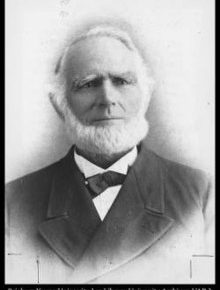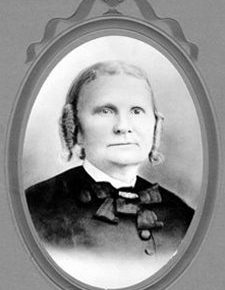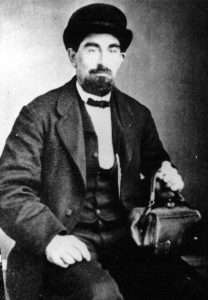
HESS, John W.

0 1
Read Time:2 Minute, 56 Second

This article originally appeared in Vol.65, No.2 (2018) of Pioneer Magazine.

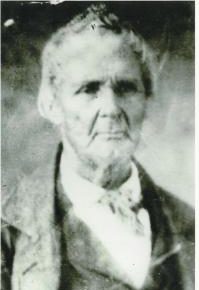
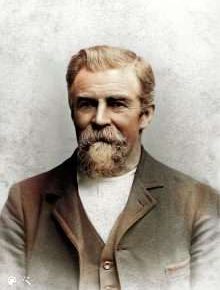
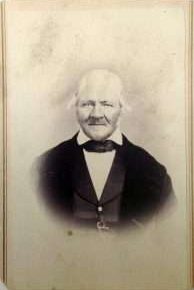
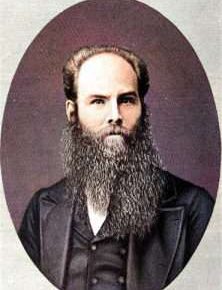
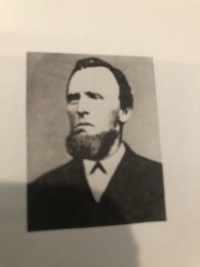
John W. Hess was born to Jacob and Elizabeth Foutz Hess on August 24, 1824, in Franklin County Pennsylvania.

John W Hess
(1824-1903)

In 1832 the family had moved to Richland County, Ohio. He writes:

“In March, 1834, my Father, Mother, three eldest sisters and myself, were baptized into the Church of Jesus Christ of Latter Day Saints; previous to this we lived in peace with our neighbors, but soon after we were baptized our neighbors began to speak evil of, and persecute us in various ways.”

Eventually settling in Hancock County, Illinois:

“I continued to labor with my might until the violence of the mob was so great that we did not feel safe in remaining on our farm longer; so we moved to the City of Nauvoo. . . .

“[January 29,1846] I married Emeline Bigler. … At this time the word went forth among the people that the church would leave Nauvoo in the spring… .

“We arrived at Council Bluffs about the tenth day of July and found that four companies had been enlisted and organized [in the Mormon Battalion], … I concluded to [join one], and was enlisted in Company “E”, Captain Daniel C. Davis. My wife, Emeline, also enlisted, as the Government had provided for four women to each company of 100 men to go as laundresses. . . .

“The pioneers reached Salt Lake Valley July 24th, and the [Mormon Battalion] Detachment [was discharged] on the 28th, of July 1847. … I feel that the year’s service … is one of the noblest and grandest acts of my life. … I was now in a country that was untried, and one thousand miles from where any supplies could be obtained, with only the outfit of a discharged soldier. . . .

“[In 1848] … I went north to a place afterwards called Farmington and located there. … In March, 1855, I was ordained a Bishop by president Brigham Young, and set apart to preside over the Farmington Ward. . . .

“In 1858, I was elected to the Utah Legislature; was elected again in 1860 for two years, or two terms.”

In 1869 John was called to serve a mission to the place of his birth, Franklin County, Pennsylvania.

“In 1876, I was re-elected to the Utah Legislature. I was Colonel, commanding the Militia of Davis County for many years. . . .

“About this time [ca. 1876] President Young called me to a mission with some Laminates located at Washakie, in the northern part of Box Elder County. . . .

“March 4, 1894 Today at the Stake Conference in East Bountiful, I was set apart to preside as the President of the Davis Stake of Zion with Joseph Hyrum Grant as my first counselor; set apart by the Apostle Franklin D. Richards and HeberJ. Grant. … I had presided over the Farmington Ward as its Bishop for twenty-seven successive years, and had labored as the First Counselor to [the previous Davis Stake] President W.R. Smith from 1882 to 1894…. To accept the responsibility of presiding over the Stake seemed a great responsibility, and so it has proved in every sense of the word. It has caused me to feel very humble . . . but through the help of the Lord I have done the best I could.

… I pray most earnestly that I may continue to be faithful and humble in the future in my labors among the people.”

John W. married seven wives and died in Farmington December 16,1903.

Happy
Happy
0 %
Sad
Sad
0 %
Excited
Excited
0 %
Sleepy
Sleepy
0 %
Angry
Angry
0 %
Surprise
Surprise
100 %
You May Also Like

HURST, Philip

This biography originally appeared on pioneerstories.org Philip Hurst wrote the following to the “Salt Lake Herald” concerning Indian affairs in Sanpete County.  It was published on 1  January 1873.  Indian…
View Post

ROBERTS, Levi

After travelling over the mountains one day we met with some of our brethren from the Valley. This was a time of rejoicing. Captain Brown who left us at Santa Fe with the sick which went by the way of Fort Kearney and a few brethren with him from the Valley, brought news that we were not to go to the Valley, and told us we had better stay another year in California. So the company divided right where we met each other; some went on to Winter Quarters; some to the Valley, and some turned back. Daniel Browett, Slater, Cox, Levi Roberts and myself turned back to Sacramento and went to work for Mr. Sutter who treated us very kindly. I sent a mule to my wife with Brother Harris, which she got…. We all went to work at the same place for Captain Sutter. We took the work of cutting a millrace. Brother Browett went [p.379] to work with the millwright, this was in September and later on in the fall, I and two others took sick with the bilious fever. We were so sick we couldn't help each other to a drink of water. We lay under some ties and had to crawl around with the sun to keep from making us chill…. Our appetites were very poor, and our food was flour, water and squash. Had it not been for the thoughts of my wife and family I could have died, but we all three recovered after awhile and went to work on the millrace again and worked all winter. Sometime in the winter two of the brethren who were working for Mr. Sutter in the mountains found gold in a tailrace they were making. Mr. Sutter let me see the first gold they found before sending it to San Francisco to get it tested. In May 1848 some of the brethren and myself made a trip in the mountains to try and find a road over (instead of going down Truckee River, as we had to cross it about 20 times) but when we got in the mountains we found so much snow we had to return, and on our way back I stopped at what we called the Mormon Island, where there was some of the brethren at work getting gold, Brother Sidney Willis and his brother; also Brother Hudson. I stayed here for a short time and got some gold.
View Post

JAMESON, Charles: Haun’s Mill Survivor

Charles Jameson was one of the Haun’s Mill victims that survived. “Oh, what a time that was! [Charles Jameson] was shot several [4] times. He crawled into the brush. The men followed him. One said, ‘Shoot him.’ Another said, ‘No, let him suffer. He’s dying anyway.’ But he did not die; he lived to go to Utah and lived to a good old age (6).” They were able to extract one bullet, but Charles carried the other three slugs with him for the rest of his life.
View Post

BELLISON, James Thomas and Louisa

Before many days, an incident occurred which tells a lot about James' attitude toward draft animals. His granddaughter, Pearl Allen Read, tells of the company coming to a bog of mud in the trail which caused many wagons to get stuck. As each team came to the bog, the Captain standing there would join the drivers in whipping the animals to get them through.When it was his turn, James forbade the Captain. "These are my animals and no whip is to be used on them." Although James' team pulled through the bog successfully, the Captain was angry and thereafter continued to find fault with this independent member of his company.James Thomas' life-long insistence that his animals be treated well was admired by those who knew him and was learned and perpetuated by his children throughout their lives.
View Post