RUSSON, Lott – Amazing Grace

0 1
Read Time:4 Minute, 13 Second

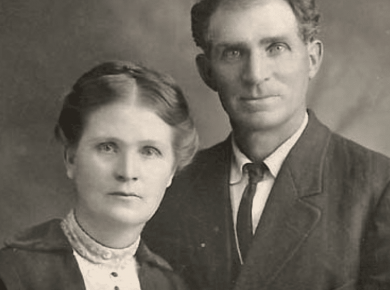
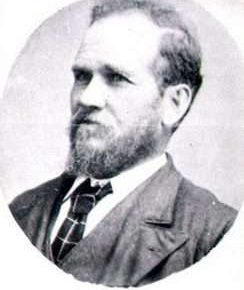
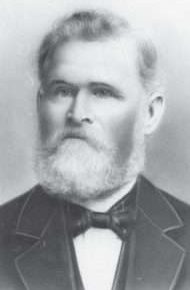
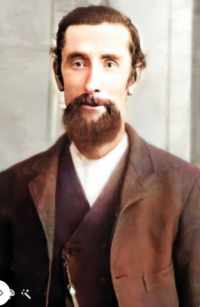
The miracle of AMAZING GRACE is well portrayed in the life of an English coal miner by the name of Lott Russon, born in Dudley, England, a place called “The Black Country” because coal was mined there. 

Lott grew up in a very poor coal mining family.  He was the only boy in a family of 6 children.  His life was miraculously spared multiple times throughout his 88 years of life.  Some of his survival stories have been passed down to his posterity to strengthen their faith as they face their trials in life.

When Lott turned 7 he was obliged to go to work as a rivet carrier to earn additional money for the family.  By grace he was saved when at work a spike got loose from a machine, flew across the room and entered his skull like a bullet.  He nearly died from the injury.  

At age 13 his father was disabled in a coal mine accident so Lott took his place and became a collier. When Lott’s father was well enough to walk, he came to the mine to check on Lott.  Tragically he fell down the shaft and was killed leaving young Lott fatherless.

From age 13 on Lott became the provider for his family.  Sometime later, after the death of his father, part of the mine collapsed where Lott was working, but by grace he and one other man somehow crawled two miles in darkness underground on hands and knees till they found the surface and returned back to the coal yard and to safety.  Both men had been given up for dead. 

By grace Lott survived a dozen other perils; a sudden flare of coal gas on the surface, burial under tons of rock when a mine roof collapsed, a freefall in an elevator car which dove some 470 feet when a cable jumped a pulley.  He survived an underground methane explosion.  He was buried in ice catastrophe. He lost his hearing when his skull was crushed by a steel bar.  By grace and and by priesthood power his hearing was restored. In all his ordeals it was by grace remained whole.  He lost only a part of one of his fingers.  

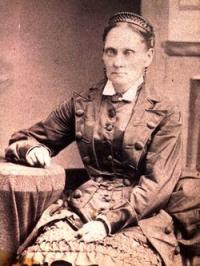
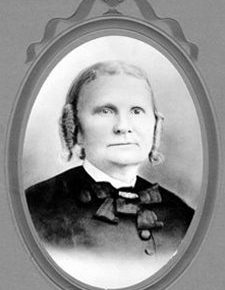
He joined the church when he was 24 but he could never earn enough money for his wife and 8 children to immigrate to Utah, so they stayed in Dudley and Lott continued working in the coal mines.  

Eighteen years passed. Lott was 42 years old. Elder Nebeker, the missionary who baptized him, sent $535.36 to him so his family could immigrate to Utah.  Lott was working in the mine the day the money arrived.  The mine was under threat of flooding and the pumps were working at full capacity to evacuate the water that was rushing into the shafts.  Lott was fitting pipes down in the mine when his wife arrived with the news.  What happened next was again the grace of God working in Lott’s life.   

In his own words he records, “On Oct. 14, 1871, my wife came to the pit and had me called up. At that time I was with the other men laying down pipe and we were up to our waists in water. When she saw me she said, “Take off the wet clothes, Lott, and never put them on again. The money has come to take us to Utah.” I said, “Let me go down and finish the job.” She said, “No, Lott, you might get hurt.” Reluctantly I complied.  As I was taking off my clothes the alarm whistle sounded.  Another accident happened and buried all the men in the mine. I alone was saved once again.”  

The ordeals in Lott’s life didn’t end with the arrival of the money from Elder Nebeker.  Many more trials and tribulations followed, but by the grace of God he and his family were able to come to Utah and join the saints where they could build Zion.  

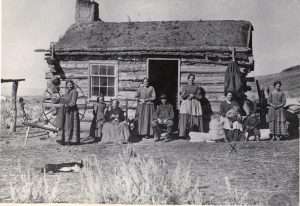
They settled in Lehi, Utah where Lott, now in his mid 40s, started life all over again.  But this time they were in Zion.  Building a home and a foundation for their posterity who would have the blessing of growing up in the valleys near the Temples of God.  Lott and his wife received their endowments and were sealed in the endowment house in 1872.  Lott Russon lived 46 more years in Lehi, Utah.  He died faithful in the faith at age of 88.  

Lott’s life gives new meaning to the verse we read in 2 Nephi 25:22 where it says, “We are saved by grace after all we can do.”  Surely it was by grace that Lott lived to see old age, bless his grandchildren, and see the miracle of the gathering of Israel and to see Zion became firmly established in the tops of the mountains of Utah.

Whenever you hear the hymn AMAZING GRACE think of Lott Russon.  “For God resisteth the proud, and giveth grace to the humble.” 1 Peter 5:10

Happy
Happy
0 %
Sad
Sad
0 %
Excited
Excited
0 %
Sleepy
Sleepy
0 %
Angry
Angry
100 %
Surprise
Surprise
0 %
You May Also Like

SMOOT, Doug: Modern-day Pioneer of Technology

After completing 42 years at BYU, Doug now (2008) is a principal in Combustion Resources Co., continuing his work in energy, fossil fuels and combustion A member of several professional organizations, he has published approximately 200 technical articles, eight invited review articles, and four books on combustion. He received the first Governor’s Medal for Science and Technology in Utah in 1987. Two of his books (written with others) have been translated into Chinese. An internationally recognized authority in energy, combustion, and fossil fuels, Doug has consulted with over 100 organizations in the U.S., Mexico, China, Japan, India, Egypt and several European countries.
View Post

BAGLEY, Edward Alma

Alma was seven years old when his family, along with the S.M. Blavis Company of Saints, left Mormon Grove on June 18, 1855. This was the start of their long trek across the plains, by ox team. Just two days later, on the 20th of June, Alma’s mother, Julia Ann, died of cholera. She got up that morning, cooked breakfast for her family, and before sundown she had died and was buried by the side of the trail along with others. Seventy-five years later, when Alma was eighty two, he described his feelings the day his mother died. He said that the wolves howled and the mourning doves mourned, and then he cried just like he did when he was a seven year old boy.
View Post

ARMSTRONG, Thomas Kirk

Thomas Kirk Armstrong was instrumental in developing the Utah territory with his team and wagon, his sawmill work, and in the sheep business at a location about seven miles east of Park City, Utah. He also maintained a dipping vat that all sheepmen used to dip their sheep in. They used a solution of tobacco and sulphur
View Post

BELLISON, James Thomas and Louisa

Before many days, an incident occurred which tells a lot about James' attitude toward draft animals. His granddaughter, Pearl Allen Read, tells of the company coming to a bog of mud in the trail which caused many wagons to get stuck. As each team came to the bog, the Captain standing there would join the drivers in whipping the animals to get them through.When it was his turn, James forbade the Captain. "These are my animals and no whip is to be used on them." Although James' team pulled through the bog successfully, the Captain was angry and thereafter continued to find fault with this independent member of his company.James Thomas' life-long insistence that his animals be treated well was admired by those who knew him and was learned and perpetuated by his children throughout their lives.
View Post

JENSEN, Jens and Dorthea: Nearly Pioneers

Most pioneer stories involve building religious faith through hardships and challenges, but some early migrants to Utah don’t fit this mold. Some were disappointed by life in Utah and returned to their place of origin. Others moved on seeking greener pastures elsewhere. Still others remained in Utah but became disaffected with the dominant religion. Some became Jack Mormons, others became vocal critics of the LDS Church, and still others joined a different church. Jens Christen Jensen and his wife Dorthea were cases of the latter.
View Post

GREEN, Elizabeth Jane

Candace asked Hamilton about his mother’s pictures and he answered “I don’t know, I’ve never touched them.” Candace asked if she could get them and he gave his consent. She went into the other room and came out with some pictures carefully wrapped in tissue and brown paper. It was such a thrill to find a picture of Elizabeth Jane Green as a young mother and five of her sons, a picture of my grandfather James Copeland Orr, taken before he left on a mission, a picture of Charley, Walter, Richard and Earnest. Some of these pictures had been taken up at Mercur, probably when the boys had taken some produce to market or gone up to Mercur on a date or to a dance. Mercur at this time was one of the biggest towns in Utah and the people of Clover and St. John sold nearly all of their produce at Mercur.
View Post