GRANT, Lucy: The First Sister Missionary

0 1
Read Time:2 Minute, 54 Second

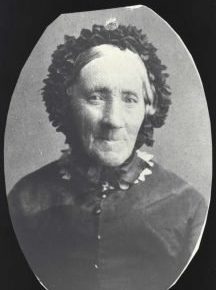
Lucy Grant Cannon (1880-1966)

When Lucy Grant was about 12 years of age, her mother died. When her father [Heber J. Grant] told Lucy that her mother was dying, Lucy could not believe him.

She hurried from the room and returned with a bottle of consecrated oil, with which she implored him to bless her mother. He blessed his wife, dedicating her to the Lord. As the children left the room, he fell to his knees and prayed that his wife’s death might not affect the faith of their children in the ordinances of the gospel. “Lutie” herself ran from the house feeling very bad, as she expressed in the following words:

“I was stunned and shocked and felt my father had not sufficient faith to heal her. I went behind the house and knelt down and prayed for the restoration of my mother. Instantly a voice, not an audible one, but one that seemed to speak to my whole being said, ‘In the death of your mother the will of the Lord will be done.’ Immediately I was a changed child. I felt reconciled and almost happy.”

(Mnrbn C. Josephson, “Careers of Service to Young Womanhood,” The Improvement Era, vol. 40, no. 12, December 1937)

The Colorado Mission was five years old when Lucy Grant, 21, was called to serve as a missionary. She is generally acknowledged as the first “lady missionary” of the church, along with her companion, Fannie Wooley. The mission was organized in December 1896, when Elder John W. Taylor of the Council of the Twelve was appointed to begin proselytizing work in that state. Accompanied by three elders, John H. Boshard of Provo, Herbert A. White, and William C. Clive of Salt Lake City. The four departed for Denver in December. A few days later, eight more missionaries were called to assist President Taylor. Within a few weeks, a branch was organized in Denver, and shortly thereafter, missionary work was extended to Colorado Springs, Pueblo, and other communities.

In November 1900, the states of Nebraska, and North and South Dakota were added to the Colorado Mission, and work extended into New Mexico, Arizona, and Wyoming. In 1901, Sisters Grant and Woolley arrived in the mission. Although they were not the first women to go into the mission field (wives of a few missionaries had accompanied their husbands previously), the two young women were the first to be formally called and set apart. Lucy Grant was the second daughter of President Heber J. Grant and his wife, Lucy Stringham.

Lucy served faithfully and, after her return home, married George Jenkins Cannon in the Salt Lake Temple. The couple became the parents of seven children. Prior to her mission, Lucy Grant was a Sunday School teacher, organist, secretary, and counselor in her ward Primary. At 18, she became president of the ward Mutual Improvement Association. Returning from her mission, she served on the MIA boards of two stakes, and in 1917, she was called to the General Board of the MIA. She served for 32 years as a board member, a counselor to two presidents, Martha H. Tingey and Ruth May Fox, and finally, as president for 11 years, from 1937 to 1948.

One of the major accomplishments of her presidency was the restoration of the Lion House as a social center. Lucy Grant Cannon died May 28, 1966, at 85, revered and honored for her service to the church. (Church News, February 1974)

Happy
Happy
0 %
Sad
Sad
100 %
Excited
Excited
0 %
Sleepy
Sleepy
0 %
Angry
Angry
0 %
Surprise
Surprise
0 %
You May Also Like

WOOLSEY, Thomas: Mormon Battalion Volunteer

On 15 Jun 1856 they left their all to overtake the first covered wagon train of Mormons, to cross the plains that year. The oldest daughter was sick with chills and fever when the journey began, and had to be carried from the house to the wagon. Her father's brother who did not belong to the LDS church and was opposed to their leaving their home, predicted she would not live to go far, but Elder Hickerson promised her she would not have another chill, and she never did.
View Post

HILL, George Washington: Stalwart Convert and Missionary to the Indian People

The missionaries were "to labor among the Indians in Oregon country." They were instructed leave their homes and families and " to settle among the Flathead, Bannock or Shoshone Indians….teach the Indians the principles of civilization; teach them….to live in peace with each other and with the whites;….to settle down….to build houses…" (7) This mission became known as the Salmon River Mission.
View Post

ROBERTS, Owen: Welsh Convert

On Friday, May 20th, they started on the railroad for St. Joseph, Missouri where they arrived safely; from thence they proceeded on their way up the Missouri River on the steamboat “St. Mary”. Here they were treated roughly by the crew and others. They had no where to sleep or sit, but were almost constantly compelled to stand on their feet night and day until May 26th where they landed on the banks of the Missouri River below Florence, Nebraska at which place they lodged for a while so they could fit up their teams and baggage to cross the plains to the Rocky Mountains.
View Post

HILL, Heamon Alison

During that time their father and baby Jasper died. They were so poor that they did not have enough money to bury their father and baby brother. “The Lord blessed us, for a man came to see us and seeing our plight, took us to his farm, gave us one room in his home, put our cattle in his pasture and buried our father and baby brother on his burying ground.
View Post

ANDREWS, Amos Betts

They were surrounded by an armed cavalry of vigilantes who asked for the leader of the group. Amos Andrews stepped forward. The leader of the vigilantes asked if they were Mormons and Andrews confirmed his question. The leader then told them to prepare to die. Andrews looked around and saw that they were out-numbered and out gunned. Andrews then requested if he'd be permitted to sing a song. He sang the whole song to "A Poor Wayfaring Man of Grief "then sang another song and another. Andrews wife, Keturah, was nursing an. 18 month old baby, the baby stopped nursing and joined its father in singing the song. Overwhelmed with emotion at seeing the baby do such a thing, a member of the mob lowered his rifle, and swore an oath saying, “They all can sing, even the child at the breast." The mob removed their hats and rode away. The story is an example that "the hymns of the righteous are a prayer unto me."
View Post

JENKINS, Jane: A Widow Supporting Her Family

In order to support herself and her family of small children, Jane made cookies, cakes, and bread which were put into small home made baskets and the children would sell them to regular customers and at the Southern Down Resort. In order to have a variety of cakes, the mother and children would go down to the seashore when the tide was out and gather larva from the rocks. This substance looked somewhat like lettuce. They washed the sand from it and put it into baskets and buckets. It was later baked as part of the cakes. These children thought nothing of walking three or four miles and selling this food for a schilling a pound. Sometimes Cecilia and Ann worked as nurse girls and as ladies maids.
View Post

Richard Alldridge

He was evidently very happy in his work because he sang at it, wrote songs and occupied his mind and hands at the same time. His songs were songs of praise and thankfulness to his Heavenly Father for the many blessings received, and the knowledge he had of the true Church.
View Post

JOHN, Thomas & Margaret Thomas

The first three nights on the trail were spent on the banks of the Elkhorn River, which was not far out of Winter Quarters. The river had many fish in it and some of the company fished a good deal while camped at that location. Others spent time harvesting grapes which were in abundance along the banks of the river. The company saw many buffalo herds and abundant antelope, deer, and elk along the trail. They only harvested one buffalo, but had many deer and antelope along the way. This journey was made before the white man exterminated the buffalo by shooting thousands and then leaving the carcasses to waste.This was not the end of the influence of the white man. Henry John documented the following: “The horse and the cow were soon to take the place of the buffalo; sheep were to replace the elk, deer and antelope. Domestic fowl claimed the place of the wild turkey; grouse and little prairie dogs were given wheat saturated with poison in order to move them out of the way so fields of grain could be raised. Wild plums and bending branches of wild fruit were to be rooted up and the more luscious fruits- peaches, pears, apples and others- were to take their place. The Indian wigwams were to be moved; white man’s cottages and beautiful residences were to take their places (2).” Henry Miller had a very stern reputation and lived up to that reputation on this journey as well. When the company came to the Green River, Captain Miller told them all to get out of the wagons and ford the stream on foot. The river was ice cold and one old man that had been very sick and worn out climbed on a mess box that was bolted on the back of a wagon. When Captain Miller saw this, he jumped into the river and pulled the old man off and threw him into the cold river. Twenty eight people died on the trip and many thought a good portion of those fatalities were attributable to Captain Miller’s harsh, unforgiving supervision
View Post

Elihu Marcellus Allen

Elihu and his family experienced severe persecution while living in Missouri because of their religion. Elihu executed an affidavit on 18 May 1839 in Quincy, Adams, Illinois itemizing a bill of damages against the State of Missouri for $1,000 for property lost and expenses incurred during the expulsion.
View Post