HUMPHREYS, Samuel – Imprisoned in Idaho for his faith

0 1
Read Time:3 Minute, 55 Second

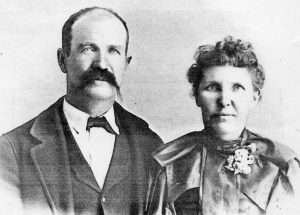
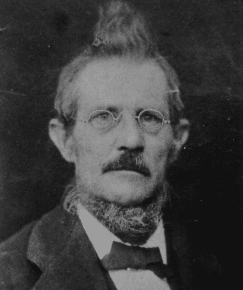
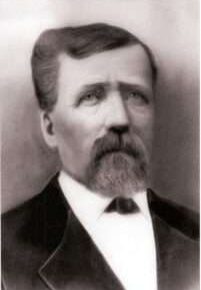
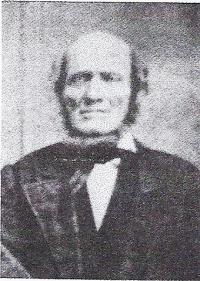
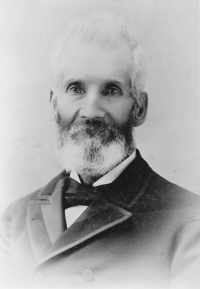
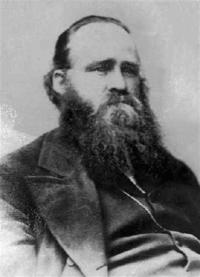
Samuel Humphries 1846-1928.  Samuel Humphreys was born in Mansfield, Nottinghamshire, England, Jan. 31, 1846. His parents, Thomas, and Mary Sudbury Humphreys joined the church and left England to join the Saints in Salt Lake City, arriving in St. Louis on July 13, 1853. In November of that same year Thomas died of cholera leaving Mary with seven children, Samuel age 7, and no means of making the journey from St. Louis to Utah. 

Orson Spencer, also a member of the church and residing in St. Louis, was ill and knew he would soon pass away. Wanting to be buried in Salt Lake City, Orson struck an accord with the widowed Mary Humphreys, providing a wagon, team of oxen and supplies to Mary if she would transport his body to Salt Lake to be buried. During the journey to Salt Lake Sam’s bed at night was in the wagon atop the wooden casket containing the body of Orson Spencer. The family arrived in Salt Lake October 1, 1856.

In 1864 the family was called to settle in the Bear Lake Valley, at Paris, Idaho. They arrived  in November of that year, spending their first winter in a dugout. The only food they had was a small quantity of wheat, which they ground in a coffee mill and baked into cakes on a shovel over the fire. Sam was 18 at this time and he and his older brother made several trips on snow shoes, each pulling a sled, from Paris, Idaho to Logan, Utah for supplies. The trip would take from 3 to 6 days depending on weather and snow conditions. As a young man Sam also made many of these “snowshoe” trips to Franklin county Idaho carrying the mail. On one such trip he departed just before a huge blizzard blew in. Because of the severity of the storm he was thought to have perished in the storm, and that his body would be found the next Spring in the mountains. He showed up a few days later to the surprise of everyone, counting the whole event as “just an experience.” 

At age 22, Sam was called on a “mission” to be a drover for an “out and back” company, delivering supplies, and to then return with immigrants to the Salt Lake Valley. His skills as a horseman, cattle driver, and hunter qualified him for this exciting adventure. On the way out, in June of 1868, while attempting to ferry cattle across the swollen Green River in Wyoming, the ferry overturned and 6 men and several cattle were drowned. Sam ended up swimming his horse across the river to lead the cattle into the water and swim across. 

Sam spent several seasons logging in the Logan canyon, getting out timber for the construction of the Logan temple. 

Sam Married Mary Anne Clifton on Oct. 2, 1876, on Sep. 3, 1884 Sam Married Mary Anne’s sister, Hannah Martha Clifton. Sam farmed, raised cattle, ran a diary, and made cheese. In May of 1886 Sam was arrested by a U.S. Marshal and imprisoned at the penitentiary in Boise, Idaho for illegal cohabitation. While in prison he received a letter from Salt Lake City calling him to preside as Bishop in Dingle, Idaho when he was released from prison. He moved his family from Paris to Dingle, where he presided as Bishop for 28 years, during which time he supervised the construction of the church house still in use at Dingle. While Bishop, his home was always open to the visiting church authorities and many happy hours were spent with them  in renewing old acquaintances. In time of sickness or need, he would go to administer to the stricken ones, no night too dark or stormy, no distance too long, for him to travel if he was needed. He was released as Bishop in 1814. He was the father of 17 children and was preceded in death by both Mary Anne and Hannah. In his latter years he enjoyed temple and genealogy work and spent several winters in Salt Lake engaged in that labor. 

Grandpa Sam enjoyed very good health up until his death which occured at the home of his oldest daughter, Mary, at Wardboro, Idaho, on Nov. 23, 1929. At His funeral an old pal spoke of Sam, calling him “brave and true and faithful.”

Like Sam Humphries, each of us must be faithful, obedient and persevere throughout our lives if we hope to live forever in the presence of God.  As the scripture reminds us, “And, if you keep my commandments and endure to the end you shall have eternal life, which gift is the greatest of all the gifts of God.”

Happy
Happy
0 %
Sad
Sad
0 %
Excited
Excited
0 %
Sleepy
Sleepy
0 %
Angry
Angry
0 %
Surprise
Surprise
100 %
You May Also Like

RIDING, Christopher Lister: Tinsmith

Christopher's skills were needed in St. George because the temple was under construction there and he was the only sheet metal worker in the Dixie mission at that time. However, there was not enough business in St. George to provide him work, so he secured a little four-wheeled cart and an ox. He loaded the cart with tin ware and tools and visited all the towns in southern Utah, exchanging his ware for flour, potatoes, butter, cheese, etc. He made most of his wares from waste cans as it was difficult to ship in sheet tin. People saved empty cans and metal ware of all kinds for him. His store of wares consisted of buckets, milk pans, tin cups and plates, lamps, canteens, coffee pots, wash boards, etc. The ball on the St. George temple and the one on the St. George tabernacle are Christopher Riding's work, as is the metal work on all the public buildings erected before his death. The tin-covered sphere on the temple remained until October 25, 1994, when it was replaced with a fiberglass model as part of a renovation project. Christopher was a loyal member of the church although he was never active in public affairs due to the fact that his work kept him away a great deal of the time. He was a great reader, spending every evening in this way.
View Post

BARLOW, Oswald: History of a St. George Pioneer

Oswald Barlow was a member of Utah's first Martial Band, directed by Professor Thomas. Not only did he play the fife and drum, but he was also an expert dancer. So, in 1859, Oswald opened up his own school of dance. Many of the Saints were glad to receive instruction from him, and cultural arts were strongly encouraged by Brigham Young. In fact, several of Brigham's daughters were among the first pupils at his school. Oswald also had a splendid bass voice and was a good entertainer; therefore, many people loved to hear him sing.
View Post

BINGHAM, Erastus

Erastus Bingham stood up on his wagon wheel and talked to the Saints, telling him that he proposed to obey the council of president Brigham Young, that he and his family would remain until Spring and invited all to join with him in accepting the invitation of the Indians to share their camping ground. About one half of the company remained with Erastus Bingham; the others decided to attempt the journey Westward with their commander, Bishop Miller. They pushed on Westward but met with a great many losses. The Indians stole some of their animals; and they suffered from the cold and lack of food and were compelled to return, some of them camping near Erastus Bingham’s camp. The Ponca Indians were very kind to the families who were sharing with them their camping ground, even bringing meat for some of the most destitute families. They wintered with the Ponca Indians, living in their wagons and a wickiup the friendly Indians provided for them.
View Post

BARLOW, James and Ann Crompton

Ann Crompton Barlow was an English Mormon Emigrant, who felt the desire to bring her three youngest children, John (17), Jane (15) & Joseph Smith (7), to the Utah Territory to gather in "Zion" with the Saints. She was a widow, with meager means, thus was chosen to use the Perpetual Emigration Fund by the leaders of the Manchester Branch.
View Post

JENKINS, Jane: A Widow Supporting Her Family

In order to support herself and her family of small children, Jane made cookies, cakes, and bread which were put into small home made baskets and the children would sell them to regular customers and at the Southern Down Resort. In order to have a variety of cakes, the mother and children would go down to the seashore when the tide was out and gather larva from the rocks. This substance looked somewhat like lettuce. They washed the sand from it and put it into baskets and buckets. It was later baked as part of the cakes. These children thought nothing of walking three or four miles and selling this food for a schilling a pound. Sometimes Cecilia and Ann worked as nurse girls and as ladies maids.
View Post

HINTON, James Maurice: Life Story

I herded those sheep through what they call the Bear Hole. I’d start them through the East side and it would take them ten days to go through. I herded sheep four years for Wilts Imlay on Kolob in the summer and on the Arizona Strip in winter. The wages were $40 a month and board. I’ve got more to show for those four years than any other time in my life.
View Post

MITCHELL, James Jr. & Anne Hull

Up north in the Upper Snake River Valley, the virgin soil was bringing forth bounteous crops. This land could be had almost for the asking, so James took advantage of the pre-exemption rights of the Homestead Act and secured 360 acres of virgin soil just two miles north of Shelley, Idaho. So it was that in 1885, James came to Idaho.
View Post

SMITH, Joseph Johnson

How happy they must have been to be in “Joseph’s City”. But the happiness didn’t last long. Within three months after arriving in Nauvoo, little Mercy became ill and died. Joseph’s wife, Mary, grieved with Joseph, but within two months, she and Joseph became excited again because she was going to have another baby. But again, the excitement was blunted by death as Mary died a week after her baby son, Joseph, was born and baby Joseph died twelve days later. Joseph now was left with just three year-old Caroline. His parents and two sisters and three brothers were still with him in Nauvoo, but how hard it must have been to have sacrificed so much in such a short time.
View Post