PERKINS, John Henry: A Pioneer Educator Brings Understanding

0 1
Read Time:3 Minute, 15 Second

This article originally appeared in the Summer 2001 issue of Pioneer Magazine

by Dr. H. Alan Luke

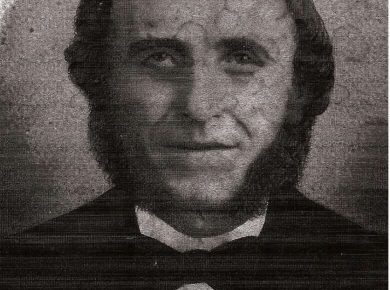
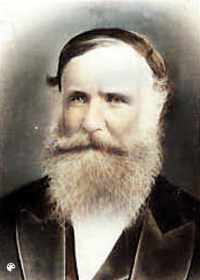
John Henry Perkins, a genuine pioneer, was born in London, England, on the last day of 1773. Some might question whether he qualified as a pioneer. He never explored a wilderness, crossed a desert, or encountered an uncivilized population. He sailed no ocean and, in fact, never left his beloved homeland. What John Henry did do was become known as a great innovator in the field of education, a pioneer of the kind we need more of.

John Henry became famous not only throughout his own country but in much of Western Europe, He received credit for many important innovations in teaching methods. Leaders in his profession honored him for his accomplishments.

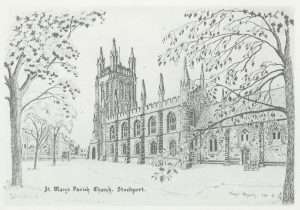
St. Mary’s Parish, Stockport, Cheshire, England. John Henry LUKE and Ann HARVEY were married in St. Mary’s Parish Church 1792.

The early 1800s saw the real beginning of the industrial revolution in Europe, which brought large populations into the vicinity of factories in cities, such as Manchester, where the Perkins family had moved from London. Most of the growth consisted of low-paid, unskilled laborers.

“The working population were very badly housed near the centre of the town and suffered a heavy mortality rate due to dangerous sanitary conditions,” reports Harry Perkins, a descendant of John Henry, in his book, The Family Tree. The vast majority of people in the poverty-stricken areas were uneducated and, thus, illiterate.

This was not true of the Perkins family, however.

“The fact that . . . John Henry Perkins was a man of good education, suggests that his father was a man of some affluence, since education at that time was very expensive,” The Family Tree reports. “The only education available to the poor was offered by charity schools.”

Community leaders decided to set up a full-time school. Advertisements were published for a schoolmaster, and John Henry Perkins was chosen. The school opened on October 25, 1809, but “proved to be totally inadequate for the 793 children who presented themselves for education.” A larger building was constructed, success mushroomed, and the school soon attracted the attention of even the leading townspeople.

The school’s budget was small, but Schoolmaster Perkins’s techniques were remarkable. Paper supplies were meager, so Perkins used sand, which was spread in a thin layer over the wooden tables. The students learned to write by using their fingers to mark letters in the sand. Many other economic measures were also contrived, and the results were prompt and astonishing.

“The school was only for children whose parents could not afford to pay, but in view of Perkins’s success, many of the wealthier people asked him to provide private education for their sons,” notes Harry Perkins. Eventually John Henry established a private school in addition to the public facility. His methods brought a flood of attention, first from all over England, and then other countries in Europe began taking note. Scholars visited from France, Germany, and Poland.

John Henry’s family members became involved as assistants; my great-great-grandmother Emma (one of John Henry’s daughters) wrote about the schools in letters to her husband, who had joined the LDS Church and moved to America. Harry was not a member of the LDS Church, but his concluding remarks in the book are ones that all SUP members identify with.

“I have lived a long life,” he said in effect. “But the time is now at hand for me to meet my maker. There is much to be thankful for, and I have but one regret—Had I known then what I know now about my noble ancestry, it would have changed my life and how I felt about myself. I would have understood far better who I am and given more meaning to all I did.”

Happy
Happy
0 %
Sad
Sad
0 %
Excited
Excited
0 %
Sleepy
Sleepy
0 %
Angry
Angry
0 %
Surprise
Surprise
100 %
You May Also Like

ALSON, Thomas

At the time there were no free schools held in Utah, so students were required to pay tuition, which was rather difficult to provide; while attending with Peck, my tuition became considerable in arrears, therefore, he proposed that I assist him with classes at a salary of $1.00 per week and my tuition, (in all about $1.35 per week) the $1.00 per week to apply on deferred payments.I engaged to teach the Hoytsville School early in January 1876, at a salary of $45 per month. The school house consisted of one log room about 30 by 40 feet, heated by a stove in the center. The teacher was also the janitor etc.
View Post

DAVENPORT, James and Almira Phelps

In this spring of 1847, James Davenport was recruited as a blacksmith for the first company to leave with Brigham Young for the Great Basin of the West. They would generally follow the Oregon/California Trail along the Platte River. But they deliberately chose the opposite side of the river from the well-traveled side. Part of the mission of that first company was to identify the best route for the trail and the best sources for feed for the livestock, and to improve the road for the thousands that would follow. There were worrisome encounters with Indians, whose intentions were not well-know at the time, but no serious troubles occurred.
View Post

ASHCROFT, Henry

In those days, the Saints in each settlement were instructed by the General Authorities to have dramas and other amusements for entertainment. In the field of music and drama, Henry was especially gifted. He was a member of the first dramatic organization of Hyde Park. He, Rachel Seamons (Hancey), and Eliza Seamons (England) received much praise for their stage work. Henry had a wonderful bass voice and sang in the choir.
View Post

GLEASON, John Streator: The Martyrdom of the Prophet

“The scene through which I have been called to pass since I arrived in this place from the East has almost alienated me from my country. Almost one continual round of mobocracy by night and by day. When I contemplate the scene it almost makes me shudder, and my blood run cold in my veins. I have been an eye witness to almost the whole scene from the beginning. My life has been exposed—threatened from time to time. . . when they were filled with wrath …. About a week before the assassination of Joseph and Hyrum Smith I was arrested—marched to jail by a band of the desperate and could not even lay there in peace—was aroused about 12 o’clock by a rush of men into the yard and a loud rattleing [sic] and hallooing at the door of the jail. One of our men went down and opened the door, when they rushed up stairs and caroused about a while, and left us.”
View Post

BOOTH, Edwin

This biography originally appeared on pioneerstories.org 1833 – 1906 Edwin Booth was born in the English town of Blackley Lancashire England on September 12, 1833. His parents joined the “Mormon”…
View Post

JEPPSEN, Niels Andersen

The day after their wedding they walked to their farm in North Ward (now named Harper Ward). She carried a basket with her dishes in one hand, while with the other hand she helped Niels carry a large box which contained their worldly goods. A large stove kettle was fastened to the box, while suspended on a stick, which he placed across his shoulder with a sheet with quilts wrapped inside.
View Post

WOOD, George Lymer: An Incident in the Life

"The usual method of disposing of the dead was to weight the bodies and dump them overboard. When others and I asked the privilege of removing our dead and burying them on land, the Captain was hateful and mean about it. All of my dear ones except Samuel's wife I had to perform this last earthly service for. Others of the party had sustained like losses, and were as anxious as I to bury them as decently as possible. The Captain at last agreed to wait and we hired a Negro to help dig a trench big enough to put them in all together. We removed the dead from the boat and began our heart¬breaking task, but had it only partly done when the boat whistle blew and the boat began to get underway. All ran hastily back except the Negro, one woman and myself. She and I stood at the grave site of our dead and watched them go. What bitterness of spirit I experienced only God knows. Was this what I had come to America, the home of the brave, for? Here I was with two strangers standing beside the open grave of a group of strangers. Our common interests were all lying before us or fast receding from sight, subject to the whim of a heartless thing in human form. "Surges of emotion swept over me, sorrow, anger, love, fear, and despair, but my nearest duty was to protect these rapidly decomposing dear forms of mine from the ravages of wild beasts, heat, and other elements. Perhaps I had been blessed and spared to perform this last service. If! were dead with them our bodies would rot together. So I urged on my companions the need for work. I felt responsible for seeing this thing through.
View Post

CURTIS, Enos

Enos live a wonderful life, enduring the trials of crossing the plains, becoming a Patriarch, and helping to build up the Kingdom of God in Utah. He helped to build the city of Springville, Utah, and went with Brigham Young to the South  of Utah, coming back in the winter of 1856. He didn’t feel well that spring, but kept on working.
View Post