GLEASON, John Streator: The Martyrdom of the Prophet

“The scene through which I have been called to pass since I arrived in this place from the East has almost alienated me from my country. Almost one continual round of mobocracy by night and by day. When I contemplate the scene it almost makes me shudder, and my blood run cold in my veins. I have been an eye witness to almost the whole scene from the beginning. My life has been exposed—threatened from time to time. . . when they were filled with wrath …. About a week before the assassination of Joseph and Hyrum Smith I was arrested—marched to jail by a band of the desperate and could not even lay there in peace—was aroused about 12 o’clock by a rush of men into the yard and a loud rattleing [sic] and hallooing at the door of the jail. One of our men went down and opened the door, when they rushed up stairs and caroused about a while, and left us.”
0 1
Read Time:3 Minute, 31 Second

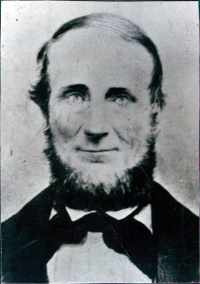
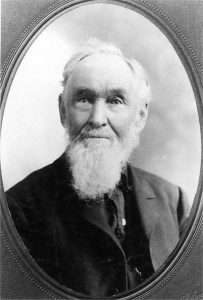
John Streator Gleason (1819-1904) was a scout for the 1847 first group into Salt Lake Valley. He joined the Church in 1839 and moved with his wife Desdemona Chase and her parents to Nauvoo in 1842, where he became a trusted friend of the prophet Joseph Smith.

John Streator Gleason (1819-1904)

The first and only issue of the Nauvoo Expositor, printed June 7, 1844, advocated the repeal of Nauvoo’s charter and charged Joseph Smith with practicing spiritual wifery, indulging in whoredoms, abusing political power, teaching the plurality of gods, and claiming power to seal men up to eternal life. It accused Church leaders of controlling politics and excoriated Joseph Smith as a seducer, liar and murderer. Three days later the city council met and labeled the paper libelous. City Marshal John P. Greene called on the Nauvoo Legion to assist in the destruction of the press and to prevent a riot. As a major in the first regiment, first cohort (cavalry) of the Legion, John Streator Gleason took part in the destruction of the press.

Gleason was summoned to Carthage and imprisoned in the same room where a few days later the Prophet would be martyred. Although it was a hot June day, Gleason wore an overcoat in order to conceal two revolvers. A mob of some thirty men came to the prison looking for Porter Rockwell (who had escaped earlier) and some other men, scrutinized the faces of each of the prisoners, but then left. Gleason described these events in a letter written to his brother 1 1/2 years later:

“The scene through which I have been called to pass since I arrived in this place from the East has almost alienated me from my country. Almost one continual round of mobocracy by night and by day. When I contemplate the scene it almost makes me shudder, and my blood run cold in my veins. I have been an eye witness to almost the whole scene from the beginning. My life has been exposed—threatened from time to time. . . when they were filled with wrath …. About a week before the assassination of Joseph and Hyrum Smith I was arrested—marched to jail by a band of the desperate and could not even lay there in peace—was aroused about 12 o’clock by a rush of men into the yard and a loud rattleing [sic] and hallooing at the door of the jail. One of our men went down and opened the door, when they rushed up stairs and caroused about a while, and left us.”

The next day a militia group escorted the prisoners back to Nauvoo in order to find the arms furnished the Nauvoo Legion by the state. On the way they met Joseph Smith and the others who were going to Carthage to deliver themselves up. Gleason wanted to tell the Prophet to turn around, for “the spirit of the people was to murder him.” Yet Gleason feared appearing bold and held back.

At the exact time of the martyrdom, Gleason and a friend were going to hear Governor Ford speak to the Mormons. As they were passing the Lower Stone House in Nauvoo, Gleason described, “A feeling like a blanket of darkness—a pall—a terrible feeling, came over both of us. We both alluded to it.” They went on and reached the assembly area after Ford had already begun his speech.

Later, Gleason was called on to help bring the bodies of Joseph and Hyrum back to Nauvoo, but he had no horse. Instead, he watched sorrowfully as the procession brought the bodies back into Nauvoo.

During the fall of 1845 and spring of 1846, Gleason was in charge of the ferry boats which took the Saints across the Mississippi River. He left Nauvoo with the first company in 1846 and accompanied them as far as Garden Grove, Iowa. During this trip he acted as captain of about fifty young, unmarried men. He returned on business to Nauvoo and then rejoined the main camp at Council Bluffs to become one of the 143 pioneers who arrived in the Salt Lake Valley in July 1847.

Happy
Happy
0 %
Sad
Sad
100 %
Excited
Excited
0 %
Sleepy
Sleepy
0 %
Angry
Angry
0 %
Surprise
Surprise
0 %
You May Also Like

ROBERTS, Owen: Welsh Convert

On Friday, May 20th, they started on the railroad for St. Joseph, Missouri where they arrived safely; from thence they proceeded on their way up the Missouri River on the steamboat “St. Mary”. Here they were treated roughly by the crew and others. They had no where to sleep or sit, but were almost constantly compelled to stand on their feet night and day until May 26th where they landed on the banks of the Missouri River below Florence, Nebraska at which place they lodged for a while so they could fit up their teams and baggage to cross the plains to the Rocky Mountains.
View Post

ARMSTRONG, Francis

From this humble beginning began the rise of one of Utah's greatest entrepreneurs of his day or any other day. He obtained his own saw mill, then a lumber company, then a construction company. As the years went by, he purchased a flour mill, several huge ranches, and developed sugar companies, banks, savings and loan operations, railroads, transfer companies, insurance companies, and eventually electric street cars (the second in the world) and the supporting electricity production company.
View Post

POND, Stillman Pond

On February 2nd 1846 the migration west began. Stillman and his family remained in Nauvoo until after the battle of Nauvoo in September 1846 when they were driven at the point of a bayonet across the river. Tribulations and hardships were many as the winter set in early and the Mormon refugees were without the proper food, clothing and shelter. The camp was ravaged by malaria, cholera, and consumption. The Pond family fell victim of all of these diseases. Stillman’s wife, Maria, became consumptive and all the children were afflicted with malaria. Snow fell early on the plains of Iowa and along the way Stillman and Maria buried their son Lowell Anson in September of 1846 on the plains of Iowa. Maria’s body wracked with pain and bowed down with grief for the loss of her son; was unable to walk and was confined to her bed in the back of the wagon with the fever of malaria. In this condition she gave birth to twin boys Joseph and J. Hyrum, the later part of September and the twins died a few days later and were also buried along the trail in Iowa.
View Post

ALLEN, Jude

In May 1845, the company turned west from their northwestern trek and moved across western Iowa to Fort Vermillion, a French trading post in the present south-eastern part of South Dakota. This group of Mormons was probably the first Anglo American settlers in South Dakota. Jude and the others in the company spent the next ten months hunting buffalo, herding cattle, putting up log cabins, raising vegetables and putting up hay.
View Post

ALLEN, Andrew Lee

The family moved to Provo, where Andrew and his sons helped to build the Provo Fort. Andrew taught his sons to work and take care of their animals. The sons worked quite often as teamsters. Andrew was an excellent rope maker and knew how to make dyes from plants. He made tassels and decorations for his teams.
View Post

History of Robert Wiley and Sarah Darling Wiley

Later Sarah decided to give up her business in Liverpool and join her family in Utah. Sarah had the means enough for a very comfortable trip across the plains. She had three teams and wagons fixed up for her trip. She brought many nice things from England. For herself she rode in a carriage across the plains.
View Post

WOOLSEY, Thomas: Mormon Battalion Volunteer

On 15 Jun 1856 they left their all to overtake the first covered wagon train of Mormons, to cross the plains that year. The oldest daughter was sick with chills and fever when the journey began, and had to be carried from the house to the wagon. Her father's brother who did not belong to the LDS church and was opposed to their leaving their home, predicted she would not live to go far, but Elder Hickerson promised her she would not have another chill, and she never did.
View Post