 0
0
 1
1

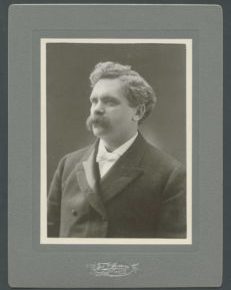
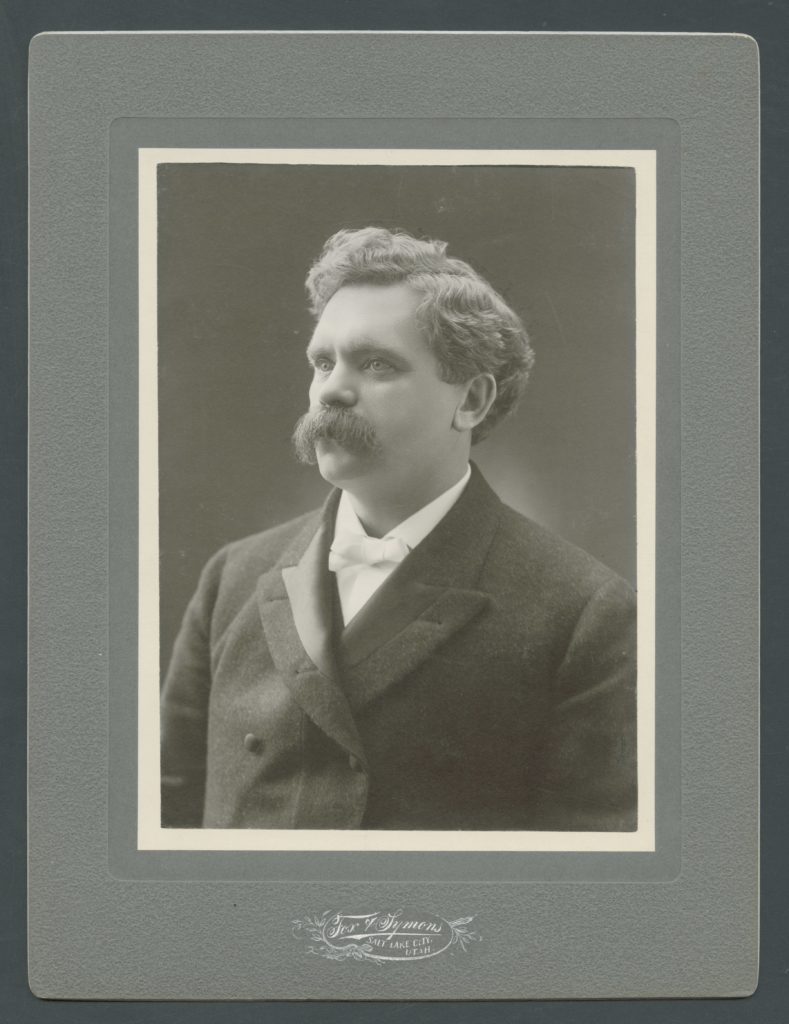
Born in 1857, B.H. Roberts became a historian, and politician, and would serve as President of the First Council of Seventy.
But every famous man was also once a boy, and sometimes boys do the strangest things.
When Brigham Henry was nine years old he emigrated to Salt Lake from England with his sixteen-year-old sister, Polly, as his family companion. That was the year 1866.
Their mother had come to Utah without her husband and settled alone in the Salt Lake Valley four years earlier. She was anxiously awaiting the arrival of her children.
The brother and sister duo joined a wagon train in Nebraska and walked barefoot most of the way to the Salt Lake Valley. For the young Roberts, the journey West was something of an adventure. He enjoyed picking berries, scouting for Indians, and swimming in streams and rivers along the way. One unforgettable experience occurred when their wagon train had to make a night trek. The exhausted young boy sought a hiding place inside one of the wagons where he could hunker down and spend the night.
Of that experience, B.H. later wrote,
“On one occasion a night drive was necessary, and a young man was entrusted with the freight wagon team. The young teamster was unusually devoted to helping the young ladies, especially on this night, so I ran in behind the ox on the near side and climbed up on the seat that had been arranged in the front of the wagon by the regular teamsters. The seat consisted of a broad plank placed across the open head of a large barrel. The day had been hot and the hours of the journey long, and I was decidedly tired, nearly to exhaustion. Fearing that my riding, which was ‘agin’ the law’ would be discovered, I slipped the broad board from the barrel head and conceived the idea of dropping down in the barrel, secure from the eyes of those who might oust me from my seat in the wagon if I were found. To my surprise, if not amazement, I discovered when I let myself down in the barrel that my feet were into about three or four inches of a sticky liquid substance which turned out to be molasses.”
Brother Roberts continued,
“The smarting of my chapped feet almost made me scream with pain, but I stifled it. To tired to attempt to climb out, I remained and gradually slipped down and went to sleep doubled up in the bottom of the barrel with such results as can well be imagined. It was daylight when I woke up. There began to be the usual camp noises and teamsters shouting to each other to be prepared to receive the incoming team driven from the prairie by night herdsmen. As I crawled out of the uncomfortable position, and with molasses dripping from my trousers, I was greeted with yells and laughter by some of the teamsters and emigrants who caught sight of me. I crept away as fast as I could to scrape off the syrup, which added to the weight and thickness of shirt and trousers, for there was no change of clothing for me, and so bedaubed I had to pass on until dusk and drying somewhat obliterated the discomfort.”
B.H. Roberts characterized his youth this way:
“My childhood was a nightmare; my boyhood a tragedy.”
Yet in spite of his difficult upbringing, and in part perhaps because of it, he attained significant success in his adult life. He had a distinguished political and military career. He was a remarkable writer and historian. He became a prominent and enthusiastic Church leader. As borne out by these many remarkable accomplishments, he lived a life of destiny and is well remembered in the early annals of Utah history. As Leonard J. Arrington put it, B.H. Roberts was “the intellectual leader of the Mormon people in the era of Mormonism’s finest intellectual attainment.”


 Brother Joseph