GLEASON, John Streator: The Martyrdom of the Prophet

“The scene through which I have been called to pass since I arrived in this place from the East has almost alienated me from my country. Almost one continual round of mobocracy by night and by day. When I contemplate the scene it almost makes me shudder, and my blood run cold in my veins. I have been an eye witness to almost the whole scene from the beginning. My life has been exposed—threatened from time to time. . . when they were filled with wrath …. About a week before the assassination of Joseph and Hyrum Smith I was arrested—marched to jail by a band of the desperate and could not even lay there in peace—was aroused about 12 o’clock by a rush of men into the yard and a loud rattleing [sic] and hallooing at the door of the jail. One of our men went down and opened the door, when they rushed up stairs and caroused about a while, and left us.”
0 1
Read Time:3 Minute, 31 Second

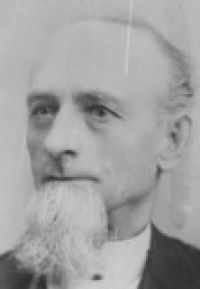
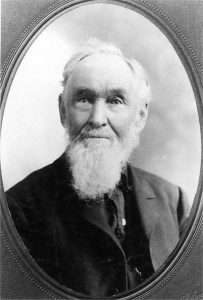
John Streator Gleason (1819-1904) was a scout for the 1847 first group into Salt Lake Valley. He joined the Church in 1839 and moved with his wife Desdemona Chase and her parents to Nauvoo in 1842, where he became a trusted friend of the prophet Joseph Smith.

John Streator Gleason (1819-1904)

The first and only issue of the Nauvoo Expositor, printed June 7, 1844, advocated the repeal of Nauvoo’s charter and charged Joseph Smith with practicing spiritual wifery, indulging in whoredoms, abusing political power, teaching the plurality of gods, and claiming power to seal men up to eternal life. It accused Church leaders of controlling politics and excoriated Joseph Smith as a seducer, liar and murderer. Three days later the city council met and labeled the paper libelous. City Marshal John P. Greene called on the Nauvoo Legion to assist in the destruction of the press and to prevent a riot. As a major in the first regiment, first cohort (cavalry) of the Legion, John Streator Gleason took part in the destruction of the press.

Gleason was summoned to Carthage and imprisoned in the same room where a few days later the Prophet would be martyred. Although it was a hot June day, Gleason wore an overcoat in order to conceal two revolvers. A mob of some thirty men came to the prison looking for Porter Rockwell (who had escaped earlier) and some other men, scrutinized the faces of each of the prisoners, but then left. Gleason described these events in a letter written to his brother 1 1/2 years later:

“The scene through which I have been called to pass since I arrived in this place from the East has almost alienated me from my country. Almost one continual round of mobocracy by night and by day. When I contemplate the scene it almost makes me shudder, and my blood run cold in my veins. I have been an eye witness to almost the whole scene from the beginning. My life has been exposed—threatened from time to time. . . when they were filled with wrath …. About a week before the assassination of Joseph and Hyrum Smith I was arrested—marched to jail by a band of the desperate and could not even lay there in peace—was aroused about 12 o’clock by a rush of men into the yard and a loud rattleing [sic] and hallooing at the door of the jail. One of our men went down and opened the door, when they rushed up stairs and caroused about a while, and left us.”

The next day a militia group escorted the prisoners back to Nauvoo in order to find the arms furnished the Nauvoo Legion by the state. On the way they met Joseph Smith and the others who were going to Carthage to deliver themselves up. Gleason wanted to tell the Prophet to turn around, for “the spirit of the people was to murder him.” Yet Gleason feared appearing bold and held back.

At the exact time of the martyrdom, Gleason and a friend were going to hear Governor Ford speak to the Mormons. As they were passing the Lower Stone House in Nauvoo, Gleason described, “A feeling like a blanket of darkness—a pall—a terrible feeling, came over both of us. We both alluded to it.” They went on and reached the assembly area after Ford had already begun his speech.

Later, Gleason was called on to help bring the bodies of Joseph and Hyrum back to Nauvoo, but he had no horse. Instead, he watched sorrowfully as the procession brought the bodies back into Nauvoo.

During the fall of 1845 and spring of 1846, Gleason was in charge of the ferry boats which took the Saints across the Mississippi River. He left Nauvoo with the first company in 1846 and accompanied them as far as Garden Grove, Iowa. During this trip he acted as captain of about fifty young, unmarried men. He returned on business to Nauvoo and then rejoined the main camp at Council Bluffs to become one of the 143 pioneers who arrived in the Salt Lake Valley in July 1847.

Happy
Happy
0 %
Sad
Sad
100 %
Excited
Excited
0 %
Sleepy
Sleepy
0 %
Angry
Angry
0 %
Surprise
Surprise
0 %
You May Also Like

MOLEN, Jesse: The Life and Struggles

Upon arrival in Salt Lake City they had very little food or other provisions. They were required to subsist on plant roots to supplement the little other food they had. The next year they experienced the cricket infestation and lost most of their crop. The rigors of the struggle to travel west plus chills and other conditions had taken their toll on Jess’s health.
View Post

BARLOW, James and Ann Crompton

Ann Crompton Barlow was an English Mormon Emigrant, who felt the desire to bring her three youngest children, John (17), Jane (15) & Joseph Smith (7), to the Utah Territory to gather in "Zion" with the Saints. She was a widow, with meager means, thus was chosen to use the Perpetual Emigration Fund by the leaders of the Manchester Branch.
View Post

WOOD, George Lymer: An Incident in the Life

"The usual method of disposing of the dead was to weight the bodies and dump them overboard. When others and I asked the privilege of removing our dead and burying them on land, the Captain was hateful and mean about it. All of my dear ones except Samuel's wife I had to perform this last earthly service for. Others of the party had sustained like losses, and were as anxious as I to bury them as decently as possible. The Captain at last agreed to wait and we hired a Negro to help dig a trench big enough to put them in all together. We removed the dead from the boat and began our heart¬breaking task, but had it only partly done when the boat whistle blew and the boat began to get underway. All ran hastily back except the Negro, one woman and myself. She and I stood at the grave site of our dead and watched them go. What bitterness of spirit I experienced only God knows. Was this what I had come to America, the home of the brave, for? Here I was with two strangers standing beside the open grave of a group of strangers. Our common interests were all lying before us or fast receding from sight, subject to the whim of a heartless thing in human form. "Surges of emotion swept over me, sorrow, anger, love, fear, and despair, but my nearest duty was to protect these rapidly decomposing dear forms of mine from the ravages of wild beasts, heat, and other elements. Perhaps I had been blessed and spared to perform this last service. If! were dead with them our bodies would rot together. So I urged on my companions the need for work. I felt responsible for seeing this thing through.
View Post

BRINKERHOFF, Jesse: A Father’s Journey of Love

The flu epidemic of 1918 sometimes known as the Spanish Flu, reeked havoc across the world killing an estimated 100 million people, more than 500,000 in the US, and killed mostly strong healthy adults. Fear spread the country, along with the flu. Hospitals were full, health professionals died, Schools, churches, public buildings,etc, were closed, and people feared being around others. Little girls made up jump rope rhimes, and here is an example, "I had a little bird, it's name was Enza, I opened the window and in flu Enza.
View Post

HIOTT, John: An Overlooked Pioneer

As far as history is concerned he was a faceless cipher who passed through life leaving few tracks and no one to mark his grave. It is easy to overlook that John and thousands of other forgotten Utah pioneers like him were critical in settling the Intermountain West. They dug the irrigation ditches, herded the cattle, built the shelters, attended meetings, maintained the roads, cut fire wood, tended the ill, mostly followed orders, and buried the deceased without fanfare. The accomplishments of their famous leaders would not have been possible without the blood, sweet, and tears of humble people such as John Hiott.
View Post

CUNNINGHAM, Elizabeth: True Grit

“My father was a miner by trade and being a man of weak constitution was badly adapted for such a laborious occupation. Consequently, this threw the management of affairs nearly entirely upon my mother, and to speak of her in [a] phrase, I cannot do it better than by saying she was a rustler in the greatest sense of the word.” Elizabeth was the foundation and matriarch of the family. She was the force that carried the Cunningham family from Scotland to Utah."
View Post

WOOLSEY, Abigail Shaeffer

John D. Lee had been ill with a heavy fever, probably the 'rocky mountain fever' and he was just starting to mend when Abigail, "Momma", came down with that same "rocky mountain fever", and soon went into a coma. Lee called for a stop here on the Sweetwater, where her family gathered around her and her daughters desperately tried to care for her. But to no avail. Abigail opened her eyes, looked lovingly on her worried, sad family and then died around midnight on the third of September 1848.
View Post