 0
0
 1
1
Read Time:6 Minute, 51 Second
Submitted by John E. Elggren, Great Grandson
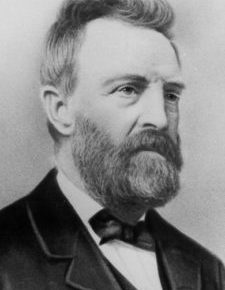
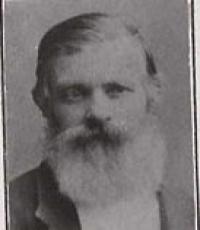
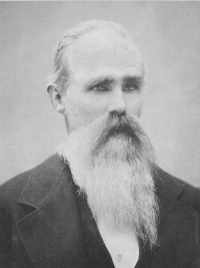
 William Crawford Lewis, pioneer of 1847, was born at Franklin, Simpson County, Kentucky, November 24, 1830. He was the son of Benjamin Lewis, of Pendleton District, South Carolina, and Joannah Ryons of Clark County, Kentucky.
William was named for William Crawford, a dear friend of his mother’s family, who was burned at the stake by Indians.
William was five years old when his parents joined the Church of Jesus Christ of Latter-day Saints. In the spring of 1837, the family moved to Caldwell County, Missouri.
Great tragedy came into William’s life when his father was shot at Haun’s Mill on October 30, 1838; he died the next day. A few months later his little sister died. When he was sixteen, his mother also passed away. After his mother’s death, he lived with his Uncle Beason and Aunt Elizabeth Lewis in Nauvoo.
William, who was taught to be honest and industrious, spent his boyhood days helping support the family. This proved to be wonderful lifetime training for him.
In 1845 and 1846 William and his Uncle Beason prepared for the journey to the west; at Council Bluffs and at Mt. Pisgah they did their part. When the Mormon Battalion mustered out, William volunteered but he was rejected because of his small size.
He wrote an account of his trip to Utah in 1847, In which he said he was living at Puncan, about 150 miles up the Missouri River from Winter Quarters. From there he arrived at Winter Quarters in time to join the large emigrant company which followed the Pioneer Company that left in April and arrived in the Salt Lake Valley July 22-24, 1847. The companies were organized on the west bank of the Elkhorn 50 miles west of Winter Quarters. There were 684 wagons organized into companies of tens, fifties and hundreds. They departed on June 11, 1847 and traveled eleven miles to the Platte River the first day.
Elijah Bingham was the captain of the Lewis’ ten, Ira Eldredge of the fifty and Daniel Spencer of the hundred. Captain Eldredge was “a hustler” so their fifty was usually in advance of the large train of teams. At Fort Bridger Captain Eldredge decided it was best to divide his fifty into two companies in order to make better time through the mountains. Elijah Bingham’s Company was in advance. Captain Eldredge followed. The advance group from Eldredge’s Company arrived in the Valley on September 10, 1847.
They arrived in the Valley in the following order: Sanford Bingham and his wife who was William’s sister, Thomas Bingham on horseback, William’s Uncle Beason and his wife led all the teams, Captain Bingham’s ox team was next, Then William with his ox team, followed by John M. Lewis and William C. Staines. The last of Eldredge’s Company arrived two or three days later. William celebrated with “short-cake, sego roots and thistles.” In the fall of 1847 William, his Uncle Beason and Aunt Elizabeth Lewis, returned to Winter Quarters to work on a mill that Brother Kesler was building for Brigham Young. William returned to Utah in 1849.
The winter of 1849 was spent at Fort Utah (Provo) helping to protect against Indians. That was a snowy, bitter winter with over two feet of snow on the ground, and one “would not have to pinch himself to know if he were there or not.”
The winter of 1849 was spent at Fort Utah (Provo) helping to protect against Indians. That was a snowy, bitter winter with over two feet of snow on the ground, and one “would not have to pinch himself to know if he were there or not.”
On May 7, 1850 William and a companion were called by Brigham Young to drive a team and wagon to the California gold mines along with a missionary who was going to the Society Islands. President Young counseled them that under no condition were they to shoot or shed blood of an Indian. If they were obedient to this, he promised them a safe trip. William was driving when his companion noticed a cloud of dust in their rear. As the cloud came nearer, it was apparent that it was caused by Indians arrayed in war paint and feathers.
William’s companion drew his gun ready to shoot. William persuaded him not to shoot by reminding him of Brigham Young’s promise. The Indians surrounded the wagon, but after a great deal of persuasion from William and a gift of floor and other provisions, the Indians allowed them to pass unharmed.
On the return to Utah, William was accompanied by Apostles C. C. Rich and Amasa Lyman who were returning to Utah for the ground breaking of the Salt Lake Temple held February 14, 1853.
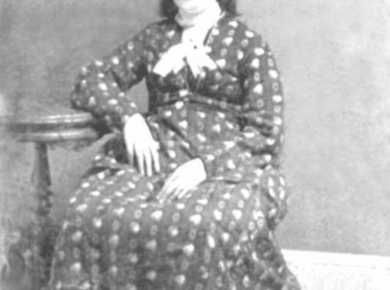
On February 23, 1853 William married Sarah J. Veach who had arrived in Salt Lake in the fall of 1852. The marriage was officiated by Apostle C. C. Rich. William and Sarah went to San Bernardino where William helped fortify the place and enlisted in the militia to protect against Indians. Three children were born to Sarah at San Bernardino. The Lewis family returned to Utah in 1857 as part of the withdrawal of outlier settlements as part of the Utah War.
In the Spring of 1860 William’s family settled at Richmond in Cache County. William worked building bridges, making roads, and stood guard against Indian trouble. As a captain of minute men of the county, he helped bring in wounded soldiers from the Bear River Massacre and acted as bodyguard for C. C. Rich when he was at Bear Lake.
From his sawmill in the canyon east of Richmond, William supplied lumber to help build up the community.
On March 15, 1869 William C. Lewis married Martha Ann Kingsbury in the Endowment House in Salt Lake City.
When the Oregon Short Line Railroad was being constructed through Idaho, William took Sarah and her family to Franklin where they kept a hotel. They followed the railroad construction to Portneuf, Arimo, Blackfoot and Eagle Rock, now Idaho Falls.
William then went into mining and operated the Copper King Mine. When he sold the mine, he lost money. He then established a sawmill in Beaver Canyon, Idaho, where he made lath, shingles, and other building materials.
The family returned to Richmond, Utah where they remained during the last years of William’s life. Before his death on May 24, 1908 William Crawford Lewis experienced many tragedies besides the earlier deaths of his father, little sister and mother. He was the father to twenty children, twelve of whom proceeded him in death, and for some they died in terrible accidents. One died in an accident while hauling lumber, another in a blasting accident and one when a horse hitched to a buggy bolted and ran the buggy shaft through her chest. Thirteen of his children were born to Sarah J. Veach and seven to Martha Ann Kingsbury.
The family returned to Richmond, Utah where they remained during the last years of William’s life. Before his death on May 24, 1908 William Crawford Lewis experienced many tragedies besides the earlier deaths of his father, little sister and mother. He was the father to twenty children, twelve of whom proceeded him in death, and for some they died in terrible accidents. One died in an accident while hauling lumber, another in a blasting accident and one when a horse hitched to a buggy bolted and ran the buggy shaft through her chest. Thirteen of his children were born to Sarah J. Veach and seven to Martha Ann Kingsbury.
Through trials and tragedies William remained faithful to the gospel, never wavering in his testimony of Joseph Smith’s divine calling, and the truthfulness of the Church of Jesus Christ of Latter-day Saints. William was a humble man who never sought praise for his accomplishments. He said of his life, he did not know of any great good he had done, neither did he know of any harm that he had caused to anyone. He hoped the Lord would accept him for the little good he had in him. The good in him included being honest in his dealings, his seeking and gaining knowledge, his development of a marvelous memory, his help to provide his children an education, His love of the out-doors which led him to spend much time in nature, including Yellowstone National Park, his genealogical work and the much temple work he did for his kindred dead.
William Crawford Lewis was a kind, well loved husband and father who did all he could to bring joy and happiness to his family. Perhaps the greatest tribute to him was the praise and love his family bestowed upon him in life and in his death.


Happy
0 %

Sad
0 %

Excited
0 %

Sleepy
0 %

Angry
0 %

Surprise
100 %

 Brother Joseph