0
0
 1
1
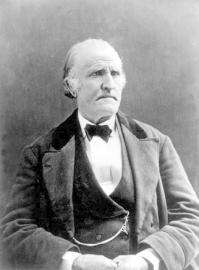
History of Amos Betts Andrews.
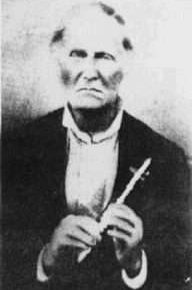
Amos Betts Andrews was born on 4 March 1800 at Whitestown, Oneida, New York. He married about 1824 to Keturah. Button and had three children before they moved from New York to Kirkland, Ohio, in 1835, and were converted to the LDS Church and baptized in the Ohio River. They also helped with the building of the Kirkland Temple (The Kirkland episode is according to family tradition, but not verified by children’s birthplaces), until forced to leave to Nauvoo, experiencing all the persecutions and hardships.
Andrews and his family were at the grove near the Nauvoo Temple where they saw and heard Brigham Young transfigured into the Prophet Joseph Smith.
It is unknown what the company was that left Nauvoo, but the Andrews family was among some Saints that were camped by a small stream in Iowa. They were surrounded by an armed cavalry of vigilantes who asked for the leader of the group. Amos Andrews stepped forward. The leader of the vigilantes asked if they were Mormons and Andrews confirmed his question. The leader then told them to prepare to die. Andrews looked around and saw that they were out-numbered and out gunned. Andrews then requested if he’d be permitted to sing a song. He sang the whole song to “A Poor Wayfaring Man of Grief “then sang another song and another. Andrews wife, Keturah, was nursing an. 18 month old baby, the baby stopped nursing and joined its father in singing the song. Overwhelmed with emotion at seeing the baby do such a thing, a member of the mob lowered his rifle, and swore an oath saying, “They all can sing, even the child at the breast.
“The mob removed their hats and rode away. The story is an example that “the hymns of the righteous are a prayer unto me.”
Andrews camped at Winter Quarters for a year and signed the petition dated January 20, 1848, for Kanesville to get a Post Office. Andrews signed his name as Amos B. Andrews. The family arrived in the Salt Lake Valley in the September of 1848 in the Capt. Snow Company. At Salt Lake City, the family camped in Pioneer Square 1848¬1849. In the Spring of 1849, Andrews blessed the soil and planted potato sprouts that he had brought with them. He had faith that the plants would grow. In time he entered their lodging with a pan of grown potatoes. Keturah cried and sang while she cleaned the vegetables and added water and bran. For the first time since coming to Utah, the Andrews family had a full stomach. There were times in the early days in Utah, that members of the family only ate one pancake for nourishment each day.
They went to Ogden with Lorin Farr, and Amos Andrews is credited with plowing the first piece of soil in Weber County.
Several stories handed down in the family tell of a kindred spirit Andrews had with the local Indians, who swore an oath of friendship to Amos Andrews and his descendants. Several accessions are written when trouble with ‘Indians was made peaceful when they learned that they were dealing with one of Andrews descendants.
Amos Andrews moved his family south with the other Saints in 1857-1858 during the Utah War. They settled at Provo for a brief time, then they moved to Huntsville, Weber, Utah, where he was the first Saint called on a mission from the Huntsville area. He served three years in Holland. He requested that he be buried on a mountainside overlooking Huntsville. But snow and water washed his grave away and the place is unknown.
Born: 4 March 1800 at Whitestown, Oneida, New York.
Died: 12 March 1865 at Huntsville, Weber, Utah.
Parents: James Andrews and Betsy (Elizabeth) Betts,
Spouse: Keturah Eliza Button, married in 1824 at Otisco, Onandago, New York. Keturah was born 10 December 1810 at Ostiseo, Onandago, New York. Died on 15 December 1887 at Willard, Box Elder, Utah.
Company: Capt. Snow’s Company in 1848.
CHILDREN
- 1. Lovisa Andrews. Born 19 March 1830 at Newbury, Chautauqua, New York. Died on 17 July 1912 at Ogden, Weber, Utah. Married to Clinton. D. Bronson on 25 September 1850 at Salt Lake City, Salt Lake, Utah.
- 2. Zebulon Dwight Andrews. Born about 1831 at Harmony, Chautauqua, New York.
- 3. Olivia (Elizabeth) Andrews. Born on. 27 September 1833 at Harmony, Chautauqua, New York. Died on 29 November 1864 at Ogden, Weber, Utah. Married to Wilmer Wharton Bronson on 27 March 1850 at Ogden.
- 4. Jane Rosetta Andrews. Born, on 25 September 1836 at Harmony, Chautauqua, New Yom, Died on 1 March 1908 at Ogden, Weber, Utah. Married to age J Marsh, on 19 February 1855 at Salt Lake City, Salt Lake, Utah.
- 5. Mary Andrews. Born about 1838, Chautauqua County, New York. Married to James W. Thither on 2 September 1860.
- 6, Sarah. Andrews. Born about 1840\41, Chhatauqua County, New York.
- 7. Amos Montgomery Andrews.. Bairn 1848 in Salt Lake City, Salt Lake, Utah. Died on 23 February 1922 at’ hatcher, Box Elder, Utah. Married to Caroline Matilda Brackenbury on 23 June 1879 at Willard, Box Elder, Utah.
- 8. Amos Betts Andrews, Born 22 September 1849 at Ogden, Weber, Utah. Died on 12 February 1916. Married to Caroline Graham.
- 9. Harriet Chalista Alwida Andrews. Born 19 May 1853 at Willard, Box Elder, Utah. Died on 12 February 1916 at Ogden, Weber, Utah. Married to Andrew Jackson Shape II on 11 January 1875 at Ogden.


 Brother Joseph