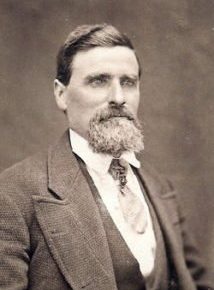
HUNTINGTON, William D.: Raised from the dead by Joseph Smith?

“Joseph you are too late. William has been dead for five minutes.”
0 1
Read Time:1 Minute, 52 Second

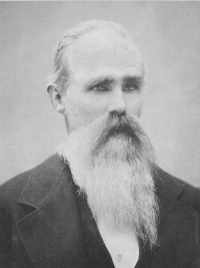
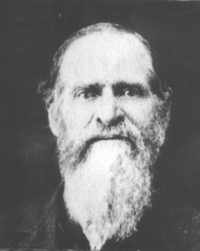
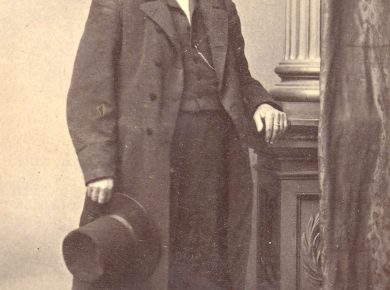
William Huntington while a young man lived with the Prophet Joseph Smith and was a great favorite of the prophet.  He took suddenly and violently ill while the prophet was away from home.  The Prophet Joseph’s wife Emma sent word for him to hasten home, for William was lying at the point of death.  When the prophet reached home his wife met him at the gate and said, “Joseph you are too late.  William has been dead for five minutes.”

The prophet rushed into the house, placed his hands upon the dead man’s head, and commanded the spirit to return to his body that he again become a living soul.  No sooner had the prophet removed his hands from his head, than he showed signs of life.  The prophet raised him up in bed and ask his wife Emma to bring a bowl of bread and milk.

He fed him part of it and then told William to feed himself, which he did.  He had been unable to take any nourishment for several days.  The prophet asked for the sick man’s clothes, he dressed him, and helped him out on the floor and over to a chair.  He then placed his hands upon William’s head and told him he would live to be an old man.  He would go the valleys of the mountains and pain would never again enter his body in any way, shape, or form, and when he died it would be suddenly.

This prophecy and promise was fulfilled to the very letter.  LeGrand knew this man very well in Springville, Utah.  He was postmaster there and LeGrand, then just a boy would go for the mail and talk to him almost every day.

The night Brother Huntington died, he went to bed feeling fine, along about three o’clock his wife found him cold in death.  He had died without a struggle.  While he was alive he bore his testimony many times that he had never felt any pain since the prophet administered to him.

William was also the one that helped prepare the body of the prophet and also helped bury him.

Here is another account of this incident.

Note:  Retyped by Monica Durfee Anderson, Granddaughter, 2013

Happy
Happy
50 %
Sad
Sad
50 %
Excited
Excited
0 %
Sleepy
Sleepy
0 %
Angry
Angry
0 %
Surprise
Surprise
0 %
You May Also Like

ALLEN, Andrew Lee

The family moved to Provo, where Andrew and his sons helped to build the Provo Fort. Andrew taught his sons to work and take care of their animals. The sons worked quite often as teamsters. Andrew was an excellent rope maker and knew how to make dyes from plants. He made tassels and decorations for his teams.
View Post

PETERSON, Charles Sreeve

Mr. Powell, tried to persuade him to give up his faith or otherwise he would have to surrender his work position. He flatly told him no, as to deny his knowledge that he had received would be the greater sin. In his words, “I knew it would be a great sacrifice to me to give up my employment and the comfortable home which I appreciated so much, but to give up the principles which I had received and which I knew to be true would be a far greater sacrifice, and of the two I would choose the lesser … no position, wealth or earthly honor could move me from my convictions and purposes at that time…”
View Post

CALL, Helaman Pratt

My father had done a little experimenting. We had a large bathtub in one of the bedrooms in our home—it hadn’t been remodeled. They had just put in a bathtub and a toilet and a hand bowl in one of the bedrooms so there was quite a bit of room in there. It was a large oversize tub. I thought my father was going to baptize me but Charles Jones was going to baptize me. He had experimented how full he could fill the tub without running it over and still get me and him both in the tub. They put a stopper on the overflow so that the water would come up higher than the normal overflow would allow.
View Post

BAMBROUGH, Annie

Submitted by Paul Bambrough Joseph Bambrough and Margaret Charlton were coal miners in Northumberland England.  They heard about opportunities in America and in 1864 arrived in Pittsburgh, Pennsylvania. Annie was…
View Post

WRIGHT: John Pannell

In conversation with Bishop Maughan they were advised to try to find a suitable location on the Logan River, and accordingly set out again the 5th of June. They next formed a camp near the site of the old Brigham Young College and here they decided to remain. A survey of the land was immediately begun and the brethren cast lots for their locations. This was the beginning of our beautiful city of Logan, June 1859. Although John Pannell Wright was a member of the second group to locate on the site of Logan in June 1859, he is generally given credit by old historians as having been the father of our city. Apparently it was he who did the first surveying here and who designated the little settlement by the name of Logan. Apparently after Brother Wright and his son had surveyed a few blocks of land, which they did by only measuring with a tape or chain, there was a drawing or lottery for the purpose of acquiring home sites. ) They also helped build a bowery under which they held their meetings. They harvested their grain on Summit Creek (Smithfield). They often carried their guns in one hand and their shovels in the other. They succeeded in yielding good crops, as high as forty bushels of wheat to the acre. Mr. Wright left his tracks in the snow while cutting the last of the grain.
View Post

HURST, Philip

This biography originally appeared on pioneerstories.org Philip Hurst wrote the following to the “Salt Lake Herald” concerning Indian affairs in Sanpete County.  It was published on 1  January 1873.  Indian…
View Post