 0
0
 1
1
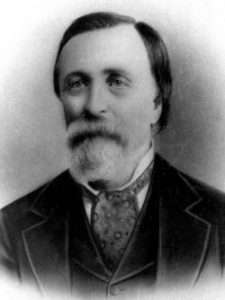
Joseph Benson Roper was the second son of William and Susanna Smith Roper and was born on November 2, 1834 in Toynton, Lincolnshire, England. One Sunday night when Joseph was seven years old his father, William, offered to stay home with the children while his wife, Susanna, attended church meetings. While she was gone William packed his clothes and other belongings. Early the next morning he left home never to see the family again.

Latter Day Saints missionaries taught Susanna and the children the gospel in 1845 and she was baptized in that year. Joseph was baptized and confirmed the following year by George Robbins on September 11, 1846. He was eleven years of age at that time.
Susanna was counseled to gather to the land of Zion and the family made preparations to leave for the trip. They journeyed to Liverpool and took passage on the ship “Ringfield”. The ship departed for the United States on January 17, 1848. The Roper family was the only “Mormons” among a ship full of Irish and English passengers. With no one to protect them, some of the other passengers decided a re-baptism was necessary. One night, while on deck, a bucketful of slop was thrown over the family using that as a method of carrying out their decision.
The ship docked at New Orleans, Louisiana on March 24, 1848, nine weeks and three days after leaving Liverpool, England. At New Orleans the family transferred to a Mississippi River steamboat, “General Jessop”, that took them to St. Louis, Missouri. At St. Louis they had a two week layover before boarding the “Mandon”, a Missouri River boat, for Council Bluffs, Iowa. The boat traveled about 150 miles upriver where it struck a large rock. The passengers were taken off the boat and camped in the woods for two weeks while the boat returned to St. Louis for repairs. The boat then returned and continued the journey to Council Bluffs.
Susanna had sent money ahead and two yoke of oxen and a cow awaited them on their arrival at Council Bluffs. The family was met by a Brother Lott who settled them in a sod house for one week while they finished preparing for their journey across the plains. Joseph, with his mother and his brother, Henry, and sister, Elizabeth, left Council Bluffs April 11, 1848 with the Heber C. Kimball Company. He and his brother were old enough that they helped with the herding of the cattle, gathering wood for campfires, milking the cow and other jobs. The company arrived in Salt Lake City on September 24th. Joseph witnessed as the crickets came and nearly destroyed their crops. He then witnessed the gulls that came to their rescue. He also saw the grasshoppers and how they could eat a field of grain in a day.
The family lived in Salt Lake City until 1852. They then moved to Provo, Utah where their mother, Susanna, married a blacksmith named Samuel Ewing. As a boy, Joseph lived through the early days of food rationing when starvation was a very real threat. Of necessity, Joseph worked at any job he could get and also took part in the Walker War. Joseph moved to Lehi, Utah and there on February 26, 1857, he married Hannah Elizabeth Molen. She was the daughter of Jesse and Laurany Huffaker Molen. On February 12, 1858, the couple went to Salt Lake City where they received their endowments and were sealed to each other in the Old Endowment House. Earlier that same day Joseph was ordained an Elder by Samuel Sprague.
In the spring of 1862 Joseph moved his family to Hyde Park, Utah where one of Hannah’s brothers was living. On September 7, 1864 the first elections were held in Hyde Park. Joseph was elected constable. He acted as the town’s policeman for the next two years.
The Ropers didn’t have much in worldly goods. It was hard to put shoes on their many children so they went without shoes most of the time. In the spring of 1867 a Sunday School was organized at Hyde Park. Joseph was put in as the superintendent. This organization provided gospel education for members of all ages. Joseph held this position for the next six years. In 1873 Bishop Hyde released Joseph as Sunday School Superintendent and called him to organize and revitalize the ward choir. A few years earlier he had brought the first organ into Hyde Park. It was a four stop, box case, Esty organ. He paid $185.00 for this organ. When he was called to reorganize the choir the ward purchased the organ from him. With the organ the choir could sing the four harmony parts to music for the first time. It was a big addition to the meetings.
Joseph did a lot to help build the town of Hyde Park. Then in 1876 he and Hannah made the big decision to move to Gunnison, Utah. Joseph was now 41 years of age. His younger brother, Henry and his family had moved to Gunnison in 1862. The last three children of Joseph and Hannah were born in Gunnison. Out of their thirteen children, nine lived to adulthood. Joseph always loved music and it wasn’t long after they arrived in Gunnison that he bought another piano for his family. He gave piano lessons to some of the children in the Gunnison Valley.
In Gunnison, Joseph, using his accumulated knowledge, taught school and for several years was ward chorister. Instead of using a piano for the correct voice pitch, he would use a tuning fork. He also held the position of tithing clerk for many years, meeting the problems that went along with the paying of tithing in kind. He was appointed Postmaster of Gunnison in 1893, and held that position until 1898, when he was released due to ill health. From the time of his release, at 63 years of age, until his death, Joseph spent his time truck gardening on the two city lots that he owned.
Three of the grown children of Joseph and Hannah moved to Idaho and in 1906 Hannah went there to visit them. At age 65 while there she became ill and passed away on June 6th. She was buried in Preston, Franklin County, Idaho. After Hannah’s death Joseph’s health declined and it wasn’t long until he could no longer live alone and care for himself. He moved in with his daughter, Lurany , and her husband. Joseph Benson Roper passed away on Tuesday, November 8, 1910 at the age of 76 years. He is interred in Preston City Cemetery, Preston, Idaho, beside his wife, Hannah Elizabeth.
The children born to Joseph and Hannah were:
- Joseph, born August 1, 1858, Lehi, Utah.
- Lurany Iness, born August 23, 1860, Lehi, Utah
- Mary Ellen, born February 22, 1863, Hyde Park, Utah
- Julia Ann, born June 7, 1865, Hyde Park, Utah
- William Simpson, born April 25, 1867, Hyde Park, Utah
- George Edwin and Emma Elizabeth (twins) born June 7, 1869, Hyde Park, Utah. (George died March 7, 1881 and Emma died September 19, 1870.)
- Hannah born September 12, 1871, Hyde Park, Utah
- John Henry born November 24, 1873, Hyde Park, Utah and died March 30, 1875.
- Jesse Warren born February 18, 1876, Hyde Park, Utah
- Jeanette born July 9, 1879, Gunnison, Utah
- Lydia born and died October 29, 1881, Gunnison, Utah
- Howard Delos born December 2, 1882, Gunnison, Utah


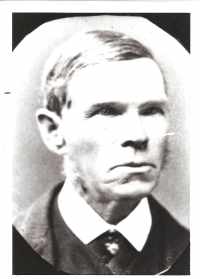
 Brother Joseph