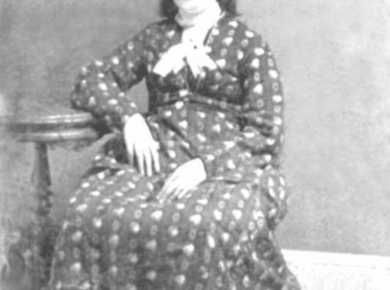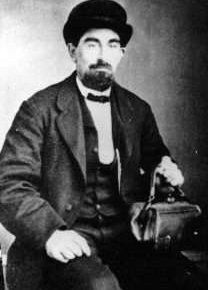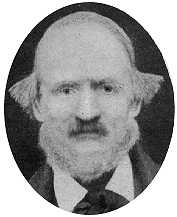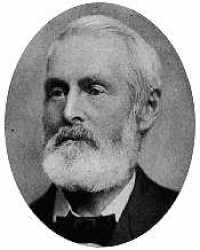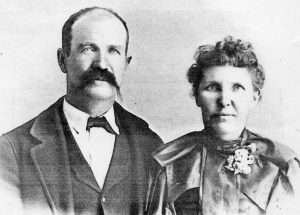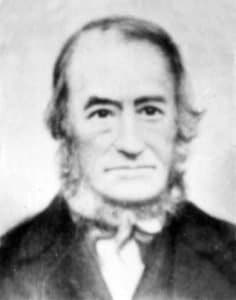
CARLISLE, Richard & Jane Field

Members of the family were baptized at various times in 1849 and 1850. Richard became the Presiding Elder of their branch. In 1851, on the “Good Ship Ellen,” they emigrated to America, except for their oldest son, Thomas, who came a year later. On their way up the Mississippi River, Jane died in St. Louis on 24 June 1851. She had done the washing for a woman afflicted with the dreaded cholera, so common among emigrants on that river. Jane caught the disease and died almost immediately. It must have been very difficult for Richard to manage his large family during the years following Jane’s death. First he had to get the whole family across the Plains, then provide a home for them in a new land. The bereft father and his motherless brood stayed to work in St. Louis during the remainder of the first year. The youngest son, Richard, hired out to a Mormon family and came west with them, the first of his own family to arrive in the Valley. The oldest son, Thomas, had by then joined the rest of the family in St. Louis.
0 1
Read Time:2 Minute, 32 Second

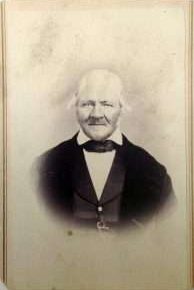
RICHARD CARLISLE AND JANE FIELD

By Angus H. Belliston

Richard Carlisle and Jane (or Jenney) Field were both born in England – Richard on 30 April 1798 in Riseholme, Lincolnshire and Jane on 18 November 1795 in Willingham, Lincolnshire. The couple was married on 27 June 1822. By 1840, just eighteen years later, twelve children had been born to them. Only six lived to maturity. One of these was Alice Carlisle, who married George Freestone, my great grandfather.

Richard was dissatisfied with the Church of England and investigated several others. He affiliated with the Quakers, but still kept searching. Eventually, the family sought out the Mormon missionaries and were converted and baptized.

Members of the family were baptized at various times in 1849 and 1850. Richard became the Presiding Elder of their branch. In 1851, on the “Good Ship Ellen,” they emigrated to America, except for their oldest son, Thomas, who came a year later. On their way up the Mississippi River, Jane died in St. Louis on 24 June 1851. She had done the washing for a woman afflicted with the dreaded cholera, so common among emigrants on that river. Jane caught the disease and died almost immediately.

It must have been very difficult for Richard to manage his large family during the years following Jane’s death. First he had to get the whole family across the Plains, then provide a home for them in a new land. The bereft father and his motherless brood stayed to work in St. Louis during the remainder of the first year. The youngest son, Richard, hired out to a Mormon family and came west with them, the first of his own family to arrive in the Valley. The oldest son, Thomas, had by then joined the rest of the family in St. Louis.

They were resourceful people and found work and homes with friends and other travelers. They came on to Utah in 1852 and settled in Mountainville (now Alpine), where Richard lived the remainder of his life. He received his temple ordinances in the Endowment House in 1854.

It was not until 27 April 1869, when Richard was turning seventy-one years old, that he married Marie Crook. Marie’s husband had also died of the cholera and the two shared a common loneliness. However, Marie wanted to be sealed to her first husband and Richard admired her faithfulness to him. So, according to the record, the two went to Brigham Young’s office and were married in a civil ceremony. Then the President performed the sealing of Richard and Jane — with Marie, no doubt, standing as proxy for Jane. Then he performed the sealing of Marie and her first husband — with Richard, no doubt, standing as proxy for him!

Richard Carlisle left word that when he died he wanted no costly marker on his grave – he desired that his good, honest life be his only monument. That kind of life he lived. And he died in Alpine, Utah on April 10, 1879, just before his eighty-first birthday.

Happy
Happy
0 %
Sad
Sad
0 %
Excited
Excited
0 %
Sleepy
Sleepy
0 %
Angry
Angry
0 %
Surprise
Surprise
100 %
You May Also Like

COX, Orville Sutherland

Being successful in disposing of their chairs, and securing loads of bacon and corn, they were almost home when an Iowa blizzard, or Hurricane, or cyclone, or all in one, struck them. Clouds and Egyptian darkness settled suddenly around them. They had no modern "tornado cellars", to flee into and no manner of shelter of any kind. The cold was intense; the wind came from every direction; they were all skilled backwoodsmen and knew they were very close to their homes; but they also knew that they were hopelessly lost in that swirling wind and those black clouds of snow. They and their oxen were freezing, and their only hope of life was in making a fire and camping where they were.
View Post

WOOLSEY, Abigail Shaeffer

John D. Lee had been ill with a heavy fever, probably the 'rocky mountain fever' and he was just starting to mend when Abigail, "Momma", came down with that same "rocky mountain fever", and soon went into a coma. Lee called for a stop here on the Sweetwater, where her family gathered around her and her daughters desperately tried to care for her. But to no avail. Abigail opened her eyes, looked lovingly on her worried, sad family and then died around midnight on the third of September 1848.
View Post

CALL, Helaman Pratt

My father had done a little experimenting. We had a large bathtub in one of the bedrooms in our home—it hadn’t been remodeled. They had just put in a bathtub and a toilet and a hand bowl in one of the bedrooms so there was quite a bit of room in there. It was a large oversize tub. I thought my father was going to baptize me but Charles Jones was going to baptize me. He had experimented how full he could fill the tub without running it over and still get me and him both in the tub. They put a stopper on the overflow so that the water would come up higher than the normal overflow would allow.
View Post

TAYLOR, Allen: Captain

Allen’s company of 445 people was twice as large as any of the other four companies that traveled that year. Apparently, Allen had earned his reputation as an effective leader when he had led rescue teams and wagons back to Nauvoo to rescue stranded saints who could not go on by themselves. There were two groups of wagons and Allen’s group traveled twice as fast as the other.
View Post

ATKIN, Thomas Jr.

When the call came in late 1857, for men to defend the church against Johnston's army, Thomas and other Tooele men responded. The Tooele contingent, under the command of Major John Rowberry, was sent to Echo Canyon, October 10. They remained in Echo Canyon until December 1.
View Post

CHAPMAN, Julia Ann

With the coming of spring, the brethren made a concerted drive to get all the Saints out of Kanesville. Other than for Julia’s health, Isaac was well equipped to travel. In the heat of the late spring, Julia gained some weight and felt pretty well. Deciding that they could safely make the trip, Isaac loaded the wagon
View Post

ALLEN, Elijah

After he was discharged from the Battalion, he worked at the San Gabriel Mission in California. He went gold hunting on the way to Utah with other battalion members. When he reached the Salt Lake Valley, he traded a sack of gold dust for 20 acres of land.
View Post