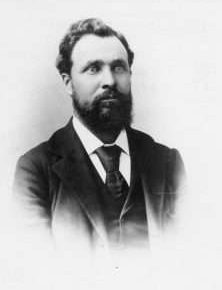
ALLEN, Elijah

After he was discharged from the Battalion, he worked at the San Gabriel Mission in California. He went gold hunting on the way to Utah with other battalion members. When he reached the Salt Lake Valley, he traded a sack of gold dust for 20 acres of land.
0 1
Read Time:4 Minute, 4 Second
  • Born: 7 Feb 1826, Burton, Cattaraugus, New York
  • Died: 12 Apr 1866, Salt Lake City, Utah
  • Came to Utah: 23 May 1848, from California. Went to Iowa and came to Utah with his family 13 Aug 1852, wagon company, John Higby, Capt.
  • Parents: ANDREW LEE ALLEN, father, CLARINDA KNAPP, mother
  • Spouse: ELIZA ANN BICKMORE, born 29 Jan 1830, Madisonville, IL, md 3 May 1852, Pott. county, Iowa. She died 26 Mar 1901, Cove, Cache, Utah

His father was a prosperous farmer in New York State. After the family joined the L.D.S. Church, they moved to Kirtland, Ohio and towns in Illinois with other members of the Church, suffering many hardships.

When still in his teens, Elijah left the family and tried to find work. He asked for counsel from Brigham young, who hired him to work as a teamster. He did this until the body of the Church was forced to move west. At Winter Quarters, Elijah answered the call to join the Mormon Battalion. Brigham Young gave him a blessing and told him that he would make the journey safely and return to his family

He marched as a private in Company B. He became seriously ill and the company was compelled to wait for him to recover. He heard the captain remark that his illness was holding the company from making their march and they decided to put him in a wagon and go on. He crawled off into the brush, thinking they would go on without him. When it was discovered that he was missing, some men went back and found him. He was reprimanded and placed in the wagon, where the jolts were almost more than he could bear, but he gradually got better and was able to finish the journey.

After he was discharged from the Battalion, he worked at the San Gabriel Mission in California. He went gold hunting on the way to Utah with other battalion members. When he reached the Salt Lake Valley, he traded a sack of gold dust for 20 acres of land. He commenced farming, but crickets destroyed his crop. In 1849, he sold his property for five dollars and a suit of ill-fitting jeans and went with Miles Goodyear, driving a team of horses, back to Iowa.

He found his family near Kanesville, Iowa, where he and his brothers improved two farms. He met a sister of his fellow Battalion friend, Gilbert Bickmore, and married her. He and his brothers put up a saw mill, ran it for a season, and sold it for $1000 to finance the family’s journey to Utah.

When they arrived in Utah, they settled first in Provo, then Elijah and his wife, Eliza, moved north to Fort Herriman in the Salt Lake valley. In Provo, he had helped build the wall around the Old Fort, and was an active member of the twenty-first Quorum of Seventies. He stayed active in the Church in Fort Herriman and made a living for the family as a farmer.

His health was never good after the sickness he endured while in the Battalion and he died of a liver complaint at Fort Herriman at the age of forty, leaving his widow with seven children to raise. She and the children moved to Richmond, Utah, where her husband’s brothers helped her and her children become self-sufficient. They were among the first settlers of Cove, Utah.

Children:

  1. Elijah Allen, born 24 Feb 1853, Provo, Utah, died 2 Nov 1876, Cove, Cache, Utah. unmd
  2. William Allen, born 17 Apr 1854, Provo, Utah, died 21 Jan 1895, unmd
  3. Eliza Ann Allen, born 1 Jun 1856, Fort Herriman, SL, Utah md 1 Oct 1877, Manassah Barnes, born 13 Dec 1852, Grantsville, Utah. She died 8 Jul 1912, Cove, cache, Utah
  4. James Carson Allen, born 21 Mar 1858, Ft Herriman, Utah, died 10 Feb 1935, cove, cache, Utah. Md 1 Mar 1883, Betsy Lowe, born 3 Mar 1860, St. John, Perry, IL, in salt Lake City, Utah. She died 10 Feb 1935, cove, Utah. Md Helen (Ellen) Lowe, born 12 Jun 1865, Franklin, Oneida, Idaho, 11 Sep 1884 in Logan, Utah. She died 28 Oct 1917, Cove, Utah.
  5. Andrew Bickmore Allen, born 23 Dec 1859, Ft Herriman, Ute died 14 Apr 1941, Cove, Cache, Utah. Md 6 Jan 1881 in Salt Lake City, Utah, Susanna Elizabeth Preece, born 19 Oct 1863, Franklin, Idaho
  6. Henry Heber Allen, born 11 Mar 1862, Ft Herriman, Utah, md 10 Apr 1882 in Salt Lake City, Utah, Elgena Poulson, born 22 Sep 1860, Richmond, Cache, Utah. He died 26 Mar 1941, Logan, Utah.
  7. Joseph Smith Allen, born 20 Oct 1863, Ft Herriman, Utah, died 9 May 1933, Santa Ana, CA. Md 9 Dec 1885, Phoebe Anderson in Logan, Utah. She was born 5 Mar 1868, Richmond, Cache, Utah, and died 21 Jan 1941, Santa Ana, CA.
Happy
Happy
0 %
Sad
Sad
0 %
Excited
Excited
0 %
Sleepy
Sleepy
0 %
Angry
Angry
0 %
Surprise
Surprise
100 %
You May Also Like

MILEON, Marie-Michelle: Enduring Hard Work

Marie-Michelle Pierre-Louis Mileon was born in Jeremie, Haiti on 5 May, 1964. She is still alive but has given us permission to write and publish this story. She currently lives in Miami, Florida with her daughter Roselaure and several other family members. She has given us a great legacy with her hard work and diligence. She never gave up hope and continued forward no matter how hard life became. To this day Michelle is one of the happiest people I have ever met and there is nobody sweeter. A difficult life did not harden her heart.
View Post

ALLEY, George H.

It is not difficult, then, to see this young man fitting perfectly into the scene, when, on April 3, 1860, the riders of the Pony Express began their mad, daring dash between St. Joseph, Missouri and Sacramento, California. He was ideally equipped for this adventure. His career as a "Pony Rider" began when he signed in at the Salt Lake City Station located on the east side of Main Street between First and Second South Streets.
View Post

STEED, Milton Ezra & Ida Hansen

The bishop had just come out of the chapel ad was standing on the top step visiting with another rancher when, unnoticed, that young man walked across the church yard, up the steps, and hit that bishop square on the jaw and knocked him down. Silence settled over the crowd; people stood motionless in a state of shock. Some of the men had their fists clenched, but no one made a move. All were wondering what the bishop would do. The bishop, however, was silently asking what the Lord would do if he were the bishop. The young man stood over the bishop with his fists clenched, glowering down at him. After a few seconds, which seemed much longer, the bishop got up and looked that young man squarely in the eye and calmly said, “Well brother ________, if that is the way you feel, perhaps you had better hit the other cheek.” He turned his head and waited.
View Post

ALLEN, Joseph Stewart: Blessings For Those Who Serve

"I simply cannot go on any farther; my feet are too sore." They sought out a fallen log (tree) and there sat down to rest. There, too, they knelt down to pray. They prayed for some shoes out there in that raw, bleak country away from stores or from any town where shoes could be bought if they had the money to buy them. They must have had great faith for after sitting there awhile longer to rest they rose to go on and saw there beside the log a pair of shoes. "They were surely meant for you, Brother Allen," said his companion. "They would not do for me at all. They are too small." So Joseph put on the shoes which fit perfectly and they traveled on.
View Post

CURTIS, Enos

Enos live a wonderful life, enduring the trials of crossing the plains, becoming a Patriarch, and helping to build up the Kingdom of God in Utah. He helped to build the city of Springville, Utah, and went with Brigham Young to the South  of Utah, coming back in the winter of 1856. He didn’t feel well that spring, but kept on working.
View Post

ATKIN, Thomas Jr.

When the call came in late 1857, for men to defend the church against Johnston's army, Thomas and other Tooele men responded. The Tooele contingent, under the command of Major John Rowberry, was sent to Echo Canyon, October 10. They remained in Echo Canyon until December 1.
View Post

HILL, George Washington: Stalwart Convert and Missionary to the Indian People

The missionaries were "to labor among the Indians in Oregon country." They were instructed leave their homes and families and " to settle among the Flathead, Bannock or Shoshone Indians….teach the Indians the principles of civilization; teach them….to live in peace with each other and with the whites;….to settle down….to build houses…" (7) This mission became known as the Salmon River Mission.
View Post

WALLACE, George Benjamin

July 4 Sunday – Rain this morning. Public meeting. Elders P. P. Pratt, Taylor and Father Smith spoke against growing cold and careless, and neglecting to pray. They urged all to give thanks to God, who is blessing us all the time. They also spoke against swearing and taking the name of God in vain. They gave strong warning and spoke of some of the law which will be put in force hereafter. They exhorted to union, obedience, etc. and exhorted the fathers concerning their children, how to bring them up, etc. They said if we forgot God it would go with us as it did with the Lamanites, etc. We must not set fire to the prairie for it is a signal for the Indians to gather together. We have now come 175 miles. The conclusion is to travel each company of 50 by itself and to have it encamp and herd by itself.
View Post

Life of James Kippen

Mr. Kippen was a firm believer in the teachings of his church regarding work for the dead, doing work along this line in the temple for members of his family who had died out of the faith of the Mormon Church, believing that by this means he would be able to save their souls. He passed all through the scenes of hardships and difficulties which the settlement of Utah made a matter of history, and during the Johnston Army troubles, he served as a guard in the Green River country and in Echo Canyon.
View Post

COX, Orville Sutherland

Being successful in disposing of their chairs, and securing loads of bacon and corn, they were almost home when an Iowa blizzard, or Hurricane, or cyclone, or all in one, struck them. Clouds and Egyptian darkness settled suddenly around them. They had no modern "tornado cellars", to flee into and no manner of shelter of any kind. The cold was intense; the wind came from every direction; they were all skilled backwoodsmen and knew they were very close to their homes; but they also knew that they were hopelessly lost in that swirling wind and those black clouds of snow. They and their oxen were freezing, and their only hope of life was in making a fire and camping where they were.
View Post