0
0
 1
1
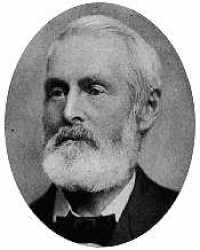
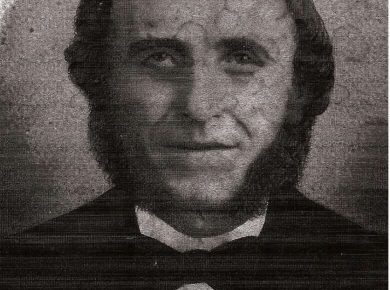
William Henry Adams, Sr., was one of the first three settlers of Pleasant Grove on July 19, 1850 with Philo T. Farnsworth and John Mercer. He scouted the area along Provo River and came back with his report of straight logs for houses, and rocks for foundations. He surveyed the town site with these two assisting and set his own stakes for forty acres. He was a stonemason and assisted in the erection of the first stone and adobe buildings in Salt Lake City. He also assisted in the erection of the Pleasant Grove Meetinghouse in 1855, which later burned in 1871. In the spring or summer of 1858, when the army settled at Camp Floyd, he worked for $3.50 per day as a mason building the barracks. He built an adobe house on Pleasant Grove's Main Street and Third South in the early 1860's. He bought one of the first "wick" lamps in Pleasant Grove when candles or fireplace was common for light.
In 1861, he laid up the adobes from the first two school houses to build the third.
Then in 1880 he laid up the adobes assisted by his son Joseph H. Adams when the second (middle) room was added to this third school house. It was also used as a community center. He was also a musical entertainer (singer).
He served his country well and did the city of Pleasant Grove a great deal of good, for he built many buildings for the people and was always willing to take anything they had for pay. He left a mark of buildings all over town and elsewhere that will stand for ages.
Although he never went to school a day in his life, he worked to become self-educated. He was good in reading, writing, spelling and figuring.
He served eight terms as treasurer and tax collector of Pleasant Grove. He had the name and confidence ofthe people of keeping his accounts as straight as a shingle. He was secretary of the High Priests Quorum for many years and kept all the minutes.
He would have no trouble with any man. Although they would wrong him, he never had a law suit in all his life. He was as well respected for his faith, honesty, and uprightness as any person by everyone that knew him, and there were many.
He went to his grave without owing any person on the earth one cent. He was always honest in paying his tithes to the church. The first year he entered the valleys, Brigham Young called for a double tithe and he paid his to the cent, as near as possible.
He could converse with anyone on the history of nearly all nations. His mind was clear to the day he died. Although he was on his sick bed for nine months, he said he did not fear death and he died a true Latter-day Saint.
William Henry Adams, Sr.
B: 4 June 1817 in Dover, Kent, England
D: 8 Oct 1898 in Pleasant Grove, Utah, Utah
Father: John Adams
Mother: Mary Nash
Spouse: Martha Jennings
B: 24 July 1808 in Dover, Kent, England
M: 3 November 1839 in St. Mary's Parish, Dover, Kent, England
D: 17 Aug 1852 in Pleasant Grove, Utah, Utah
CHILDREN:
Mary Adams
B: 1 February 1841 in Dover, Kent, England
D: 1 February 1841 in Dover, Kent, England
Martha Adams
B: 1 May 1843 in Dover, Kent, England
D: 19 September 1843 in Dover, Kent, England
William Henry Adams, Jr.
Chr: 26 June 1845 in S10 Mary's Parish, Dover, Kent, England
M: 22 March 1869 to Melissa Jane Caldwell in Salt Lake City, Salt Lake, Utah
D: 2 November 1921 in Pleasant Grove, Utah, Utah
Eliza Adams
B: 6 October 1847 in Dover, Kent, England
M: 11 Aug 1865 to George Aker Huggins in Salt Lake City, Salt Lake, Utah
D: 22 January 1913 in Fountain Green, Sanpete, Utah
John Alma Adams
B: 5 August 1850 in Salt Lake City, Salt Lake, Utah
M: 29 July 1877 to Mary Alice Frampton in Pleasant Grove, Utah, Utah
D: 4 August 1935 in Pleasant Grove, Utah, Utah
Spouse: Francis Ann Otten Crossland
B: 8 February 1824 in Redlion Street, London, Middlesex, England
M: July 1858 in Pleasant Grove, Utah, Utah
D: 23 January 1903 in Pleasant Grove, Utah, Utah
Children: 1.
Alice Maria Adams
B: 14 May 1859 inPleasant Grove, Utah, Utah
M: 22 October 1877 to Joseph Ephraim Whiteley in _
D: 29 December 1924 in _
Annie Jane Adams
B: 10 Mar 1861 in Pleasant Grove, Utah, Utah
M: 25 September 1879 to John Henry Newman in _
D: 17 August 1927 in _
Joseph Hyrum Adams
B: 22 Feb 1865 in Pleasant Grove, Utah, Utah
M: 4 June 1888 to Colinda Chrilla Rogers in _
D: 31 July 1950 in


 Brother Joseph