0
0
 1
1
This article originally appeared in Vol. 50, No.1 (2003) of Pioneer Magazine.
by Janet Peterson
Among W. W. Phelps’s many important contributions to the building of the kingdom was his writing the words to “The Spirit of God” and “Praise to the Man,” as well as numerous other hymns.
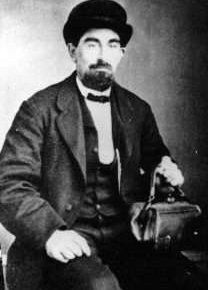
William Wines Phelps was born in Hanover, New Jersey, on February 17, 1792, the eldest of twelve children. He was educated in New Jersey and married Sally Waterman in 1815. He later took several plural wives.
After William bought a copy of the Book of Mormon from Parley P. Pratt, he traveled to Kirtland, Ohio, to meet the Prophet Joseph Smith, Doctrine and Covenants section 55 is a revelation to W. W. Phelps from the Lord commanding him to be baptized, which he was in 1831. He was also instructed to write and print books to educate children.
William assisted Emma Smith in preparing a selection of hymns for publication. He wrote many of the hymns for the 1835 Collection of Sacred Hymns, which included texts only and not music In 1836, the first temple of this dispensation was to be dedicated in Kirtland. For this momentous event,
William wrote the anthem “The Spirit of God,” which was sung following Joseph’s offering of the dedicatory prayer. “The Spirit of God” is sung at every temple dedication, accompanied by the “Hosanna Shout.”
W. W. Phelps edited The Evening and The Morning Star, published the Book of Commandments, assisted in compiling the Doctrine and Covenants, served as Joseph’s scribe in translating the book of Abraham, donated money for the building of the Kirtland Temple, served as a counselor in the first stake in Missouri, and held a seat on the Nauvoo City Council.1
For a two-year period W W Phelps fell into apostasy and was excommunicated from the Church. Repentant, he sought forgiveness from the Prophet, to which Joseph responded, “I shall be happy once again to give you the right hand of fellowship, and rejoice over the returning prodigal”2 Following the Martyrdom, William expressed his love and devotion to Joseph Smith in the hymn “Praise to the Man”.
Arriving in the Salt Lake Valley in 1848, William was appointed as one of the first regents of the University of Deseret and later served in the Utah legislature.
William Wines Phelps died on 7 March 1872 in Salt Lake City. The following fifteen of W. W. Phelps’s numerous hymn texts are in the hymnal:
- “The Spirit of God”
- “Now Let Us Rejoice”
- “Redeemer of Israel” (printed in The Evening and The Morning Star, 1832)
- “Now Well Sing with One Accord”
- “Praise to the Man”
- “Come, All Ye Saints of Zion”
- “Glorious Things Are Sung of Zion”
- “Adam-on di-Ah man”
- “We’re Not Ashamed to Own Our Lord”
- “Come, All Ye Saints Who Dwell on Earth”
- “Gently Raise the Sacred Strain”
- “Come, Let Us Sing an Evening Hymn”
- “O God, the Eternal Father”
- “If You Could Hie to Kolob”
- “Joy to the World” (Isaac Watts, alt. by William W Phelps)


 Brother Joseph