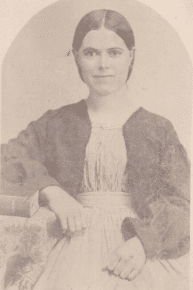
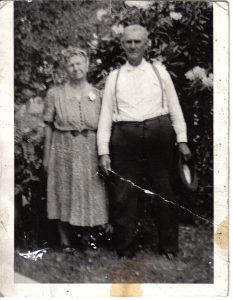
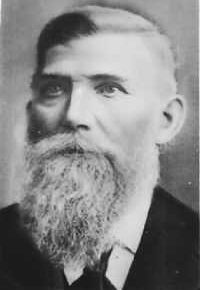
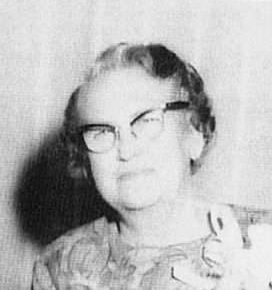
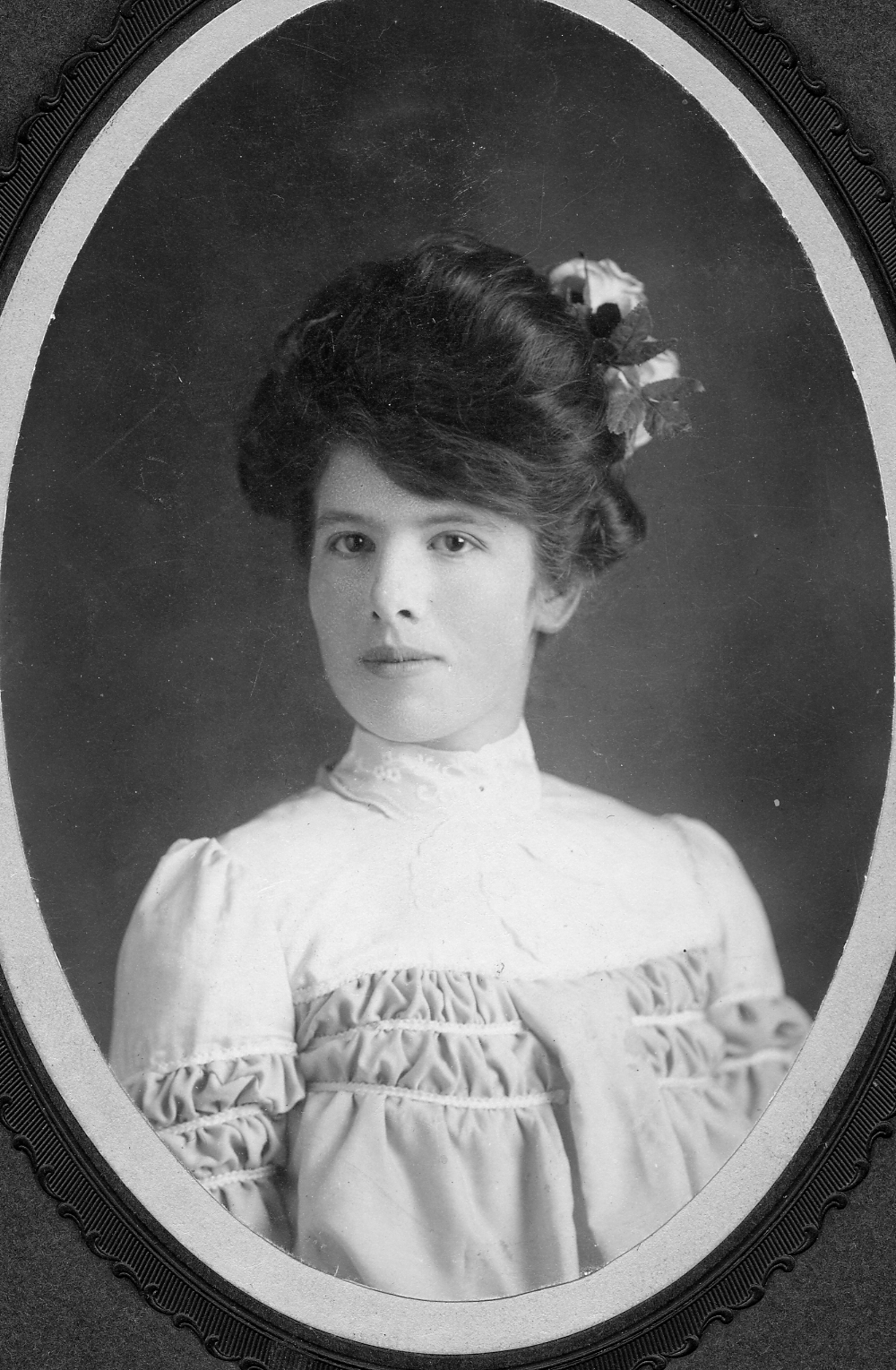
Thomas Grover was born 22nd of July 1807 in Whitehall, New York. His family lived on the northern end of Whitehall which was at the south end of Lake Champlain. At this time moving goods by water ways was big with the Erie Canal. In 1820, Thomas (age 13) was cabin boy on the barges that operated on Lake Champlain. By 1930-31, he had advanced to the position of Captain of the Shamrock, a freight and passenger vessel operated on the entire waterways from Quebec to New York City or Albany westward to Buffalo.
He married Caroline Whiting in 1828, and moved west to Freedom, New York. While living there he learned of the new “Mormon” Gospel. He became interested, investigated it to his complete satisfaction and became a member of it. He was baptized in September 1934 by the Prophet Joseph Smith and Elder Sidney Rigdon.
In late 1835 his family moved to Kirtland to join the Saints and helped work on the temple. They were driven out of Kirkland a year later finally going to Nauvoo. His family had grown to seven children by 1840. His wife Caroline died along with their youngest daughter later that year. He met and married Caroline Eliza Nickerson (a widow). With the revelation given to Joseph Smith, the practice of plural marriage was given Thomas accepted the practice. He was married to six women but never had more than four wives at one time.
Upon joining the Church, Thomas made a gift of considerable size of money to Joseph Smith. He was a member of Zions Camp; he suffered the persecutions of the Mormons in Missouri and was with the prophet in prison a number of times. He fulfilled three missions for the church (in New York State, Canada, and Michigan). He was a member of the first High Council of the Church in Nauvoo (D&C 124:132). He was one of the Prophet Joseph Smith’s bodyguards. When the Prophet was kidnapped, Thomas was one of the men who rescued him.
Thomas was among the first 143 men to go with President Brigham Young in 1847. He left his family with enough provisions to last two years. On the north side of the Platte River it became necessary to build a boat to cross the Platte. President Young called the camp together to ascertain the best plan. Young gave his plan to build a raft but Thomas said, “It will not work”. Young said, “I think it will”.
Thomas again said it would not work in that kind of stream and they went to bed. The next day President Young got his boat into the water and it sank. President Young turned to Thomas and said, “My plan has failed, what is yours?” Thomas soon built another boat but differently than President Young’s. When ready Thomas asked for a large 6000 pound prairie schooner to be loaded on to the boat and then floated the raft across the river. President Young then appointed Thomas and 13 others to remain and run the boat ferry to help other wagon trains cross the river.
He was asked to help settle some business for the Saints in California that had arrived on the sailing ship “Brooklyn”. Then to bring tithing gold dust worth $3000.00 and $1280.00 in coins back to Salt Lake City. In 1850, went back east to Iowa and Missouri to purchase cattle to bring west. Around the spring of 1854, he bought a farm and moved into two log houses. Next spring planted wheat in the warm weather but this was the year of the crickets that came into the area. However, the grain had ripened before the crickets had a chance to do much damage. They harvested 700 bushels which was life-saving for many.
Thomas was in the Utah legislature which was located in Fillmore in 1855 and 1856 of which he served three terms. He moved to a farm in Farmington of which he gave part of the farm ground for the Farmington meeting house. He was appointed to the high council and served until his death. When the Perpetual Emigration Fund was ask for in 1861, he sent one yoke of oxen and a wagon, and sent two yoke of oxen and two wagons each year afterward until the railroad was completed.
Thomas and his family spent the remaining years in the Farmington. One Sunday, upon returning home from Fast meeting, where he had borne a stirring testimony to the truthfulness of the gospel and the Mission of Joseph Smith, he stated he didn’t feel well. He went to bed. He passed away a few days later on February 20, 1886.
Thomas Grover can be known as a Cabin Boy, Boat Captain, Body Guard, Pioneer, Father, Trusted Friend, Cattle Herder, Boat Builder, Farmer, Legislator, Emigration Supporter, and much, much more.
In 1853 when the grasshoppers took the crops, he and his family subsisted on boiled thistles, mushrooms, or any kind of roots or segos. He apprenticed as a stone and brick mason with his father. They built an adobe house in Pleasant Grove, as well as many other buildings there.
They were surrounded by an armed cavalry of vigilantes who asked for the leader of the group. Amos Andrews stepped forward. The leader of the vigilantes asked if they were Mormons and Andrews confirmed his question. The leader then told them to prepare to die. Andrews looked around and saw that they were out-numbered and out gunned. Andrews then requested if he'd be permitted to sing a song. He sang the whole song to "A Poor Wayfaring Man of Grief "then sang another song and another. Andrews wife, Keturah, was nursing an. 18 month old baby, the baby stopped nursing and joined its father in singing the song. Overwhelmed with emotion at seeing the baby do such a thing, a member of the mob lowered his rifle, and swore an oath saying, “They all can sing, even the child at the breast." The mob removed their hats and rode away. The story is an example that "the hymns of the righteous are a prayer unto me."
The Final Architect of the Salt Lake Temple This article originally appeared in Vol.66, No.2 (2019) of Pioneer Magazine. The striking image of the Salt Lake Temple is instantly recognizable…
This article originally appeared in Vol.62, No.2 (2015) of Pioneer Magazine. by Pioneer Magazine John McCarthy, was one of only two Mormons who were part of the ten-man crew who…
They traveled by "steam cars" to upper New York state, by canal boat to Buffalo, by lake boat to Cleveland, Ohio, by "steam cars" again to Portsmouth, by river boat down the Ohio and up the Mississippi to Quincy, Illinois, and thence by hired teams to Nauvoo. The exultation felt by George upon their arrival there is expressed by a note he made in his Bible at this time:
Submitted by Hudson Bradshaw, a student at Arrowhead Elementary School in Santa Clara, Utah. Robert Kirk Anderson I’ve never met my great grandpa Bob, but I’ve heard that he was…
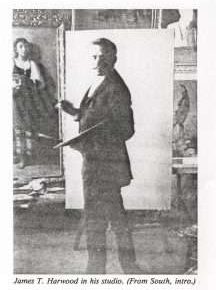
James Taylor Harwood was bom in Lehi, Utah, in 1861, and somehow amid the hard work common of the pioneer life, he nurtured an instinctive love of and talent for…
Sister Brady Englestead has told me of how her sister who was about 14 years old had been sick for months, and got so she wouldn’t eat, and although they had the elders administer many times, still she seemed to get worse. One day she said “If you will have Amos Cox administer to me I think I will get well.” Father was only 17 years old at the time and had never administered to anyone in his life, but they sent for him out in the field where he was scything grain. He said he was dumb founded, but told them he would come. There in the field he asked Heavenly Father what to say and said he believed it was one of the most humbling experiences of his life. He went to the house, washed his hands, and sealed the anointing. He promised the girl that she would get well, then when he looked at her and saw how frail and pale she looked, he was scared and so weak that he sat down.
Candace asked Hamilton about his mother’s pictures and he answered “I don’t know, I’ve never touched them.” Candace asked if she could get them and he gave his consent. She went into the other room and came out with some pictures carefully wrapped in tissue and brown paper. It was such a thrill to find a picture of Elizabeth Jane Green as a young mother and five of her sons, a picture of my grandfather James Copeland Orr, taken before he left on a mission, a picture of Charley, Walter, Richard and Earnest. Some of these pictures had been taken up at Mercur, probably when the boys had taken some produce to market or gone up to Mercur on a date or to a dance. Mercur at this time was one of the biggest towns in Utah and the people of Clover and St. John sold nearly all of their produce at Mercur.
MARY (HAFEN) LEAVITT October 25, 1972 THE DELMAR D. GOTT ORAL HISTORY COLLECTION DIXIE COLLEGE ST. GEORGE, UTAH INTERVIEW WITH MARY (HAFEN) LEAVITT Rhoda and Delmar D. Gott are talking…
One day, when it was soon time to harvest the beets, he called the boys together to show them how to top the beets. When he had them all around him he took a big beet and his best knife and toped the beet and at the same time he cut the end of his finger off. Then he said, "Boys, that will never do. Don't do it that way!"
Anna is born in Virgin, Utah but a a very early age moved to Eagar Arizona, then Snowflake, Az, then Morelos, Mexico Where she went to school. Forced out of Mexico, she moved with her family to Woodruff, Arizona, then later to Hurricane, Utah. She married, raised her family, and died there.
Archer had said he would give his life if he could reach the “Valley of the Mountains in the land of Zion, with my family, that they may grow up under the influence of the Gospel of Christ.”
Submitted by Alexa West, a student at Little Valley Elementary School in St George, Utah. Esther Stucki Gubler was born to Samuel and his third wife, Anna Mary, on August…
 0
0
 1
1

 Thomas and his family spent the remaining years in the Farmington. One Sunday, upon returning home from Fast meeting, where he had borne a stirring testimony to the truthfulness of the gospel and the Mission of Joseph Smith, he stated he didn’t feel well. He went to bed. He passed away a few days later on February 20, 1886.


 Brother Joseph