 0
0
 1
1
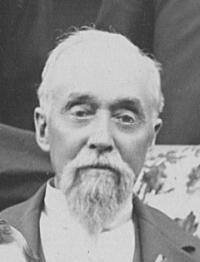
ABEL (ABLE) ALEXANDER
- BIRTHDATE: 08 Jan 1822 Calne, Wiltshire, England
- DEATH: 30 Aug 1897 Woods Cross, Davis, Utah
- PARENTS: Henry Alexander & Mary Dolman Alexander
- PIONEER: 26 Oct 1864 William Hyde Wagon Company
- SPOUSE: Sara Alexander
- MARRIED: Abt. 1846
- SPOUSE DEATH: 03 Dec 1875 Woods Cross, David, Utah
- CHILDREN:
- Emma: 14 Apr 1847
- Edna: 1851 (died age 2)
 ABEL (Able) ALEXANDER‘s parents trained their children to be industrious, honest, healthy, religious, and to have a good sense of humor. The family worked together, played together, prayed together, and had a great love for one another. Abel grew to be a great farmer. He married Sara Alexander, a lady having the same last name as he. She may have been a cousin and the marriage date is unknown. Abel leased land at Calne and Blackland, both in Wiltshire, England. Elders of the LDS Church had been proselyting and forming branches of the church throughout the British Isles since 1837. Abel became interested and investigated into their teachings and was baptized on March 6, 1853. Sara was baptized in July of the same year. From that time on, Abel and Sara made great effort to save funds for joining the Saints in the Rocky Mountains of America. As they walked many miles along the roads and through meadows on their way to church, they would sing the songs of Zion.
A great sorrow visited this family. Their two year old daughter, Edna, received fatal burns when a pot of freshly made tea was upset, scalding her chest. Due to the shock of the accident as well as the severity of the burn, she died on December 17, 1853. They had to use the funds they had saved to pay for the medical care and burial expenses for their little one. They worked very hard for eleven years in order to accumulate the necessary funds to emigrate. Their daughter, Emma, was now eighteen years old and had assisted in many ways to contribute her share to the expenses of the journey. Finally, their family joined other Saints in the trip to London. On June 3, 1864, they sailed down the Thames River from London on their way to America on the ship, Hudson. John M. Kay was president of the group with George Halliday and John L. Smith his counselors. The saints were called together for meetings which were inspirational to the saints and helped to knit them closer together. Other times, they would sing, play instruments, dance the cotillion, and in other ways have enjoyable times. However, they also had hardships, worries, heartache, pain, sickness, and the death of nine children from measles. The ship finally arrived in New York on July 19, 1864 after forty six days on the ocean. They took a boat and came around by way of New Orleans, up the Mississippi River, landing at St. Joseph. The boat was an open top cattle boat and had not been cleaned. The saints were so crowded, they were unable to either sit or lie down. They stopped in Wyoming, Nebraska in order to regroup and become equipped for the journey across the plains. They joined the William Hyde Wagon Company and arrived in the Salt Lake Valley on October 26, 1864.
After their arrival, Abel and his family decided to move out to Bountiful. They moved into an adobe home and Abel hired out to his neighbor, John Moss, to herd sheep. Abel’s daughter later married John Moss and had eight children. Later, he moved into a home of his own on a small farm on Eleven Hundred West. Abel owned the first reaper in South Bountiful. It would cut grain, pile it on a little platform and when it was large enough, it would dump it. The farmer would tie these piles into bundles with grain stocks doubled around the heads of grain to hold them tight. The first mowing machine to cut hay was owned by him also. He received $1.50 per acre for cutting. Abel was very active in the Sunday School Organization in South Bountiful #2 which was held in the Rock School House at Cleverly Crossing. He furnished the bread for the sacrament service and helped greatly with the school’s problems.
His first wife, Sara, died just eleven years after reaching Utah. A year after that, Abel married Hannah Kilburn. Abel became incapacitated early in the summer of 1897 and died on August 30, 1897. A double funeral was held in the South Bountiful Ward Chapel at one o’clock on Wednesday afternoon for Abel Alexander and Marion S. Thorpe. Apostle J.W. Taylor, Daniel Moss, and Bishop Egan were the speakers.
Abel Alexander was born January 8, 1822 at Calne, Wiltshire, England. He was a son of Henry and Mary Dolman Alexander. The city of Calne lies in the midsection of the northern part of Wiltshire, England. Luxuriant green pastures, filled with sheep and cattle fall away from the base of the Cotswold Hills to the east. Rippling streams of water flow through the surrounding arable land and merge with the Avon River at the very old city of Salisbury to the south east of Calne. Ten miles north of Salisbury is to be found “StoneHenge” which has a history which is so old and its origin and purpose are still such a mystery to us. This section of England has been inhabited for hundreds of years.
Abel was the fourth child of a family of seven. Their names were Sarah, Enoch, Enos, Abel, Aaron, Amelia, and Mary. His mother was well versed in the arts and crafts of home making, and also, assisting with work in the fields, milking cows, harvesting crops, and feeding the animals. She was an outstanding mother who trained her children to be industrious, honest, healthy, religious, and to have a good sense of humor. The family worked together, played together, prayed together, and had a great love for one another. Abel grew to be a great farmer. He and his family leased the same farm for thirty years. That record tells the kind of honest laborers they were. They worked long hours with very small pay_ They endured many hardships.
Abel married Sara Alexander, a lady having the same last name. She may have been a cousin, and the marriage date is unknown. Their first daughter, Emma was born at Calne on April 14, 1846 on a small piece of land which Abel leased. Evidently Abel leased other land since his daughter Edna was born at Blackland, Wiltshire on April 24, 1851. Elders of the Church of Jesus Christ of Latter day Saints had been proselyting and forming branches of the church throughout the British Isles since 1837. Through the efforts of the Elders who labored at the Branch in Calne, Abel Alexander was convinced of the truthfulness of the message and entered the waters of baptism on March 6, 1853 (age 31). Sara hesitated, but not for long. She was baptized July 17, 1853. From that time on, Abel and Sara made a great effort to layaway funds for joining the Saints in the Rocky Mountains of America. As they walked many miles along the roads and through meadows on their way to church, they would sing the songs of Zion.
Suddenly, a great sorrow was visited upon this family. Two year old Edna received fatal burns when a pot of freshly made tea was upset, scalding her chest. Due to the shock of the accident as well as the severity of the burn, she passed away December 17, 1853. It now became necessary to use the funds set aside for their immigration to America for medical care and burial expenses for the little one.
Many of the saints were leaving for America which naturally made them more anxious and determined to sacrifice even more so they might also be able to go. They worked very hard for eleven years, in order to accumulate the necessary funds for this purpose. Their daughter, Emma, was now eighteen years old and had assisted in many ways to contribute her share to the expenses of the journey. Their family joined other Saints in the trip to London (about 150 miles). On June 3,1864,363 Saints sailed down the Thames River from London on their way to America on the ship “Hudson”. John M. Kay was president of the group wi th George Halliday and John L. Smith his counselors. Matthew McCune was appointed to take care of the needs of the passengers. The Saints were called together for meetings which were inspirational to the saints and helped to knit them closely together. On other occasions, they would sing, play instruments, dance the cotillion, and in other ways have enjoyable times. However, they also had many hardships, worries, heartache, pain, and hunger. Many little children were very ill with the measles. Nine of them died and were buried at sea. Food had to be rationed. Often, they ate only hard biscuits. Many became seasick. Many of the Saints were not physically fit for long hard traveling and all that lay ahead.
The ship finally arrived in New York on July 19: 1864. The journey took 46 days. George Q. Cannon met the company as they carne off the ship. On Aug~st 2, 1864, they took a boat and came around by way of New Orleans, up the Mississippi River, landing at Ct. Joseph. The boat was an open top cattle boat and it had not been cleaned. The saints were so crowded, they were unable to either sit or lie down. For those who were well, this must have been terrible; but for those who were sick and weak, it was unbearable. They stopped at Wyoming, Nebraska in order to regroup and become equipped for the journey across the plains. They were assigned to a group of 400 Saints with William Hyde as their guide. The church sent 170 teams and wagons from Utah to the Missouri River in 1864 to aid the poor. The pioneers had hoped for a successful journey, but as they traveled, many became seriously ill with Mountain Fever. Some of them never recovered and were buried by the wayside. Four families were allowed one wagon and one bake over. At each stop, these families would cook their meals and then pass the bake over on. Often one of the families would go hungry because they lacked time enough to cook the meal before the company moved on. As they passed through settlements, they were able to buy milk, eggs and other commodities. God’s blessings were with them and gave them strength for the day. Many mothers carried their babies in their aprons all the way across the plains.
Those who survived the hardships of the journey arrived in Salt Lake City on October 26, 1864. Abel Alexander and his family were among that number. Soon after their arrival they began looking for a home. Some of the saints were locating in Bountiful and Abel and his family decided that there they would like to settle down. They moved into an adobe house that stood where the Wilford Hatch home (1957) now stands. Abel hired out to his neighbor, John Moss, to herd sheep. John Moss was a livestock rancher. Abel’s daughter later married John Moss and eight children were born to them. At this early time, Bountiful consisted of one ward, so it was necessary for the pioneers to walk a considerable distance to attend church (in East Bountiful). Some of them even walked to Salt Lake City and back to attend conferences. The experiences of the Alexanders in England and crossing the plains helped to prepare them for the rugged life of the pioneer.
The length of time Abel worked for John Moss is not known. He later moved from his first home to one of his own, a small farm, located on Eleven Hundred West, across the street from Salters and James Howard.
Abel owned the first reaper in South Bountiful, It would cut grain, pile it on a little platform and when large enough, it would dump it. The farmer for whom he was reaping would tie these piles into bundles with grain stocks doubled around the heads of grain to hold them tight. The first mowing machine to cut hay was owned by him also. He received $1.50 per acre for cutting. The farmers would have to finish the work by hand.
“Dernei” was his byword. He was quite witty. He rode a horse sideways like a woman and without a saddle.
Abel Alexander was very active in the Sunday School organization (South Bountiful # 2) held in the Rock School House at Cleverly’s Crossing. He furnished the bread for the sacrament service and helped greatly with the school’s problems.
His first wife, Sarah, died December 3, 1875, just eleven years after reaching Utah. One year later he married Hannah Kilburn and she helped care for him. His daughter never spoke ill of her.
Abel became incapacitated early in the summer of 1897. While he was ill Bill Parkin called to see him. Brother Parkin had been to the Independence Day program at the graveyard and when he walked to Abel’s bedside he said, “Well, brother Abel, I see you’re not long for this world.” Not a very cheerful statement, but true, as Abel passed away August 30, 1897 at eight o’clock. He was bedfast for seven weeks. Had he lived until the next January 8, he would have been seventy seven years old. A double funeral was held in the South Bountiful Ward Chapel at one o’clock on Wednesday afternoon for Abel Alexander and Marion S. Thorpe. Apostle J. W. Taylor, Daniel Moss and Bishop Egan were the speakers.


 Brother Joseph

 Pioneer John