WALTERS, Archer: A Story of Commitment

Archer had said he would give his life if he could reach the “Valley of the Mountains in the land of Zion, with my family, that they may grow up under the influence of the Gospel of Christ.”
0 1
Read Time:3 Minute, 23 Second

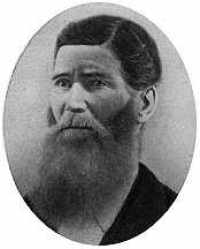
Archer Walters was born to Henry and Sarah Walters on July 29, 1809 at Cambridge, England. He married Harriet Cross on August 26, 1837 at Sheffield, England. Harriet was born October 21, 1809.

Archer’s mother, Sarah, died May 5, 1811, leaving Archer motherless two and a half months shy of his second birthday. He was raised by his father.

Archer and Harriet were taught the gospel and were baptized members of the Church of Jesus Christ of Latter-day saints in 1848. Until this time they had never thought of leaving England.

When Brigham Young set forth a plan, called the Perpetual Emigrating Fund, designed to assist in bringing poorer converts to America by ship, then transporting them by train to Iowa City, the family was excited. Under this plan, at Iowa City the immigrants would be outfitted with handcarts which would carry their minimal belongings as the people, themselves, would walk pulling their handcarts to the Salt Lake Valley.

Archer had said he would give his life if he could reach the “Valley of the Mountains in the land of Zion, with my family, that they may grow up under the influence of the Gospel of Christ.”

By this time, Archer and Harriet had five children: Sarah, born November 16, 1838; Henry, born October 14, 1840; Harriet, born August 8, 1842; Martha, born September 9, 1844; and Lydia, born September 23, 1850.

With his wife and four daughters and one son, Archer left England as a PEF immigrant aboard the ship Enoch Train on April 6, 1856. The ship left from Liverpool, England and arrived safely at Boston on May 1, 1856.

From Boston the immigrants took the train to Iowa City arriving on May 12, 1856, where they were to be outfitted with handcarts. Because he was a carpenter and had a set of his own tools, Archer was immediately put to work making handcarts and building coffins for those who died in the Iowa City camp. On the 1,300 mile trek from Iowa City to Salt Lake City, Archer repaired handcarts and continued to build coffins for those who died along the trail.

The Walters family, along with the other immigrants who arrived aboard the Enoch Train traveled in the Edmund Ellsworth Company, the first of the handcart companies. The Ellsworth Company left Iowa City on June 9, 1856.

Archer kept a detailed journal of the company’s travels for most of the trek which has proven to be a rich first hand account of the first of the handcart companies, and which has often been quoted by historians of the handcart companies including Wallace Stegner. Unfortunately, Archer made his last entry in the journal on Sunday September 14, twelve days before the company arrived in the Salt Lake Valley on September 26, 1856.

His work repairing handcarts, pulling his handcart and making coffins while often going without enough to eat wore him down. After September 14, Archer was too ill to write and he had to ride in one of the supply wagons. He never recovered from his illness and died in Salt Lake City on October 14, 1856 at age 47. His wife, Harriet, and the five children all survived the journey. Harriet lived another 27 years, dying on September 30, 1883 in Salt Lake City. The five children remained faithful, steadfast members of the Church of Jesus Christ of Latter-day Saints. Sarah, the oldest, became a plural wife of William Clayton, journalist of the Pioneer Company of 1847 and author of the hymn, “Come, Come Ye Saints.” She gave birth to eleven of William Clayton’s many children.

Archer Walters gave his life to reach Salt Lake City and just as he had hoped they would, his wife and children did grow under the influence of the Gospel of Christ.

For many years Archer’s handcart was on display at the Daughters of the Utah Pioneers Museum and Library in Salt Lake City as it was considered one of the best original example of an actual handcart company handcart in existence.


Happy
Happy
0 %
Sad
Sad
0 %
Excited
Excited
0 %
Sleepy
Sleepy
0 %
Angry
Angry
0 %
Surprise
Surprise
100 %
You May Also Like

CALL, Helaman Pratt

My father had done a little experimenting. We had a large bathtub in one of the bedrooms in our home—it hadn’t been remodeled. They had just put in a bathtub and a toilet and a hand bowl in one of the bedrooms so there was quite a bit of room in there. It was a large oversize tub. I thought my father was going to baptize me but Charles Jones was going to baptize me. He had experimented how full he could fill the tub without running it over and still get me and him both in the tub. They put a stopper on the overflow so that the water would come up higher than the normal overflow would allow.
View Post

ADAMS, Arza Madsen

A muggy evening added to Arza’s discomfort with the chills and fever. Malaria had driven him to bed for several days, even though he had much work to do on his farm located just north of the village of Carthage, Illinois. It was dusk when William and John Barnes, two non-Mormon acquaintances, knocked on the cabin door with devastating news: Joseph Smith and his brother Hyrum had just been murdered in Carthage. One of two survivors, Willard Richards, wrote a short letter describing the disaster and asked the Barnes brothers to deliver the letter to Arza Adams, one of the few Mormons living near Carthage. Although seriously ill, a surge of adrenaline permitted Arza to drag himself out of bed, saddle his horse, ride to Benjamin Leyland’s cabin and ask him to join in a dash to Nauvoo.
View Post

ALLEN, Andrew

WHILE WORKING AROUND A THRESHING MACHINE, ANDREW LOST HIS ARM IN THE GEARS, NEEDING AMPUTATION ABOVE THE ELBOW. IT WAS SAID OF ANDREW, HE COULD HARNESS A TEAM OR ANY OTHER WORK ON A FARM AS QUICKLY AS ANY MAN WITH TWO ARMS AND HANDS.
View Post

SMITH, Joseph Johnson

How happy they must have been to be in “Joseph’s City”. But the happiness didn’t last long. Within three months after arriving in Nauvoo, little Mercy became ill and died. Joseph’s wife, Mary, grieved with Joseph, but within two months, she and Joseph became excited again because she was going to have another baby. But again, the excitement was blunted by death as Mary died a week after her baby son, Joseph, was born and baby Joseph died twelve days later. Joseph now was left with just three year-old Caroline. His parents and two sisters and three brothers were still with him in Nauvoo, but how hard it must have been to have sacrificed so much in such a short time.
View Post

SHIRTS, Peter

The road was to follow an old Indian trail on the west edge of the Black Ridge. When asked how the wagons would get across the deep canyon which barred the way, he replied, “We’ll leap it!” The 165 ft deep canyon crossing became “Peter’s Leap.” The stream became “Leap Creek.” A sturdy windlass was erected on top of the north canyon wall. The wagons coming from the north were stopped here. The cargo was lashed securely to the wagon box. The teams were unhitched and led down the winding 30 percent grade to the canyon bottom.
View Post

MELLOR Jr., James: Inspirational Story

Mary, however, was so hungry and faint that she finally told Louisa to go on without her. Louisa would have none of that. She instead walked ahead a short distance, kneeled down, and poured out her heart to the Lord to help them. She arose and headed back toward her mother on the same path she had just taken. She walked a short distance when she suddenly saw something in the prarie grass. It was a freshly baked pie! It was laying right side up, and the crust wasn't even broken. They both thanked the Lord for the immediate answer to her prayer, ate the pie, and resumed their tip toward the company. In the meantime, since they had not caught up with the company in the time expected, James Sr. had taken his handcart to go look for them. He found them and took them in the handcart back to camp.
View Post

WOOLSEY, Abigail Shaeffer

John D. Lee had been ill with a heavy fever, probably the 'rocky mountain fever' and he was just starting to mend when Abigail, "Momma", came down with that same "rocky mountain fever", and soon went into a coma. Lee called for a stop here on the Sweetwater, where her family gathered around her and her daughters desperately tried to care for her. But to no avail. Abigail opened her eyes, looked lovingly on her worried, sad family and then died around midnight on the third of September 1848.
View Post

NIELSEN, Ane: A Self Sufficient Pioneer

Ane was a hard worker. She had to work more like a man than a woman. She did a lot of work in the fields and with the animals. When anyone in the family needed help or advice on the farm, they would ask her. She could fix a broken harness as well as any man. She had quite a few sheep that her boys would care for. She would shear her sheep, then wash the wool and spin it into yarn. Following this preparation, she would weave it into beautiful cloth.
View Post

John Adamson

Two other children, Andrew and Margaret, were professional dancers in Scotland and danced for the entertainment of the passengers during the voyage. When they reached America they traveled to Florence, Nebraska where they were met with teams and wagons sent by President Brigham Young to help them cross the plains.
View Post