 0
0
 1
1

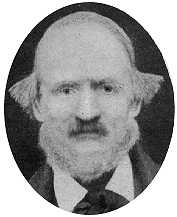
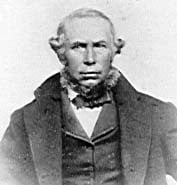
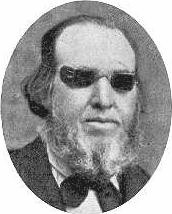
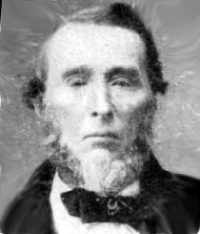
This is a story about my great-great-grandfather Peder Christian Nielsen. It was written by May Nielsen Anderson, with modifications by Frank Merrill Nielsen in 2019.
Peder Christian Nielsen was born April 21st, 1823 in Sadinge Parish, Maribo, Denmark. This is located on the island Lolland. You can see the town of Maribo, where Peder is from, right between the “l” and “Lolland” on the map below.

Peder was the youngest of Niels und Anne Hansen Nielsen’s children. Peder was medium-sized with jet black hair, hazel blue eyes and medium stature. It was said that he had an alternate disposition. He could be jovial and moody at times. His birthplace was Sadinge and he was nicknamed Sadinge. He worked in the flax industry, preparing the flax for the spinning wheel. He was also a butcher and did some carpentry. Later, he learned to make baskets.
He married Magdalene Rasmussen on December 28, 1844 in Skjoringe Parish in Maribo (Denmark). He began farming in this area and moved on to Bukkehaye, Nebbelune Parish, Maribo. However, he continued his basket-making business, which was a profitable and pleasant vocation. They belonged to the Lutheran Church, the most popular church in Denmark.
Joining the Church of Jesus Christ of Latter-day Saints
He and his family joined The Church of Jesus Christ of Latter-day Saints in 1855. They found it very difficult to live after they accepted the Gospel. They were the only family to believe the Gospel in the area, and all their neighbors and friends turned against them. He was unable to sell the baskets he had sold before. His family was persecuted in many different ways. However, they held firm to their convictions. They longed and prayed for the day they could embark on their journey to Zion (the Utah company of the Latter-day Saints).
These years were filled with hardships and suffering. Their two last children were born in these years. This couple had four children, three sons and two daughters. Two of their children died while still living in Denmark.
From the moment they joined the Church, it was 11 years before they could leave Denmark. They were blessed with the support and encouragement they received from missionaries. Although these visits were a joy for them and provided them with spiritual food they also made their children feel better. They often had to send them to bed hungry as they gave the missionaries all they had.
From Denmark to Utah
Two missionaries visited their home in spring 1866 and announced that they might be able to emigrate from Zion. The announcement was met with mixed emotions of deep gratitude as well as loud shouts of joy. Four children were scheduled to leave, but it was agreed that the twenty-year-old eldest child should stay behind. They were informed that their second son (only fourteen years old) had to stay with them before departure. They made plans for their departure and began the long-awaited journey in May 1866.
They took a boat to Copenhagen, Denmark’s capital, from their island Lolland. They stayed there for several days. They then sailed to England via Hamburg in Germany and landed in Hull. From there they took a train to Liverpool where they boarded the sailboat bound for America.
It was a long and tedious journey. Niels Nielsen, a missionary who returned to Brigham City (Utah), was the Presiding Elder. They reached New York City after ten long weeks of sailing. They then traveled by train and boat to Florence in Nebraska. They were met by oxen squads sent by the Church. These wagons and teams hauled provisions and very small children. However, all those who could walk were able to do so.
The company was ravaged by the deadly disease cholera shortly after they left Missouri River. There was never a day that passed without someone leaving a loved one to die in the Great Plains. It was terrible to witness the pain and suffering that the Saints endured. It was more than 100 deaths, and it is known as the “Cholera Train” in history.
The disease subsided as they approached the Rocky Mountains. However, it caused almost every family to be broken apart. Magdalene cared for two families of children whose parents were taken away. They arrived in Salt Lake City, Utah, on October 19, 1866.
Utah
An old friend of theirs met them in Salt Lake City and drove them to Big Cottonwood (now Holladay) in Salt Lake County. He was able to re-enter the basket-making trade and found a market. He was able to purchase ten acres of virgin land in the spring of 1867 and built his first home. He bought his first cow in 1867.
He moved to Brigham City in the spring 1868. He arrived in Brigham City shortly after. Soon thereafter, he joined other men and moved to Weber Canyon to start the railroad. His family was left behind in Brigham City. His family was forced to survive on very limited rations for the first half of fall because he didn’t receive any pay.
He returned from the railroad in the fall of 1868 and discovered that Bear River City was located not far from Brigham City. He built a log cabin there, and he and his family moved there in the fall of 1868. Their eldest daughter died in 1869. She was the first to be buried at the Bear River Cemetery.
There were good indications that there would be a bounteous harvest in the spring of 1869. But suddenly, a cloud of grasshoppers landed and ate the crops and gardens. Once again, it was hard to live. The little railroad town Corinne, just a few miles from Bear River City, could have made it worse. It was built in that summer. People sold wood, butter, eggs and wild hay to the people, which the grasshoppers did not molested and was abundant near the river bottoms.
The log house, which was medium-large in size, was used for school, meetings, dances, and entertainment. People often met up in winter to revive their spirits and had dance parties, parties and spelling contests. The fireplace was lit with sage to provide warmth and light.
Peder and Magdalene’s younger child, who had been left in Denmark, arrived in Utah in the summer 1869. It was the first time they had seen him since three years. However, their eldest son, who died in 1871, never enjoyed that privilege.
The spring of 1870 saw people plant their crops again and wonder what would happen. They knew the ground was full of grasshopper eggs, so they planted their gardens. It was obvious that grasshoppers began to destroy crops as soon as the ground warmed enough to hatch them. The people banded together and managed to get rid of enough grasshoppers to make their crops look healthy and promising. One Sunday morning, the men were ordered to fix the dam at the river. They responded quickly and heroically to the call, but despite all their efforts, they couldn’t save it. It was too late to build another dam on the Malad River that year. The river had alkaline water, and was rapidly contaminating the land. This made the land inaccessible. Despite all the drawbacks, there was still some grain and corn, as well as molasses and cane. Peder’s grain was regarded as the best in the area, and after threshing, it had produced six bushels per acre. Peder was a farmer on shares so he didn’t have much for summer work.
People began to leave Bear River City. Many moved to Cache Valley where Logan, Utah is situated. He decided to return to Big Cottonwood in 1871, having been much poorer than when he had left it three years before. He rented a farm, raised a fair crop and made adobe to build another house. He cleared his land of oak brush and planted currant bushes, fruit trees and shade trees in his new home.
He felt more content living in the same ward he had lived in when he arrived in Utah. His family soon became independent and comfortable. He renovated his home, making it more comfortable in the year 1877.
As a young man, he was involved in three years of war against Germany. He had also contracted a lung disease during that war. This condition continued to worsen over the years, until eventually he became a bedridden and suffered greatly. Later, his son said that he was a skeleton with no skin or bones when he died in the early hours of August 6th 1879. He was buried at the Big Cottonwood Cemetery.
Notes by Frank M. Nielsen
John Nielsen Anderson, May Nielsen Anderson’s dad, died in 1948 at the young age of 90. This biography was written twenty years prior to this biography. However, John probably contributed much of what May wrote through years of family story telling. Tora, John’s little sister, lived until 1961. Tora and May were also very close so Tora may have been a great source for information. My Grandpa Frank, the son of Rasmus Nielsen, and nephew to John Nielsen, was a well-known genealogist and family historian. May will be grateful for his contributions. Mary May (May Nielsen Anderson) is my cousin and I owe her a debt for her efforts to remember our pioneer Nielsen ancestors. FamilySearch.org may contain many more historical records and stories about the Nielsens of Denmark.
A note on my Nielsen Mormon pioneers: I have viewed the roster of the “Down-and-Back Oxcart Company”, which is located at the Church Pioneer History Library, Salt Lake City, Utah. May Nielsen Anderson stated that they crossed the Great Plains in company with the Abner Lowry Co. There were 300 people on the roster of that company. I found 54 deaths along the emigration route. Most of them died from the dreaded Cholera and most of them near the beginning of the journey. This disaster earned this company the horrible name “Cholera Train.” While it’s not the 100+ deaths John and Tora remember, the 54 deaths from 300 pioneers (18%) may be the highest mortality rate of any other emigrant company, other than the Willie or Martin Handcart Companies 1856.


 Brother Joseph