 0
0
 1
1
-

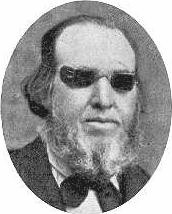
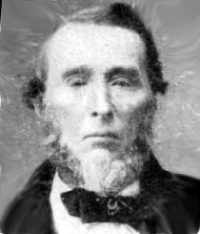
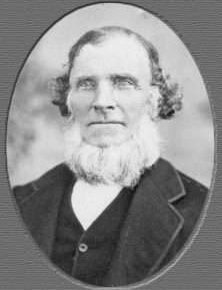
George Hubbard Alley
(1823-1910)Birth: 14 June, 1823, Lynn, Massachusetts
- Death: 6 April, 1910, Salt Lake City, Utah
- Parents George Alley & Mary Symonds
- Arrived in Utah 20 September, 1848, Brigham Young’s Company
“I, George Hubbard Alley, do hereby swear, before the great and living God, that during engagement, and while I am an employee of Russell, Majors and Haddell, I will under no circumstances, use profane language, that I will drink no intoxicating liquor; that I will not quarrel or fight with any other employee of the firm; and that in every respect I will conduct myself honestly, be faithful to my duties, and so direct all my acts as to win the confidence of my employers, So help me God.”
Such an oath, pledged and kept under all conditions, tells its own story of the character of the man who took it. George Hubbard Alley was that type of man, and he took that oath to become a Rider of the Pony Express.
Born June 14, 1823, in Lynn, Essex County, Massachusetts, George Hubbard Alley was the eldest of the seven children of George and Mary Symonds Alley.
Uncle George, as we who knew him always called him, was an expert shoemaker by trade. With his parents, four sisters, and two brothers, he came to Utah in the Brigham Young Company, which arrived here on September 20, 1848. The Alley family had joined the Church in Lynn, Massachusetts, where the parents had been baptized by Apostle Erastus Snow.
Before the family came to Utah, they had gone from Lynn to Salem, thence to Nauvoo. Here the parents received their endowments in 1842; and their eldest son was baptized at that time, most probably in the Mississippi River. Four years later, in the fall of 1846, the Alleys travelled by ox team to Winter Quarters, where they remained for nearly two years. In June, 1848, George, his parents, and his brothers and sisters began that momentous trek to the unknown, desert land which was destined to “blossom as the rose.”
The first family home, a log cabin, was built in North Canyon; but early in 1849, residence was established on a large tract of land a corner plot facing on both Fourth South and State Streets directly north of the Eighth Ward Square, now identified by the City and County Building. Father Alley gave a portion of his land (a lot from the eastern section facing Fourth South) for the erection of the original Eighth Ward Meeting House.
Uncle George, by this time, was making his own contribution to the support of the home; for the services of the expert shoe maker were much in demand.
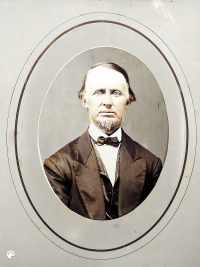
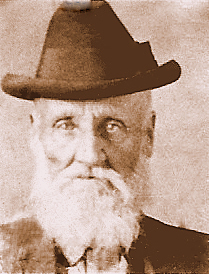
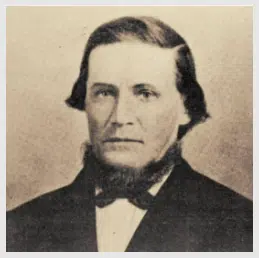
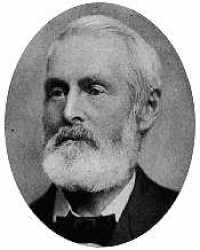
George Hubbard Alley was a man of slight build, under average height, and he tipped the scales at 125 pounds or less. He was wiry; and his sense of honesty, loyalty, and responsibility was absolutely beyond question. Besides, he was a horseman of outstanding ability, and he never learned the meaning of fear. We could call him rugged, and he loved adventure. His natural endowments included extraordinary endurance, patience, sound judgment, and a keen, alert intellect.
It is not difficult, then, to see this young man fitting perfectly into the scene, when, on April 3, 1860, the riders of the Pony Express began their mad, daring dash between St. Joseph, Missouri and Sacramento, California. He was ideally equipped for this adventure. His career as a “Pony Rider” began when he signed in at the Salt Lake City Station located on the east side of Main Street between First and Second South Streets. Our station was one of the “home stations” where riders as well as horses changed. His run was the west half of the route, beginning in Salt Lake City and terminating at Sacramento; but eventually he made the run eastward to St. Joseph, too. (Of course, the run included the return trip to Salt Lake City.) Wages, paid by the month, were from fifty dollars, minimum, to $150, maximum.
Uncle George’s “home base” was Salt Lake City. From the starting point it was customary to ride the number of miles allotted to the horse, change horses and continue until the run to the next home station was completed. Stops were made only for meals, drinking water, and any emergency which might arise. At each home station there would be, of course, a fresh horse and a relief rider to proceed toward Sacramento. When Uncle George had exchanged with his relief rider, he had a rest period to sleep and freshen up until he should relieve the next rider from Salt Lake City. This procedure continued until he reached Sacramento, where he remained until it was his turn to start eastward again.
During his waiting periods in California before he was to begin his return trips to Utah, he engaged himself in his dearly loved hobby – panning gold. He kept the mineral he panned, for he never intended to use it commercially. He accumulated a large quantity of the “yellow stuff and rolled it into balls for future use. Uncle George was a gifted artisan and with his artistic skill he fashioned two gentleman’s rings and a beautiful mounting for a magnificent large Italian cameo. He gave one of the rings to his brother Stephen and the other he wore himself. The mounted cameo he presented to his mother. He made other ornaments from the gold which he panned in California, but no one in the family knows where they are. For years he had a large quantity of gold in his possession, but he never converted it into jewelry of any description, and his relatives have never found it.
After the death of his parents, George made his home with his beloved brother Stephen and his family at 941 South Eighth East.
George Hubbard Alley was quiet and retiring by nature. He was a man of few words, never boasting or talking much of his achievements. He never married. In his young manhood he became engaged, but the girl of his choice was untrue to him; and he never showed any interest in any other woman.
After his working years were over, it was his custom to take long walks with a faithful, devoted companion- a big, beautiful shaggy dog called Old Jack. They were a familiar twosome around the neighborhood and in Liberty Park. Old Jack was killed in a traffic accident; and after the death of his pet, the lonely old man would wander around aimlessly. His loving relatives and dear neighbors were constantly mindful of the dangers he might encounter, and they never permitted him to be out of sight without beginning a search for him.
George closed his long, useful, eventful life at his brother’s home on April 6, 1910, just a few weeks before his eighty-seventh birthday anniversary. He had remained true to the pledge he had made half a century earlier, when he accepted the responsibilities of a Rider of the Pony Express; he had won, not only the confidence, but the love and respect of all with whom he came in contact. His life, so quietly lived, affected for good the lives of scores of his relatives and associates. Truly did he merit the benediction of the Master, “Well done, thou good and faithful servant. Enter thou into the joy of thy Lord.


 Brother Joseph