 0
0
 1
1

(1813-1903)
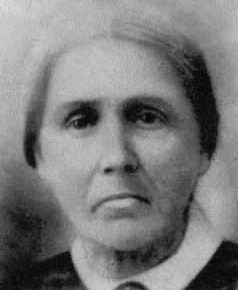
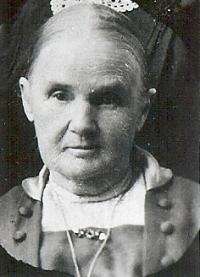
Elizabeth Clements Kendall was born at Liberty, Clay County, Missouri on May 17, 1836, the seventh child of Ada Winchell and Albert Nephi Clements. It was in Missouri that she spent her younger childhood. “Mother” Ada Clements washed and ironed for the Prophet Joseph Smith’s family, and Elizabeth and her brothers delivered the finished articles in a little wagon.
Ada had a good-sized copper bucket and when the clothes were ready to be delivered, she would say to the children, “Now you must shine up the bucket real good and we’ll fill it with popcorn and apples and you may take it to Joseph and Emma along with the wash.” They had to use vinegar and salt and would work so hard to get it shiny enough that they could see themselves in it. Then they would fill it with choice apples and popcorn and go merrily on their way.
Joseph and Emma would be so pleased with them. Joseph was so kind to all, especially children, whom he loved very much. Whenever he met them he would shake hands with them and always had a kind loving word for them. It was on one of these trips to deliver laundry with her brother that the Prophet asked Elizabeth if she would like to see the Egyptian Mummies. She was very thrilled at the thought and of course very curious, but she felt it a great privilege to be allowed to see them.
The mummies were kept in the attic where they wouldn’t be destroyed and in those days there weren’t any stairways in the houses such as we have now, and in order to get to the attic one had to climb a ladder which was straight up along the wall. She told Joseph in a very timid voice that she would like to see them, but was a little frightened while climbing the ladder to the attic. But when at the top she saw the room with the curious-looking things, and Joseph seeing that she was a little frightened stepped to her side, laid his hand on her shoulder and said, “Come little one, do not be afraid.”
He took her by the hand and led her to them saying, “Touch them and you will never be afraid of the dead.” This she did and he then placed his hand on her head and gave her a blessing. He told her she would be a great nurse and would care for and administer to many, and that she would accomplish various other needed services during her lifetime. . . Ada Clements, with some of her children, Elizabeth was not among them, She had to stay behind. . .
However, in 1852, she joined Captain Zabriskie’s company helping to care for his wife who was semi-invalid. They left about the same time as her mother’s company left. All those who were able to walk did so to relieve the weight of the heavily loaded wagons. At times, the young people were allowed to walk ahead with the guides, helping to find and to prepare suitable camping grounds. They would carry with them, both axes and shovels to clear the camping place of debris so that in the evening after all chores were done, they would have a smooth spot to dance in.
When crossing the plains, sagebrush was not always available, so the girls wore large aprons into which they would put dry buffalo chips. The buffalo chips were used, as well as the sagebrush, to make a large campfire around which the group sang, danced and told amusing stories. . .
Many interesting things happened to Elizabeth while crossing the plains and perhaps one of the most interesting was the Indian who tried to trade horses for her. While the wagon train was stopped one day for a rest Elizabeth and her girlfriend had taken their knitting and gone down alongside the creek to set in the sun. They looked up from their chattering and laughter to see an Indian watching them. Then he disappeared.
Upon their return to camp, the Indian was in consultation with Captain Zebriski. Then later the Captain reported to Elizabeth their conversation. The Indian, attracted to Elizabeth had said to the Captain, “Heap wino squaw, she knit socks, me want her.” The Captain said no shaking his head. “Me give two horses.” Again the Captain shook his head and said no. Then the Indian left to return later with several horses and robes. And again no was given as his answer.
The Captain also told the Indian that he could not give her to him because she wasn’t his girl. The Indian became very angry. It took much persuasion to get him to leave and take his horses and robes with him. After this incident, Elizabeth was asked to ride in a covered wagon, which was a great disappointment to her as she loved to be with the other young folks.
The journey continued without any further trouble from the Indian. Another tragic, but interesting, incident happened and was caused by a young, hot-headed guide, an Indian hater, who made the remark that the first Indian he saw he would kill. The captain, wanting peace with all the Indians for the safety of his company, tried to talk the guide out of it. They hadn’t traveled far when he sighted two Indian squaws, busily engaged in the process of washing clothes in the river. Even though he endangered a company of people of whom he was partially responsible, he killed the Indian squaws.
That evening the Indians came to where the company was camped and demanded that the captain turn over to them the man who was responsible for the outrageous act committed against them. As much as Captain Zebriski hated to place a man at the mercy of the Indians, he figured it was better than to have his whole company attacked and wiped out. The Indians took the guide but a short distance from the camp and there dealt with him in their own cruel, but just way, by skinning him alive. The people in the camp shuddered when they heard his screams of agony.
Elizabeth made it to the Salt Lake Valley where she met Levi Newell Kendall, her sister Eliza’s husband. Levi went to Elizabeth’s mother Ada and asked for Elizabeth’s hand in marriage. So, she became Levi’s 2nd wife, and bore him 12 children. . . They moved to Springville in 1858, and true to the Prophet’s blessing, Elizabeth, besides rearing her own large family, was called to do nursing, and also to help prepare the dead for burial. She became a midwife and delivered hundreds of babies for which service she usually received farm produce in lieu of money.


 Brother Joseph