 0
0
 1
1
Mother & Doctor
This article originally appeared in the May-June 1970 issue of Pioneer Magazine.
by Elon Hanson

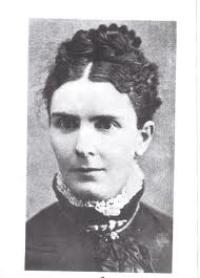
Ellis Reynolds Shipp knew firsthand about the sickness and death the Saints had to deal with. At the age of five she traveled in a covered wagon with her family to Pleasant Grove, Utah. While Ellis was still a young girl, her mother died. Later, five of her own children died in childhood. Ellis knew how important it was for every mother to learn the laws of good health.
Encouraged by friends, Ellis resolved to educate herself. She adopted a rigorous schedule of rising daily at 4 A.M. to study until 7 A.M. Then she tended to her two small boys, milked the cow, and taught at the ward school. She studied many subjects, but it was medicine that interested her most. Later she studied medicine in Salt Lake City with a Dr. Gunn.
In October 1873 President Brigham Young declared that “the time has come for women to come forth as doctors in these valleys of the Mountains.”
The first woman to answer President Young’s challenge was Romania B. Pratt in 1874. Then on November 10,1875, Ellis made a curious entry in her diary: “What a strange fatality! This morning I start for Philadelphia to attend Medical College.”
With her husband’s encouragement – yet reluctant to leave her young sons – Ellis left for the East. She arrived in Philadelphia, Pennsylvania, at three-thirty in the morning and slept on a bench in the railroad station until daybreak. Although the next few months of the valiant woman’s life were filled with constant study, she grieved for her children, and she anxiously awaited letters from home.
In the spring Ellis’s husband, Bard, came to visit her. Finding his wife weak and tired, he encouraged her to come home for the summer. After being home awhile, Ellis found that financial problems, the anguish of leaving her children again and the discovery that she was pregnant made it difficult for her to even think about returning to school. Yet her strong convictions that she should serve others, and her desire to help her family, overcame her reluctance, and she returned to her medical studies.
Back at school Ellis had to conserve what little money she had. In exchange for food, she began instructing a baker’s daughters in dress-making. She was deeply touched when her young son sent her a letter with a pressed flower and a dollar he had earned.
Worried that her pregnancy might end her schooling, Ellis prayed all one night to the Lord that she might have the strength to finish her classes before the baby was born. Ellis did not miss a single class! On May 25,1877, the day after she passed her exams, she gave birth to a baby girl. Ellis was delighted to have a daughter, and she wrote in her diary:
“It is to me the crowning joy of a woman’s life to be a mother.”
The August heat became unbearable, so Ellis took her daughter Olea to the New Jersey countryside. Walking from farmhouse to farmhouse, Ellis finally found a home where a mother welcomed her to stay and teach her daughters dressmaking skills in exchange for board and room.
In the fall Ellis returned to her last year of school. On March 14,1878, at the age of thirty-one, Ellis recorded in her diary: “Graduated from Woman’s Medical College of Pennsylvania.”
Upon returning home, Ellis moved her family into a house near her office. “Thus began the happiest hours of my life,” Ellis wrote.
She was now with her sons and daughter. Her boys helped clean the house, tend the baby, and deliver messages. On one occasion, Ellis was on calls for a period of twenty-four hours, during which time she delivered five babies. When she returned home, her two boys were waiting for her. They immediately rushed her off to bed and made sure she was not disturbed while she rested.
Sometimes when Ellis returned home from visiting the sick, her arms were loaded with eggs, chickens, or butter. Usually she received a twenty-five dollar fee for such calls, but she knew how little money some of her patients had and she was glad to help them in any way she could. “My needs were never so urgent,” she wrote, “that I felt the necessity of placing bills in the hand of collectors.”
Ellis soon realized that she and the few other women doctors in the area were not enough. In the fall of 1878 she opened her School of Obstetrics and Nursing. It was not unusual for Ellis to be pregnant or for her to be holding the baby of one of her students while she lectured.
After returning from medical school, Ellis gave birth to four children – two boys, who died in infancy, and two girls.
Not only did Ellis teach classes in Utah, she also traveled with her children to teach in Canada, Mexico, Colorado and Nevada.
Successfully combining motherhood and a medical practice, Dr. Shipp helped thousands of people during her lifetime. She died in 1939 at the age of ninety- two.


 Brother Joseph

 Pioneer John