YOUNG, John Ray: Experiences

John R's mother was ill and stayed in Winter Quarters, but John R and his brother Franklin W ( 8 ) left soon after the advanced party, in the Jedediah M Grant Company. In his book John R. states that they were no ones responsibility, but everyones chore boys. It is heart renching to me to picture a sick mother sending a 10 year old son on a 1000 mile treck through wild country with an 8 year old in tow. One morning when they were camped on Hams Fork near Ft Bridger, in what is now Wyoming, a cow was sick and would not get up. John was left behind to try to get her up and bring her to the next camp site. It is terrible to think of the fear he felt as the last dust settled from the wagons as they faded from view. While tending the cow he saw an Indian across the river, and he decided to leave the cow and head for camp. The next morning several men returned to the previous camp site, and found that the cow had been butchered by Soux Indians 'on the war path after Shoshones', This band raided Ft Bridger, but left the Mormon train alone except for one sick cow.
0 1
Read Time:5 Minute, 0 Second

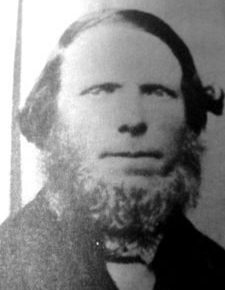
My great great grandfather John Ray Young was born 100 years before me. I was born April 13 1937, and he was born April 30 1837 in Kirtland Ohio. His parents were Lorenzo Dow, and Persis Goodall Young. Lorenzo is the youngest brother of Brigham Young, and the son of John and Abigail Howe Young. When John R. was one year old the family moved to Far West Missouri, and a year later were driven out of Missouri at the threat of death with all Mormons after Governor Liliburn Boggs issued his infamous extermination order. The family lost their home, and many of their belongings, and traveled to Illinois and settled in Nauvoo.

John R. was a sickly child, with many health problems, and spent much time indoors. I will now quote from his book, ‘Memoirs of John R, Young Utah Pioneer 1847’, which was published in 1920 by the Deseret News Press when he was 83 years old,

“One day father took me for a walk, to give me air and sunshine. We met Joseph and Hyrum Smith and Sydney Rigdon. Father shook hands warmly with Joseph, and Hyrum, but he merely bowed to Brother Rigdon. Joseph asked if I was the child father requested the Elders to pray for. Being answered in the affirmative, the prophet removed my hat, ran his fingers through my curly locks, and said, “Brother Lorenzo, this boy will live to aid in carrying the gospel to the nations of the Earth. His words thrilled me like fire, and from that hour I looked forward to the day when I should be a missionary. “

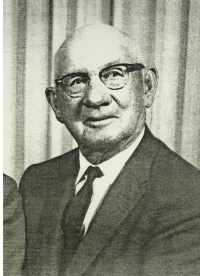
At the time of this prophesy John R was 7 years old, and not expected to live long. He died on September 15 1931 in Provo Utah Just 5 years before I was born, at the age of 94.

At age 16 (1854) he was called on a mission to the Sandwich Islands ( Hawaii ) I was called to serve a mission to Hawaii 104 years later in 1957 at the age of 20. John R also served missions to England and Wales, to further fulfill the prophesy of Joseph Smith when he was 7 and very sick. When John R. returned home from his first mission (4 years ), Johnsons Army was arriving in Utah, and most of Salt Lake had been evacuated to Utah County. On January 1 1859 he married Albina Terry, the oldest daughter of William Reynolds, and Mary Phillips Terry, and settled in Payson. Two years later (1861) Brigham Young called them and 10 other families to sell their homes and go to the Uintah Basin to establish a new settlement.

They sold their farm, and bought a team and wagon and loaded their belongings and their son, and went to Salt Lake City. When they arrived John R went to see Uncle Brigham fo instructions, and to visit, and was told that because of Indian problems in the Basin that he should return to Payson and buy a farm. In accord with the directions of the prophet, John R. Albina and baby John Terry returned to Payson sold the wagon and bought a house and 10 acres and took up farming again. Also in 1861 John R married my great great grandmother Lydia Knight, daughter of Newell and Lydia Golthwait Knight. I am presently living in Spring Lake Utah a small village between Payson and Santaquin, with a 5 acre farm, it is amazing that my ancestors would pick up and move any time they were asked. They were later called to Dixie (Santa Clara) and then to Orderville.

I would like now to back up 14 years to 1847 when John R. was 10 years old. His family was living in Winter Quarters, and in the spring the ‘pioneer’ company was making plans to blaze a trail to the Rocky Mountains. President Young asked Lorenzo to go with the advanced party, as he was an expert teamster, hunter, and mountain man. He agreed to go if he could take his wife Harriet Wheeler Young. Brigham was planning to only take men, but decided to take one of his wives, and a child, so Lorenzo took one of his sons.

John R’s mother was ill and stayed in Winter Quarters, but John R and his brother Franklin W ( 8 ) left soon after the advanced party, in the Jedediah M Grant Company. In his book John R. states that they were no ones responsibility, but everyones chore boys. It is heart wrenching to me to picture a sick mother sending a 10 year old son on a 1000 mile trek through wild country with an 8 year old in tow.

One morning when they were camped on Hams Fork near Ft Bridger, in what is now Wyoming, a cow was sick and would not get up. John was left behind to try to get her up and bring her to the next camp site. It is terrible to think of the fear he felt as the last dust settled from the wagons as they faded from view. While tending the cow he saw an Indian across the river, and he decided to leave the cow and head for camp. The next morning several men returned to the previous camp site, and found that the cow had been butchered by Sioux Indians ‘on the war path after Shoshones’, This band raided Ft Bridger, but left the Mormon train alone except for one sick cow.

While I was on my mission serving on the Island of Kauai I read the book written by John R. and was very interested in the missions to Hawaii. I read about one of his companions named William W Cluff, and my companion at the time was Devar Cluff. I asked my companion if he knew a W.W. Cluff and he told me no, but he would ask his mother . She wrote back and told him it was his great great grandfather.

Happy
Happy
0 %
Sad
Sad
0 %
Excited
Excited
0 %
Sleepy
Sleepy
0 %
Angry
Angry
0 %
Surprise
Surprise
100 %
You May Also Like

REES, Thomas: Poor Welch Immigrant

Thomas and his family wanted to go to Utah with the saints, but he didn’t have the money to do so. Thus, their pioneer pilgrimage began on their destitute little farm in Wales with an effort to save money for the journey. It took until 1868 for them to save enough to send Brigham and one of his older sisters to Utah. They sent them off with instructions to save money and help the rest of the family to come. Brigham sailed to the states on the steamship Colorado. If his sister traveled on the same ship with him, it was Elizabeth because she is the only one to closely match name and age (5). The ship carried 600 saints bound for Utah, and was the last of the year. It departed Liverpool on 14 July, 1868 (6), and arrived at the Castle Garden Immigration center of New York on 7 August, 1868 (7) They traveled by train to Florence, Nebraska (another account says the train took him to Wyoming), then walked the last 800 miles from there to Utah because the rail hadn’t been completed to Ogden yet. Records record him arriving in Utah in 1869, so he must have been delayed en-route. Brigham would have been one of the last of the pioneers to walk to Utah before the Golden Spike was driven in Ogden.
View Post

SWEETEN, Colen Hagle

Finally, I heard his muffled voice calling from the bottom of the well. He said that the horse filled the entire hole. There was just about enough mud and water to cover the horse. He could not find anything of the man or the shovel.
View Post

MAUGHAN, Harrison Davenport & Mary Freestone

Education had already become a high priority in the mind of this teenager. After twelve or fifteen months of employment she had saved enough money to enroll in the new Brigham Young Academy in Logan. Where had she learned what she needed to know to get admitted? How was she able to make her way in the environment of an academy? She may have attended school briefly as a small girl and perhaps for one year just after returning from Franklin Meadows. Mary left one little school workbook, labled “Alpine City, Utah.” It is filled with evidence of studies in math, geology, grammar (including diagraming sentences) and a lot of theology from the Bible. She also left another workbook in penmanship and a series of well-written essays on a variety of subjects. These showed good spelling and extraordinary penmanship, a beautiful script worthy of a highly educated person. Mary attended Brigham Young Academy for perhaps only three months, or maybe asmuch as two semesters. At the end of the spring term in 1882, the students exchanged messages in little autograph books, with one greeting per page in the form of a poetic sentiment. Each page is written in beautiful script – a very impressive exhibit, when compared to twenty-first century handwriting, which is often illegible at the college level!
View Post

WALLACE, George Benjamin

July 4 Sunday – Rain this morning. Public meeting. Elders P. P. Pratt, Taylor and Father Smith spoke against growing cold and careless, and neglecting to pray. They urged all to give thanks to God, who is blessing us all the time. They also spoke against swearing and taking the name of God in vain. They gave strong warning and spoke of some of the law which will be put in force hereafter. They exhorted to union, obedience, etc. and exhorted the fathers concerning their children, how to bring them up, etc. They said if we forgot God it would go with us as it did with the Lamanites, etc. We must not set fire to the prairie for it is a signal for the Indians to gather together. We have now come 175 miles. The conclusion is to travel each company of 50 by itself and to have it encamp and herd by itself.
View Post

GREEN, Robert Kenyon: Biography (1806-1884)

Winter in Ponca CampOn July 1st, 1846 a ferry was completed to cross the Missouri River. On the western side, a place called ‘Cold Spring Camp’ was established on recommendation of Bishop George Miller. It was late in the year, and the Green family pioneers had been delayed by heavy rains. They waited for instructions to either press on to the Rocky Mountains or find a place to spend the winter. Companies organized by Brigham Young and Heber C. Kimball at the Cold Springs Camp combined with Bishop Miller's Company and became the advance party for the church.
View Post

ADAMS, Arza Madsen

A muggy evening added to Arza’s discomfort with the chills and fever. Malaria had driven him to bed for several days, even though he had much work to do on his farm located just north of the village of Carthage, Illinois. It was dusk when William and John Barnes, two non-Mormon acquaintances, knocked on the cabin door with devastating news: Joseph Smith and his brother Hyrum had just been murdered in Carthage. One of two survivors, Willard Richards, wrote a short letter describing the disaster and asked the Barnes brothers to deliver the letter to Arza Adams, one of the few Mormons living near Carthage. Although seriously ill, a surge of adrenaline permitted Arza to drag himself out of bed, saddle his horse, ride to Benjamin Leyland’s cabin and ask him to join in a dash to Nauvoo.
View Post

PETERSON, Charles Sreeve

Mr. Powell, tried to persuade him to give up his faith or otherwise he would have to surrender his work position. He flatly told him no, as to deny his knowledge that he had received would be the greater sin. In his words, “I knew it would be a great sacrifice to me to give up my employment and the comfortable home which I appreciated so much, but to give up the principles which I had received and which I knew to be true would be a far greater sacrifice, and of the two I would choose the lesser … no position, wealth or earthly honor could move me from my convictions and purposes at that time…”
View Post

JACKSON, Elizabeth Horrocks: Handcart Pioneer of 1856

“It will be readily perceived that under such adverse circumstances I had become despondent. I was six or seven thousand miles from my native land, in a wild, rocky, mountain country, in a destitute condition, the ground covered with snow, the waters covered with ice, and I with three fatherless children with scarcely nothing to protect them from the merciless storms. When I retired to bed that night, being the 27th of October, I had a stunning revelation. In my dream, my husband stood by me and said, 'Cheer up, Elizabeth, deliverance is at hand'. The dream was fulfilled.”
View Post

ALLEMAN, John

JOHN ALLEMAN and his family arrived in Nauvoo in 1838 from Pennsylvania with two wagons, ten horses and their household possessions. He bought farm land and built a brick home for his family. He assisted in building the Nauvoo Temple and served as a cavalryman in the Nauvoo Legion.
View Post

YEARSLEY Sr., David Dutton: Giving His All

The Yearsleys made their way through the bitter cold winter weather to Winter Quarters. The hardships were so extreme that some entire families were buried along the way. “Thus, from day to day, slowly and wearily traveling, went the exiled Saints across the undulating surface of snow-covered Iowa. The Roads were very bad, the weather cold and stormy, and the streams, now frozen, now swollen by spring freshets, almost and at times quite impassable. Again and again they were obliged to double teams on the heavily loaded wagons, to drag them through deep streams and miry marshes on their line of travel. Some days three or four miles would be the extent of their journey. Many a halt was made, at times for weeks (5).”
View Post