0
0
 1
1

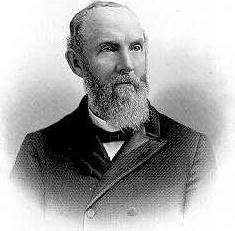
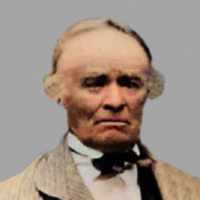
JOHN NEBEKER was the eldest of five brothers who were among the earliest settlers of Utah. Three besides himself—Henry, Peter and George—came to Salt Lake valley in 1847, and the other, Lewis, arrived a few years later. All the Nebekers of this region are descendants of these brothers, and all of that name in America are related to them. John was captain of ten in George B. Wallace’s fifty and A.O. Smoot’s hundred, a part of the first emigration that came to make homes in the midst of the Rocky Mountains. As colonizer, civic officer, legislator, and every other capacity in which he acted, he was a faithful, industrious worker and an honest, straightforward man.
His parents were George and Susannah Meridith Nebeker, and he was next to the eldest of their eight sons and two daughters. The date of his birth was August 1, 1813; the place, Newport, Newcastle county, Delaware. Up to thirteen years of age he attended the common schools of his neighborhood, and then studied at home under the tutelage of his father, who had a finished commercial education. The latter was foreman of a cotton factory in Delaware and a farmer in Illinois. He was also a government surveyor in Ohio. The mother was an intelligent and thoroughly good woman, the daughter of a Baptist clergyman of Wilmington, Delaware.
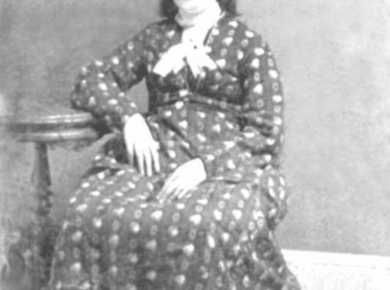
Their son John, who became proficient in mathematics, leaned toward civil engineering, and also had a taste for the legal profession. He would have succeeded in either had he been given the necessary education. At Covington, Fountain county, Indiana, he learned the saddle and harness-making trade, and this with farm work and labor in the cotton factory occupied his time until he attained his majority. Moving to Vermillion county, Illinois, he there made a home, dealt in horses, bought and sold furs, and was accounted a solid citizen. In politics he was a Whig, but he had many warm friends in the Democratic party. He was now a married man, having wedded Lurena Fitzgerald, a native of Pennsylvania, at Reily, Butler county, Ohio, October 25, 1835.
Mr. Nebeker became a Latter-day Saint during a visit to Nauvoo in the winter of 1845-6; his wife and his mother having previously been converted to the Mormon faith. Prior to taking this step he had thought of going to Oregon, but now he determined to follow the fortunes of the Saints. His political friends sought to dissuade him from his purpose, offering him various inducements to remain, but he was firm in his resolve to share the lot of his exiled co-religionists.
With a good outfit of wagons and cattle he left Vermillion county in the fall of 1846, and arrived at Winter Quarters on the Missouri in time to assist in fitting out the Pioneers, one of whom, Perry Fitzgerald, was his wife’s brother. After their departure he joined the general emigration, which in June, 1847, set out for the Rocky Mountains. On the way his son Ashton was run over by a wagon and had his thigh broken. The fractured bones wore set by Luke Johnson and Henry I. Doremus, the boy playing with a pocket knife while the operation was in progress, which was thought remarkable, no soothing drug having been administered to the little hero to prepare him for the ordeal. The date of arrival in Salt Lake valley was the 26th of September.
Mr. Nebeker and his family, having lived in the “South Fort,” an adjunct of the “Old Fort,” until the spring of 1849, moved onto a city lot (lot 4, Block 116, Plat “A,” Salt Lake City survey) and in that vicinity, it is claimed, he cut the first wheat that ripened and was harvested in this intermountain region. It is also said that he had one of the two apple trees that first bore fruit in Utah, the other tree being raised by President Brigham Young. The Nebeker tree ripened its fruit the first year of bearing. He took a great interest in the cultivation of fruit trees, he and his brothers bringing with them from Illinois quite a quantity of apple seeds ami peach pits, which being divided, the Nebekers planted one portion and William C. Staines the other. The young trees that sprang from these plantings, especially those raised by Mr. Staines—for the others were destroyed by crickets—are believed to have stocked most of the early orchards of Salt Lake valley. Mr. Nebeker not only kept his own orchards in fine condition, but assisted his neighbors in caring for theirs, giving his advice and instruction free. The general excellence of Utah fruit up to the invasion of the codling moth in 1869 was largely due to the public-spirited and unselfish labors of John Nebeker.
Prior to the organization of the Provisional State of Deseret, and while yet a resident of the fort, he acted as a deputy-marshal, first under Marshal John Van Cott and then under Marshal Horace S. Eldredge; his duties corresponding with those of a deputy sheriff of to-day. Many tough characters coming with the gold seekers on their way to California, Deputy Nebeker more than once had to arrest such persons, and for lack of a place of confinement would take them to his home and board and lodge them there, until their cases were disposed of by due process of law. It is related that for several weeks he had three men, encumbered with ball and chain, eating at table with his family and sleeping in the same room with himself and some of his children.
About the year 1852 he was a justice of the peace at Salt Lake City, but as such was more of an arbitrator than a judicial officer, it being his practice to get the parties, plaintiff and defendant, together, out of court, and in a neighborly way induce them to an amicable settlement of their difficulty. He got no fee for such services, but for that he cared little, so long as he could promote peace and save expense to his fellows.
In the fall of 1853 he presided over the missionary company which located and built Fort Supply on Smith’s Fork, near Fort Bridger, a movement intended to exert a civilizing influence over the Shoshone Indians. While there he represented Green River county in the Territorial legislature. The mission was abandoned in 1854, and three years later the fort was destroyed at the approach of Johnston’s army.
In the fall of 1861 Mr. Nebeker moved with a portion of his family (he had married a plural wife, Mary Woodcock, in September, 1854) to Toquerville, in Washington county, where he raised cotton, built and operated a cotton gin, and was associated with Apostle Erastus Snow in the settlement of Southern Utah, including what is now Lincoln county, Nevada, where he presided for some time, enjoying the confidence and good will of both Mormons and non-Mormons. In 1869-70 he went upon a mission to Illinois and Indiana.
From 1870 to 1872 he was Probate Judge of Kane county, and in the latter year represented that county in the Constitutional Convention. Ho now returned north and located a part of his family at Laketown, in Rich county, which section he represented in the legislature of 1874. Ecclesiastically, he was president of the Elders’ quorum for several years after the settlement of Utah, and at a later period was a member of the High Priests’ quorum.
John Nebeker was a man of veracity, of character and integrity. Possessed of a keenly sympathetic nature, he was ready at all times to render assistance to any one in trouble. He practiced self-denial, despised effemiuacy, and was noted for his impartiality and high sense of justice. If a member of his own family were a party to a dispute, and he the arbitrator, he would lean .almost to the other side in his efforts to be fair to the stranger, giving him the benefit of every doubt. He was very much inclined to take an unselfish interest in the welfare of others, generally thinking first of the comfort of those around him, and of his own comfort last. He was the father of ten sons and six daughters, most of whom grew to maturity. His sons William Perry, Ira and Aquila are among the best known of his descendants. He died October 25, 1886, at his home in Laketown.


 Brother Joseph

 Pioneer John