 0
0
 1
1

(1870-1950)
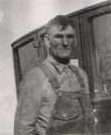
John Henry Mitchell or Jack as he was sometimes called was born on 1 February 1870 in Hooper, Weber, Utah. He came to Shelley, Idaho with his parents James and Anne Hull Mitchell when he was a young boy. His family settled on ground located 2 miles north of Shelley. At this time, there were no ditches, canals and only sagebrush. His parents had taken out pre-exemption homestead rights and had settled on 360 acres of land. There was much work to be done. First, they had to build a cabin because they had been sleeping in tents until a two-room log cabin could be built. They worked long days and nights building corrals and planting fruit trees and bushes. John and his brothers helped their father James build the Cedar Point Canal along with many other ditches and canals. This was done with teams of horses and shovels. (There is a DUP monument located by the Shelley Stake Center honoring these hard-working pioneers.)
John Henry knew only hard work and more hard work. Helping his father farm and prove up on the 360 acres with only horses was a full-time job.
I do not know the circumstances of how my grandfather John Henry met my grandmother, Elizabeth Ann Hull, but they had the same grandparents (Thomas Hull and Mary Benson). They were both born in Hooper, Weber, Utah so it is likely because of their being related to each other they probably grew up together and visited each other’s homes. At the time of their marriage on 2 March 1896 in Blackfoot, Bingham, Idaho, my grandmother already had one son named Lorenzo Lowery. I do not know if she was ever married to Lorenzo’s father. Anyway, my grandfather John Henry acquired a ready-made family.
Following a process that as each child became of marriageable age, the homestead became 40 acres less as the son or daughter would be given a sod shack and a team of horses to begin their life with their new mate. So it was that John Henry was given 40 acres of land. He built a two-story home and started farming. He was very stern and strict. He worked long, hard days farming and taking care of his family.
He would kill a pig, put it in a barrel, and then rub salt on it. It had to be par-boiled before eating because it was so salty. But the salt helped preserve the meat all summer.
John Henry smoked and used to roll his own cigarettes out of brown paper sacks. Underneath the old pot-bellied stove was where he would throw his cigarette butts.
John Henry, his father and his brothers had to go to the lava rocks to obtain cedarwood for burning in their stoves. This was a never-ending job. They would be gone days at a time with the horses and wagons or sleigh in the wintertime. This wood burned clean and hot.
He had four horses to farm with. These horses could also be hitched to the wagon to go into the town of Shelley for groceries and in the winter they would be hitched to a sleigh.
Grandpa had an old spud planter pulled by a team of horses. Grandma would sit on the back of the planter to make sure that only one spud set would go into the hole.
They had a big orchard and every morning Grandma would gather the windfalls and make delicious applesauce and other goodies. The red plum tree fruit was gathered, smashed and put in a wooden keg to make red wine. They used a red siphon hose to get the wine out of the keg.
In 1926 John Henry bought a brand new Model T Ford. This was before the Great Depression hit. After the depression, he didn’t have enough money to buy gas so the car sat for a long time until he sold it to his neighbor for $6. However, grandpa was not a good driver and many times he ran into a fence or a ditch.
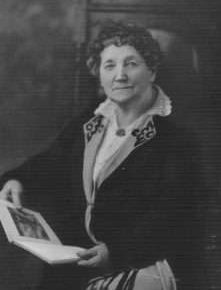
Grandma was a hard worker always cleaning, cooking, sewing, and helping grandpa on the farm. She always had homemade bread with sugar on it which she would give to her grandchildren when they came to visit. She suffered from asthma and later on in life she lost her eyesight to cataracts.
John Henry and Elizabeth eventually sold their farm to their son, Floyd, and moved into a large two-story red brick home in Shelley. Times were very tough and many times, they had no food to eat. They were very poor and lived on nothing.
I remember many times going to visit and my grandpa would always get out the checkers. That is how I learned to play checkers. My grandma would always give me bread with butter and sugar. It seems to me as I look back that I never really saw my grandma as a young woman. She was always old because she had worked so hard all her life. Even all the pictures I have of her depict her as an old person.
John Henry Mitchell died on 8 August 1950 in Shelley, Bingham, Idaho, and is buried in the Shelley Hillcrest Cemetery. Elizabeth Ann Hull died on 28 June 1964 in Shelley, Bingham, Idaho, and is buried in the Shelley Hillcrest Cemetery also.
Together they raised eight children and when their daughter, Nellie Viola died in childbirth, they helped raise her four children.
Their children are as follows: Lorenzo (Lowery), Evelyn Mary, William John, Edith Jane, Nellie Viola, Roland, Emmett, and Floyd.


 Brother Joseph