 0
0
 1
1
This article originally appeared in Vol.58 No.2 (2011) edition of Pioneer Magazine

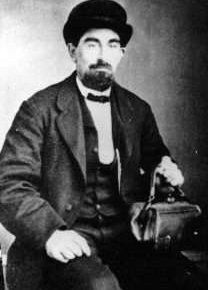
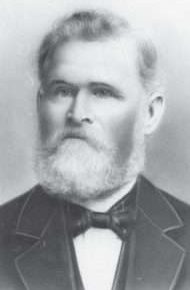
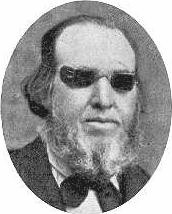
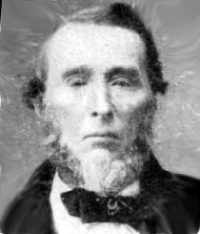
David Leonard Savage was born in Johnston County of Leeds, Upper Canada, July 25, 1810 or 1812. In February 1834 he married Theo (Theodocia) Finch, but she died shortly after the birth of their first and only child. Five years later David Savage came to Knox County, Illinois, where he was baptized into the LDS church by his brother.
David married his second wife, Mary White, in 1841 and was called to serve a mission to Michigan. David’s assignments during the Nauvoo period included electioneering for the Prophet to become president of the United States and working on the Nauvoo Temple. David and his family left Nauvoo in the fall of 1846. They traveled in Parley P. Pratt’s company and were three months on the way, arriving in Salt Lake Valley Sept. 24, 1848. In 1850 they were called as part of the first group to settle Lehi, where he served as second counselor to Bishop David Evans. In 1853 another call took the family to Cedar City, and then subsequently to Cedar Springs, later called Holden.
In 1859 he participated in the heroic rescue effort that saved the handcart companies stranded in Wyoming.
Also in 1859 he married Mary Ward Heeps and in 1860 married Margaret Jones Evans.
In 1863 he was called by Apostle C. C. Rich to go to Bear Lake to form a new settlement, Paris, Idaho. It was a very cold, hard country and was fraught with hardships and trials, including crop failures because of the cold. His health began to fail him; the strain was so great both on body and mind. After staying at Bear Lake three years, the family moved back to Holden. He moved to Snowflake, Arizona, in 1881 and died there in 1886.
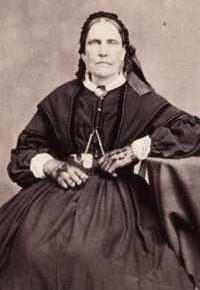
David Savage’s fourth wife, Margaret Emma Jones, whom he married in 1860, was born in Blackwood, Monmouth South Wales, England. Margaret’s family accepted the gospel and were baptized in 1843 and sometime after that emigrated.
Margaret was a seamstress, dressmaker and school teacher. History indicates that Margaret left David in 1869. It was believed that previously Margaret had received a letter from an old sweetheart, George Hancock, and asked her husband if she should answer it. He told her yes as it might get Hancock to join the Church, but instead it ended up with Margaret leaving David. Accordingly, David took his problem to President Brigham Young, who advised him to keep his children, which he did, except that he did not have the heart to take the baby, Gomer, from Margaret. In 1869 Margaret took Clara Sarah Evans, from her first marital union, and Gomer Savage, from her second, to California, where she married George Hancock. She died on Nov. 23, 1877, in California.
David Leonard Savage was a great friend to the Indians, He leaned to speak their language fluently.
“While the U.S. Army was encamped at Camp Floyd, just for pastime they fired on some Indians, which caused the Indians to go on the warpath. Three miles from this place was the little town of Cedar Fort. The Indians gathered in the mountains above the town and prepared to fight. Their war cries were terrifying to the people in the Fort. The men were gathered together for defense, and the frightened women and children huddled together in the little rock fort. Finally a band of Indians were seen advancing to attack.
“It was then that David Savage’s coolness and bravery and knowledge of the Indians and their language served a wonderful purpose. Despite the protest of his companions, who told him he would surely be killed, he went forth alone and unarmed to meet them. At first the Indians were very hostile and raised their spears and filled their bows ready to fill him with arrows, but he steadily advanced. He then told them that the men who had fired on them were not Mormons, but were enemies to the Mormons. The Mormon People were friends of the Indians and would always treat them kindly.
“He told them the Great Spirit would be displeased with them if they fought and killed each other. After parleying a short time the Indians rode peacefully away. Thus a cruel war and much bloodshed was avoided.”
Sources: Savage history recorded by 2nd wife, Mary White; LDS Family Search Records; autobiographies and histories of David Leonard Savage and wives; A History of Woolford and Hall Families by Jacqueline W. Solomon.


 Brother Joseph