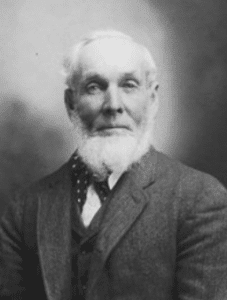
BRIGGS, Thomas

2 1
Read Time:47 Second

Bountiful Pioneer

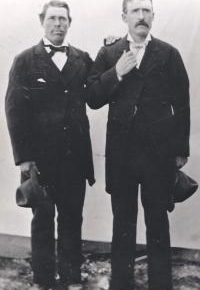
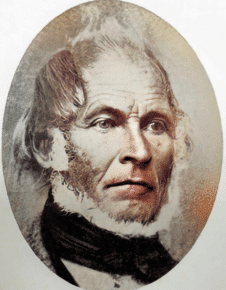
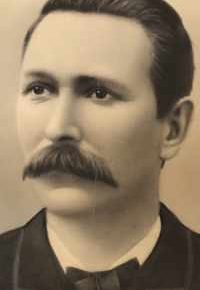
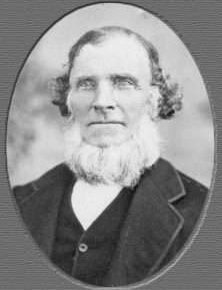
At their December meeting the South Davis Chapter eulogized the pioneer life of Thomas Briggs, which was presented by Bruce Briggs, a second great-grandson. Thomas Briggs emigrated to America in 1851. He made the six-week ocean journey from England to America arriving at the Port of New Orleans, then up the Mississippi River to St. Louis. Thomas finally arrived in Deseret and settled in Bountiful in 1862.

Thomas Briggs operated a lumber mill, farmed and was generally interested in community affairs. He served on the board of trustees for the local school. His interest in education was so deep that he set up a night school in a room in his home so that persons engaged or employed in daytime activity might further their education.

Thomas Briggs was a recognized peacemaker and over the years became successfully involved as an arbiter in problems between persons in the community.

This article originally appeared in Pioneer Magazine
Happy
Happy
50 %
Sad
Sad
0 %
Excited
Excited
0 %
Sleepy
Sleepy
0 %
Angry
Angry
0 %
Surprise
Surprise
50 %
You May Also Like

ANDERSON, Hans

They had 37 deaths on this voyage due to an out break of the measles and the stagnant and unfit water. Just 4 days before arriving in America, August 7th, Hans' grandson Carl Fedrick Liljeroth died. The "Emerald Isle" arrived at the New York harbor on August the 11th.
View Post

ATKIN, Thomas

Mary became seriously ill with a "rupture" in her side. The doctors could do nothing to help her. Thomas, watching her suffer, resolved he would be more devoted in serving the Lord, if only the prayers and desires of his heart and those of his children regarding his beloved wife would be granted. Eventually, Mary was healed. He did not forget the resolution and promise he had made with the Lord and commenced in earnest to inquire of his spiritual advisors.
View Post

ALSON, Thomas

At the time there were no free schools held in Utah, so students were required to pay tuition, which was rather difficult to provide; while attending with Peck, my tuition became considerable in arrears, therefore, he proposed that I assist him with classes at a salary of $1.00 per week and my tuition, (in all about $1.35 per week) the $1.00 per week to apply on deferred payments.I engaged to teach the Hoytsville School early in January 1876, at a salary of $45 per month. The school house consisted of one log room about 30 by 40 feet, heated by a stove in the center. The teacher was also the janitor etc.
View Post

COX, Orville Southerland

Occasionally, the monotony of the bellows was broken in other ways. For example: At one time, oxen were brought to the shop to be shod that had real hard hoofs, called “glassy hoof.” Whenever Deacon undertook to drive a nail in, it bent. Cox straightened nails over and over, as nails were precious articles in those days, and must not be discarded because they were bent. After a while, the boy said, “Let me.” He shod the ox without bending a nail. Thereafter, Cox shod all the oxen with one and all that came to the shop.
View Post

HOLBROOK, Judge Joseph Holbrook: Faithful Saint

He served in the state legislature from 1859 to 1862 inclusive, it being held at the court house in Salt Lake City. January 20th, 1864, he was again appointed Judge of Davis County. There was a company of "Silvergrays" formed in the south portion of Davis Co. and mustered into service on the 8th day of August 1857, from members of the Nauvoo Legion. They were called the "Mountain Sharps."
View Post

ASHCROFT, Henry

In those days, the Saints in each settlement were instructed by the General Authorities to have dramas and other amusements for entertainment. In the field of music and drama, Henry was especially gifted. He was a member of the first dramatic organization of Hyde Park. He, Rachel Seamons (Hancey), and Eliza Seamons (England) received much praise for their stage work. Henry had a wonderful bass voice and sang in the choir.
View Post

ALLEN, Joseph Stewart: Blessings For Those Who Serve

"I simply cannot go on any farther; my feet are too sore." They sought out a fallen log (tree) and there sat down to rest. There, too, they knelt down to pray. They prayed for some shoes out there in that raw, bleak country away from stores or from any town where shoes could be bought if they had the money to buy them. They must have had great faith for after sitting there awhile longer to rest they rose to go on and saw there beside the log a pair of shoes. "They were surely meant for you, Brother Allen," said his companion. "They would not do for me at all. They are too small." So Joseph put on the shoes which fit perfectly and they traveled on.
View Post