0
0
 1
1
Richard Alldridge:
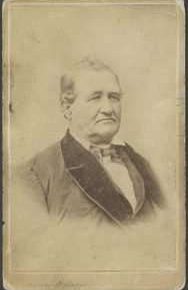
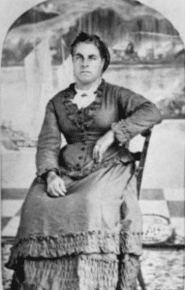
Richard Alldridge was born in Floore, Northampton, England, 15 May 1815, son of Robert Alldridge and Elizabeth Haycock Alldridge. He married Ann Gordan Blunt, daughter of John Blunt and Jane Gordan Blunt, September 1836, Northampton, Northampton, England.
Northampton was occupied by the Danes who probably fortified it in A.D.9l4. Town walls and a castle were built. Tanning was an industry in the time of Edward I and in 1675 a law was made forbidding strangers to purchase hides in the town of Northampton except on fair days. Boots and shoes were made there in the reigns of John, who visited the town 31 times and bought a pair of boots for nine shillings. By the 17th century it was one of the most noted places in England for the manufacture of boots and shoes.
The town stands on the Nene River above which four main roads converge to meet at All Saints Church and the civic center. Below this is a large market square. A disastrous fire destroyed 600 houses and many churches. The All Saint's Church, a civic church was rebuilt; St. Giles is a cruciform structure dating from the 12th century; St. Peter's was built about 1160 and St. Sepulchre’s, the Northamptonshire regimental church, is one of the four round churches remaining in England. In St. Matthew's church is the famous painting “Madonna and Child" by Henry Moore. Northampton is the seat of a Roman Catholic bishop. In the 13th century many monasteries were built but these are gone.
The town and county schools were founded in 1541; there are grammar schools for boys and girls, a technical high school and a college of technology and art. In the Central museum and art gallery is a collection of footwear dating from the 15th century.
Grandfather and Grandmother Alldridge left Northampton and went to Birmingham, Warwickshire, England to live. They evidently thought there were greater opportunities there and that surely, proved true. Birmingham is the center of a large industrial area in the West Midlands. It is of far more recent growth than most other cities of comparable importance. The city has no ancient cathedral or mediaeval castle, and although little is known of the origin of Birmingham, it did not exist before Anglo Saxon times. The city is the home of a wide range of manufacturing enterprises, and has the world's largest cocoa and chocolate factory. Its manufactures include a great variety of metal products, but it is best known for its motor vehicle and electrical industries. Birmingham is the center of cultural life for a large industrial area, with a university, an important concert hall, museums and a repertory theater. Its Shakespeare Memorial Library contains the largest Shakespeare collection in the world. Birmingham claims 1,500 different trades. The engineering trades greatly increased its importance. Jewelry, gold and silversmithing are old established industries.
A demand for the goods manufactured in Birmingham grew because of their excellence in workmanship, quality and dependability. The growing prosperity of the town attracted men of ambition, and they were also attracted by the freedom which existed there. It was not a corporate town and so was not encumbered in religious matters by the Acts of Uniformity. Nor did it suffer from the restrictive influences of craft and trade guilds. During the 18th century, Birmingham became the home of 1eading scientific thinkers and industrialists. The Lunar society, at which scientific and phi1osophcal problems were discussed; Joseph Priestly, oxygen discoverer, botanists, mineralogists, engineers, astronomers, designers and scientists all came to make their homes in Birmingham. It has many parks, schools. colleges, and last, and of great importance, Birmingham has a traditional reputation for nonconformity; other religious groups were permitted to meet, Quakers, Congregationalists, Unitarians, Methodists, Baptists, and others have many churches and meeting places in Birmingham. This made it possible for the Gospel of Jesus Christ to be so successfully accepted and explains why our Grandfather Alldridge went to Birmingham to live and. establish his business. They were there 'When the missionaries arrived to bring them the Gospel.
The LDS missionaries were hospitably treated in the home of Grandfather and Grandmother Alldridge. and they were eager to hear about the Gospel of Jesus Christ. The elders came in 1847 and Grandfather was baptized anf confirmed a member of the Latter-day Saint Church in the Birmingham Branch, 31 July 1247. Grandmother followed his example and joined the LDS Church 18 September 1847. Their daughters joined 3 December 1849, two years later.
Richard Alldridge served as a missionary in England for many years before coming to Utah. The Millenial Star (a Church publication) of 23 April 1861, lists this family as numbered with 624 Saints who left Liverpool, England, on the ship “Clipper-Underwriter”, 23 April 1861. The day before their departure from Liverpool, Presidents Lyman, Rich, and Cannon visited the ship and held a meeting on board, giving the Saints their parting blessings and many choice instructions.
“May God bless them in their journey onward to the home of the .saints in the Valley of the Mountains. (Journal History, 2) Apr 1861). The company arrived in New York. 22 May 1861, thirty days travel on water, and under the presidency or leadership of Milo Andrus, Homer Duncan, and Charles W. Penrose. they trave1ed on to Florence (now Omaha) Nebraska, arrived 2 June 1861. Here they waited and prepared for their journey across the plains westward, until the men who had been called by President Brigham Young to go east and meet the emigrants and help them in their travels, arrived in Nebraska.
The company of 620 Saints , with 38 wagons, left Nebraska 21 July 1861, for the Salt Lake Valley and arrived there 12 September 1861. Elizabeth and Grandmother were sick most of the way crossing the plains, but their daughter Ann, helped those less fortunate to endure the long and tedious journey.
One of the young men sent East to help the emigrating Saints, was also a convert from Macclesfield, Cheshire, England. who had joined the LDS Church in the Staffordshire Conference, Macclesfield Branch, England. He joined the Church 9 June 1850 and had sailed on the Ship “Ellen Marie” and arrived in Utah 15 September 1853. Thomas Thorley went to Cedar City, Iron, Utah, to help colonize that area. His assignment to help this particular company across the plains was very fortunate for him because he became acquainted with Ann Alldridge, learned to love her, and. they were married soon after the company arrived in Salt Lake, 21 September 1861, in the Endownent House.
This young couple left to make their home in Cedar City, Utah, but the Alldridge parents and sister, Elizabeth stayed in Salt Lake for several years before they went to make their home in Cedar City, Utah. Elizabeth had married David Woolley before her parents went South.
Grandfather Alldridge brought his shoemaking equipment with him from England and because his superior skill was requested to make boots, etc., for Army officers and others who wanted better shoes than were obtainable elsewhere. He was evidently very happy in his work because he sang at it, wrote songs and occupied his mind and hands at the same time. His songs were songs of praise and thankfulness to his Heavenly Father for the many blessings received, and the knowledge he had of the true Church. He was active in civil and community affairs, in Church and was influential because of his fine character and example. People respected him and appreciated his fine character.
A notice in the Deseret News is copied: DEATH OF ANOTHER PIONEER- Information has been received in Salt Lake by relatives of Richard A1ldridge of Cedar City, Utah, that he had died there yesterday. The cause of his death is not definitely known but as he was 82 years of age, it is possible that it was due to no unusual conditions. His daughter, Mrs. Elizabeth Alldridge Evans of the 18th ward, took the first train South to be with her father but he died one hour before she arrived in Cedar City. Richard Alldridge was one of the outstanding pioneers of Southern Utah and was known as a sterling and upright citizen. Millennial Star.
It is an honor to be fortunate to have such ancestors as Grandfather and Grandmother Alldridge, Grandmother Ann Alldridge Thorley, Grandfather Thomas Thorley, and others who bequeathed such a rich heritage to their descendants.
NOTE: A list of some of the songs written by Richard Alldridge, and comments about them by J. Spencer Cornwall, are contained on the hard copy filed at the Sons of Utah Pioneers office in Salt Lake City, Utah.


 Brother Joseph