 0
0
 1
1
Compiled by Jennie B. Hill

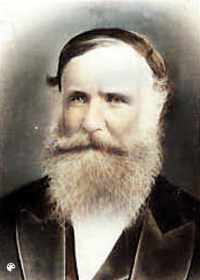
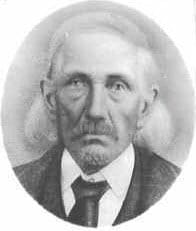
Heamon Alison Hill was born at Petersboro, Hillsboro County, New Hampshire on 24 December 1836. He was the son of Leonard Hill and Sally Forbush. On his father’s side he was a grandson of Asahel Hill and Ruth Rumrill. On his mother’s side, he was a grandson of Simeon Forbush and Catherine Hosmer.
The Forbush family lived on Capt. Thomas Morrison’s farm. They had five children, four sons and one daughter. This daughter was Sally who is the mother of Heamon Alison Hill.
Leonard and Sally Forbush Hill were married 21 November 1826. Sally’s wedding dress was a pink brocaded silk, a very lovely color. Leonard and Sally lived at Petersboro, Hillsboro, New Hampshire where all their children were born except their last child who was born at Nauvoo, Illinois.
Their children were as follows:
- Charles Fredrick Hill Born 6 Jan 1829 Died 6 May 1847
- Sarah Julia Hill Born 21 Nov 1830 Married Bingham Bement
- Jerusha Morrison Hill Born 21 Mar 1832 Married Courtland Searle
- Cyrus Andrew Hill Born 3 Apr 1834 Died 30 Jun 1834
- Heamon Allison Hill Born 24 Dec 1836 Married Lurancy Chase 25 Nov 1860
- George Eldridge Hill Born 29 Aug 1838 Died 28 May 1907
- Mariah Josephine Hill Born 13 Apr 1840 Married Courtland Searle
- Justis Franklin Hill Born 16 Nov 1841 16 Nov 1841
- Emerald Jasper Hill Born 30 Sep 1845 30 Sep 1836
Leonard and Sally lived in Petersboro until 1843, when they joined the Church of Jesus Christ of Latter Day Saints. They were the only two of their families who joined the church. They moved to Nauvoo, Illinois where their last child was born but lived only one year.
Heamon Alison’s parents were firm and true to their faith and gave their lives for the sake of the gospel in the exodus from Nauvoo. They were ostracized from their two families. One book on genealogy says “they joined the Mormons and went West”.
Aunt Mariah Searle, who I interviewed before writing this sketch, stated that her father was a carpenter by trade and they had a very comfortable home in Petersboro.
When they moved to Nauvoo he helped build many of the homes in that city. She said they had a home on the outskirts of Nauvoo but it was it was not completed in one day. She remembers this distinctly: She was sitting in the doorway when the Prophet Joseph Smith and his brother stopped at their home and came to the well for a drink. They were on their way to Carthage where they were shot and killed. She said that her father said that this was the last place they stopped as they left Nauvoo for the last time. The cup that they used was kept in the family for a long time. She said they came to the well, but they did not come into the house.
Before their father could complete their home, an armed mod drove them out of Nauvoo in the Spring of 1846. They, along with thousands of others were forced leave all they had except the few things they could gather in their wagons, and started West with the saints to an unknown land. This was done by the orders of Governor Ford of Illinois.
After crossing the Mississippi river, the sanitary conditions were so bad that the family took sick. They were sick for a long time. During that time their father and baby Jasper died. They were so poor that they did not have enough money to bury their father and baby brother.
“The Lord blessed us, for a man came to see us and seeing our plight, took us to his farm, gave us one room in his home, put our cattle in his pasture and buried our father and baby brother on his burying ground. We stayed there for a long time because our mother was so ill and also our older brother Charles. About February we reached the east side of the Missouri river. From lack of food and exposure to cold, our mother again took sick and died 17 Feb 1847. We pulled her body on a hand sled across the Missouri river to bury her on a hill. It seems that we were to be further tested because on the 6th of May 1847, our older brother Charles died thus leaving five out of our family of seven, three girls and two boys. We had no parents, no home and no food. Sarah, the oldest, was 17 years old. She did all she could and the Bishop helped, too, but we sold everything that could be spared to buy food; even our clock and looking glass had to go.”
At last our family had to be put in different homes. Sarah and Mariah went to live with a family by the name of Havers or Harvers. Mr. Jesse Harvers was on a mission. Jerusha lived with a family by the name of Farnsworth, and Heamon Allison and George lived with a Turley family. It was while Heamon Alison lived with this family that one of the Turley boys snapped a whip and it stuck Heamon Alison in the eye causing him to lose his sight in that eye.
After our sister Sarah married Bingham Bement, a widower with two sons, we all went to live with them. We only had one room, but we were all together. While here trying to go on to Utah, an epidemic of smallpox broke out and we all had the disease. Sarah was expecting her first child. When it was born it was literally covered with small pox and only lived a short time. Aunt Mariah said that those were such trying times because they had such a little to go on.
In the Spring of 1850, Heamon Alison Hill started across the plains with a Mr. Bigford and wife. Mr. Bigford took cholera and died. This made more work for Heamon Alison and he said,
“I not only walked the distance but to keep the sheep and cattle on the trail, I walked thrice the distance. I only rode one half day when I was too sick to walk.”
He arrived in Salt Lake City in October, 1850. All he owned was the clothes he had on. That was a long and tiresome trip for a boy of 14 years.
His sister Jerusha married Courtland Searle and they were sent to settle on the Peteetneet creek, now know as Payson. Heamon Alison came with them in that first group of pioneers to Payson. He was one of the two boys that raced to the creek to get a drink, and he won out. He worked wherever he could. The first year he herded cows for his board. Later he rented a piece of hay land south of Salt Lake City. He had to cut the hay with a scythe and give the owner 3/4 of the crop for rent.
About this time he went to visit Lurancy Chase. He asked her to marry him in the spring of 1860 but she said,
“I could not see living on that farm, so I put him off until 25 Nov 1860. When we were married, we lived in two rooms of my father’s house. These were log rooms with no chinking. We had plenty of fresh air and it was plenty cold”.
In 1862 they moved to Payson, Utah, and built the little log cabin that now stands on the corner of 3rd West and 2nd South. When first built it had a dirt roof. This was the first home Heamon Alison had since the family left Nauvoo. He was as proud of that humble cottage as we are of the lovely homes we have today.
They had been married 5 years and no baby had come to bless that home. Grandma Hill said one day a Mr. Milan Filmore came to her door and asked her if she would take his baby. She hesitated because she had no experience with babies. When he saw her hesitate, he raised his arm and said,”Sister Hill, I promise you in the name of Jesus Christ that if you will take this motherless child and love it and care for it, the Lord will bless you with children of your own”. She took the baby, but it later died. Grandma Hill said, “I thought I would have felt no worse if it had been my own”.
On 2 Apr 1866, about one year later, a baby came to their homes. They named her Mariam Lurancy after her grandmother Mariam Gove and her mother.
Heamon Alison Hill must have had great faith, for when President Brigham Young called for volunteers to go back and help the emigrants who did not have sufficient means to get to Utah, he left his wife and three week old baby girl on 25 Apr 1866, took his team and again started across the plains. We have a letter that he wrote to Grandmother Lurancy Hill just before he reached Fort Bridger, Wyoming, as follows:
(Dated 10 May 1866) “All is well. I have lost my appetite in Provo, and found a dog’s for I can eat double rations. We have had one mud hole that has reached all the way. Our cattle are lost every night. I see Charles, he is the night herder. I see Sisson. We are in three different companies. I was glad to hear from father. Sisson said that he was getting well. He was over to the Bishop’s the day he left home. We have very heavy loads. We have cattle give out every day. My team is able to work yet. It has rained or snowed almost every day and night since we started. Our captain is too slow and easy.
“I have not forgot you. And I hope you are all well. Tell little Lurancy to be a good little girl and pop will bring her something pretty. Remember your prayers. Direct a letter to Laramie and write on the envelope ‘remain here until called for’. Camped six miles this side of Bridger. Your affectionate husband, Alison H. Hill. 11 May, I guess this is enough. I wrote on an ox yoke. Arrived at Bridger 17 May”.
Grandpa Hill returned six months later, October, 1866. This was a great sacrifice at this time of his life, as he was needed so much at home to make his family comfortable. After that trip his health was never as good as before due to cold weather and exposure.


 Brother Joseph