BAMBROUGH, Annie

0 1
Read Time:1 Minute, 15 Second
Submitted by Paul Bambrough
Joseph Bambrough and Margaret Charlton were coal miners in Northumberland England.  They heard about opportunities in America and in 1864 arrived in Pittsburgh, Pennsylvania.

Annie was born July 3, 1866 – a couple years later, two elders met with the Family – were baptized 1868. The coal company fired Father Joseph and kicked them out of the company’s housing –  thinking the “Mormon’s” were members of a cult.  The family ended up in St.  Louis and joined a wagon train for Utah. Father Joseph and Mother Margaret took turns walking – while Annie’s brother Matthew (Paul’s Grandfather) who was 6 years old walked almost the whole way to Utah.

However – Annie at 2 years old had  never been able to walk and had to ride the whole way in the wagon.  Elders promised Her parents if they came to Utah they would be blessed and Annie would walk.  They arrived July 2, 1868 at Pioneer Square, in Salt Lake City.  Annie was put down on the ground – stood for a few minutes and took her first steps.  The Bambrough’s settled in South Weber, Utah.

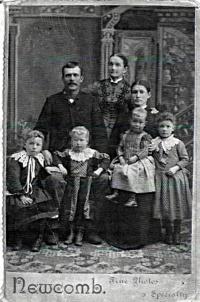
The William and Annie Jones family

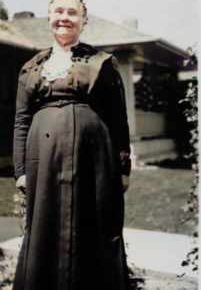
Annie married William H. Jones on July 10, 1883. They had 12 Children  – raising 11 to adulthood.  Annie and William remained active in the Church – they were noted for their integrity, honesty, courage, faith and loyalty.

Annie Bambrough Jones died August 12, 1939 – age 73 – Buried in Pioneer Cemetery , Rigby, Idaho.

Happy
Happy
0 %
Sad
Sad
0 %
Excited
Excited
0 %
Sleepy
Sleepy
0 %
Angry
Angry
0 %
Surprise
Surprise
100 %
You May Also Like

ROBERTS, Levi

After travelling over the mountains one day we met with some of our brethren from the Valley. This was a time of rejoicing. Captain Brown who left us at Santa Fe with the sick which went by the way of Fort Kearney and a few brethren with him from the Valley, brought news that we were not to go to the Valley, and told us we had better stay another year in California. So the company divided right where we met each other; some went on to Winter Quarters; some to the Valley, and some turned back. Daniel Browett, Slater, Cox, Levi Roberts and myself turned back to Sacramento and went to work for Mr. Sutter who treated us very kindly. I sent a mule to my wife with Brother Harris, which she got…. We all went to work at the same place for Captain Sutter. We took the work of cutting a millrace. Brother Browett went [p.379] to work with the millwright, this was in September and later on in the fall, I and two others took sick with the bilious fever. We were so sick we couldn't help each other to a drink of water. We lay under some ties and had to crawl around with the sun to keep from making us chill…. Our appetites were very poor, and our food was flour, water and squash. Had it not been for the thoughts of my wife and family I could have died, but we all three recovered after awhile and went to work on the millrace again and worked all winter. Sometime in the winter two of the brethren who were working for Mr. Sutter in the mountains found gold in a tailrace they were making. Mr. Sutter let me see the first gold they found before sending it to San Francisco to get it tested. In May 1848 some of the brethren and myself made a trip in the mountains to try and find a road over (instead of going down Truckee River, as we had to cross it about 20 times) but when we got in the mountains we found so much snow we had to return, and on our way back I stopped at what we called the Mormon Island, where there was some of the brethren at work getting gold, Brother Sidney Willis and his brother; also Brother Hudson. I stayed here for a short time and got some gold.
View Post

ALLRED, Isaac

He promised them that they would not have to shed the blood of their fellowmen, but that this added affliction heaped upon them in this hour of their trials would turn out as a blessing upon their heads. Several of the young Allred boys joined the "Mormon Battalion" and performed with that Battalion in the longest march of foot soldiers in length of miles ever traversed by any army in the history of time.
View Post

HURST, Philip

This biography originally appeared on pioneerstories.org Philip Hurst wrote the following to the “Salt Lake Herald” concerning Indian affairs in Sanpete County.  It was published on 1  January 1873.  Indian…
View Post

SAVAGE, David Leonard: Indian Peacekeeper

In twenty minutes, he was decked out in war paint and feathers and riding through Cedar Fort giving his terrifying war cries and soon the mountains rang with the death call of these desperate people. They were on the war path for sure, assembling their forces they hid in a ravine near Lehi. When the stage coach passed, the driver and all the passengers were massacred.
View Post