 0
0
 1
1
Submitted by Brad York
- Born: 27 August 1807, Bethel, Oxford, Maine
- Died 12 November 1881, Santaquin, Utah

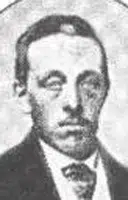
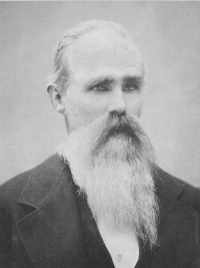
Aaron Mereon York (Sr.) was a convert of the Church. He was taught by two of the early missionaries of the Church, Daniel Bean and John F. Boynton who was to become a member of the First Quorum of the Twelve. Unfortunately, Elder Boynton would also become a bitter enemy to Joseph Smith and the Church. Aaron was a polygamist with two wives, and we descend from his second wife, Mary Trueworthy Carter. Mary and Aaron had five sons and three daughters. His first wife was Hannah Carter, daughter of John and Hanna Knight Libby Carter with whom he had six sons and two daughters.
Aaron migrated from his ancestral home in Bethel, Maine in 1834 to be with the Saints in Kirtland. He aided in building the temple at Kirtland and along with the rest of the church was driven by persecution from Kirtland, Ohio to Far West, Missouri.
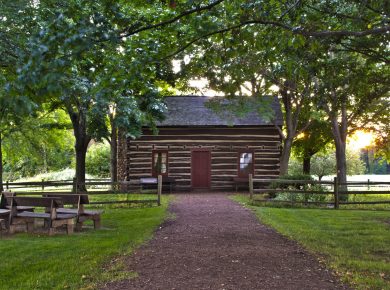
While at Far West Missouri in October 1838, his home, his blacksmith shop, and everything else he owned was burned by the mobs acting on the Mormon Extermination Order issued by Governor Lilburn Boggs. On October 30, 1838, at approximately 4 p.m., as a mob rode into the Haun’s Mill community, most of the Latter-day Saint women and children fled into the woods to the south, and most of the men with guns in hand headed to the blacksmith shop.
Unfortunately, the building was a particularly vulnerable structure as the widely spaced logs made it easy for the attackers to fire inside. The shop became a deathtrap, since the mob gave no quarter, discharging about 100 rifles into the building. Thomas McBride was wounded and surrendered his gun to Jacob Rogers, who shot him dead and then hacked his body with a scythe.
After the first attack, several of those who had been wounded or had surrendered were shot dead. Members of the mob entered the shop and found ten-year-old Sardius Smith, seven-year-old Alma Smith (sons of Amanda Barnes Smith), and nine-year-old Charles Merrick hiding under the blacksmith’s bellows. Alma and Charles were shot (Charles later died), and a mobster man known as “Glaze, of Carroll County”, killed Sardius when he “put his musket against Sardius’s skull and blew off the top of his head.”
Later, William Reynolds would justify the killing by saying, “Nits will make lice, and if he had lived he would have become a Mormon.” Several other bodies were mutilated, while many women were sexually assaulted. Houses were robbed, wagons, tents, and clothing were stolen, and horses and livestock were driven off, leaving the surviving women and children destitute. John York, Aaron’s cousin, was one of the 17 men killed at the Haun’s Mill Massacre. The Missouri Executive Order 44 “Claiming that Mormons had committed open and avowed defiance of the law and had made war upon the people of Missouri” was the false pretense Governor Boggs used to direct that “the Mormons must be treated as enemies and must be exterminated or driven from the State if necessary for the public peace”.
Aaron and the rest of the Saints headed to Nauvoo, Illinois to establish yet another place of refuge and to build another temple to the Lord. They lived in Nauvoo for the next eight years. From Nauvoo, Aaron was called to serve two different missions to Maine, his home state. When leaving on the first, his wife Hannah insisted that he go despite their poor conditions. He left the family with only a pan of cornmeal and a new milk cow. Upon his return, he worked on the temple and worked in the temple when it was completed, and he was ordained a High Priest.
Aaron was an educated man and in addition to his professional duties as a blacksmith, he served as a music teacher to the Saints in Nauvoo. His wife Hannah taught school, and they both had beautiful singing voices. He was well acquainted with the brethren and was visited by the Prophet many times. Aaron provided Joseph with horse and buggy transportation on several occasions as he traveled the 300-mile round-trip route to Springfield, the Illinois state capital, to seek protection and redress from the Governor.
He was a Pioneer in 1850. The William Snow/Joseph Young Company left Council Bluffs, Iowa on June 21, 1850, and arrived in the Salt Lake Valley on October 4, 1850, a journey of 105 days. 487 people and 42 wagons were the makeup of the company. Seven died from cholera early in the trek. Aaron was accompanied by Hannah, and six children ranging in age from 17 to eight months. His oldest son Asa took over the duties of driving a wagon for the Bickford family when Ezra Bickford died of cholera. When the family arrived in Salt Lake, Aaron set up a blacksmith shop with his brother-in-law, Dominicus Carter. They forged many of the first tools that farmed the valley.
His oldest son Asa writes about Aaron, saying; “my dear father was with me when Mary and the boys died [Asa’s wife and 3 sons died of diphtheria in 1866], he and his wife Mary stayed with me during that winter of trial. He was a great comfort to me. I loved and honored my father and was always ready to take his advice”.
Aaron was always a faithful Latter-day Saint, and whenever the brethren called on him to do anything, he did it. He died faithful to the end. He lived and died on the covenant path.


 Brother Joseph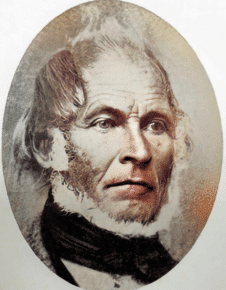

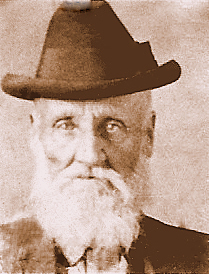
 Pioneer John