WATT, George D.

0 1
Read Time:1 Minute, 30 Second
This article originally appeared in Pioneer Magazine, 2010 Vol.57 No.3

On Saturday evening, July 29, the Mormon missionaries agreed to baptize 15 of the eager investigators the following morning in the River Ribble.

Heber C. Kimball

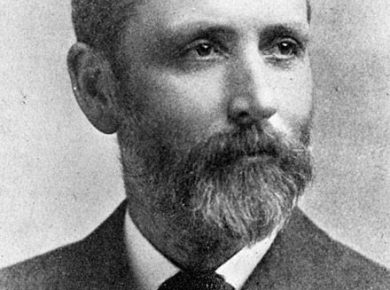
Heber C. Kimball estimated that between seven and nine thousand people were sitting and standing on the bank, watching the open-air baptisms. He records:

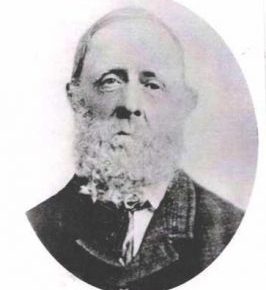
“Two of the male candidates, when they changed their clothes . . . were so anxious to obey the Gospel that they ran with all their might to the water, each wishing to be baptized first. The younger, George D. Watt, being quicker of foot than the older, outran him, and came first into the water” (in Whitney [1967], 135).

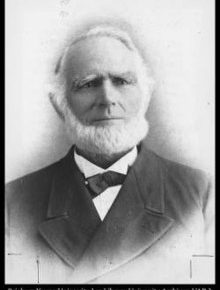
In 1842, Watt left England to join the gathering of the Latter-day Saints in Nauvoo, Illinois. In 1846, Brigham Young sent Watt and his wife back to England as Church missionaries. Watt used his skill at Pitman shorthand in serving as a clerk to mission president George Q. Cannon. In late 1850, the Watts returned to America and joined the new gathering of Latter-day Saints in the Salt Lake Valley in Utah Territory.

George D. Watt was on a committee called by President Brigham Young as part of a project to help simplify spelling in the English Language. The Deseret Alphabet came about on January 19, 1854, when the Board of Regents of the University of Deseret announced that they had adopted a new phonetic alphabet. The new alphabet consisted of 38 to 40 characters and was developed mostly by George D. Watt.


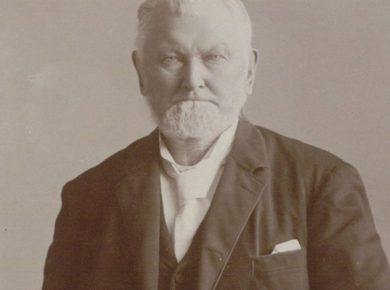
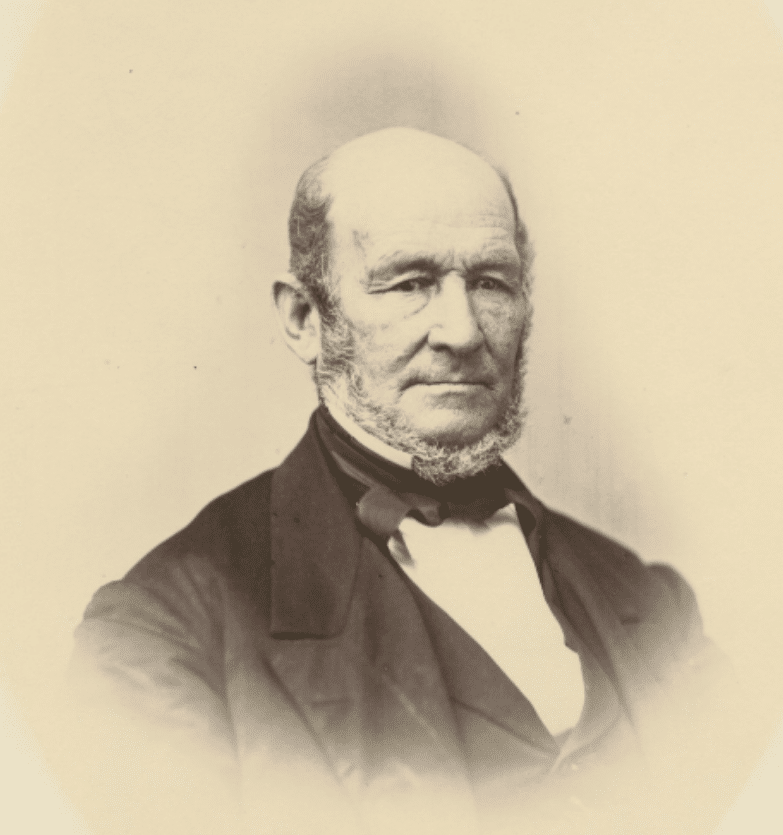
Excerpts from Ronald G. Watt, “Sailing the Old Ship Zion”: The Life of George D. Watt,” BYU Studies, 18.1. George Watt photo courtesy LDS Church Archives.

Happy
Happy
0 %
Sad
Sad
0 %
Excited
Excited
0 %
Sleepy
Sleepy
0 %
Angry
Angry
0 %
Surprise
Surprise
100 %
You May Also Like

JACOBSEN, Christian Jensen: Frontier Craftsman

Another life altering experience occurred in 1854 when L.D.S. missionaries introduced the Jensens to a new religion. After a short investigation Christen and Kirsten were baptized on a cold day in December and became the first members of the church in their local area. Soon after, Christian was called to be a local missionary and also to preside over two branches of the church. In the fall of 1857 he was assigned to open a mission on LæsØ, an island located midway between Jutland and Sweden. As a missionary he received frosty receptions but soon encountered some inhabitants in need of his clock repairing skills. This led him to adjust his strategy and avoid the topic of religion until he had the family’s clock dismantled. Once the family knew him as a clock repairman, they were more prone to discuss religion with him. Using this strategy, and after visiting the island several times, Christian baptized a dozen or so members and organized the Byrum Branch there.
View Post

ANDERSON, Editha Morgan

Whatever else she was, Edith, like many other mature single Latter-day Saint Women, had internal strength and strong religious beliefs sufficient to tolerate an environment that was unsympathetic toward mature single women, as exemplified by Stout’s comments.Editha established a private school in her small log cabin that was located on 1st North and about 70 West in American Fork. It served as a bedroom, living room, and a tightly packed class room. The dwelling featured one door, one window, two beds, a wood stove, and a rest facility located out back of the cabin. Her rudimentary school attracted a dozen or so students, about the same number of youngsters as attended another school that met in a community-owned building that served as a place of worship and education.
View Post

WOOLSEY, Joseph Henry and Abigail Schaeffer

When her daughter Agatha Ann Woolsey, the first wife of John D. Lee, introduced her to the Gospel, she embraced it whole heartedly, remaining faithful from her baptism 17 Jun 1838, in Vandalia, Fayette County, Illinois, until her death on the cold dreary plains of Wyoming, just before “Rocky Ridge” on the way to the summit of the Rockies.
View Post

ALEXANDER, Abel

Their two year old daughter, Edna, received fatal burns when a pot of freshly made tea was upset, scalding her chest. Due to the shock of the accident as well as the severity of the burn, she died on December 17, 1853. They had to use the funds they had saved to pay for the medical care and burial expenses for their little one.
View Post

YEARSLEY Sr., David Dutton: Giving His All

The Yearsleys made their way through the bitter cold winter weather to Winter Quarters. The hardships were so extreme that some entire families were buried along the way. “Thus, from day to day, slowly and wearily traveling, went the exiled Saints across the undulating surface of snow-covered Iowa. The Roads were very bad, the weather cold and stormy, and the streams, now frozen, now swollen by spring freshets, almost and at times quite impassable. Again and again they were obliged to double teams on the heavily loaded wagons, to drag them through deep streams and miry marshes on their line of travel. Some days three or four miles would be the extent of their journey. Many a halt was made, at times for weeks (5).”
View Post