 0
0
 1
1
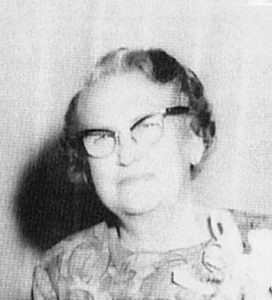
Pioneer Child & Mother
This biography originally appeared on pioneerstories.org
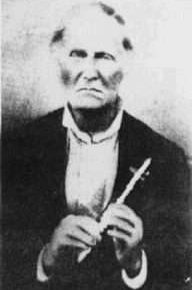
 My grandfather, John Eagar, was born July 13th, 1823, at Auburn, Cayuga. Cayuga County, New York. Two years later they moved to the village of Ling Sing on the east bank of the Hudson River, 34 miles above New York. His father was Thomas Eagar, his mother Lucy Buell.
My grandfather married Sariah Anna Johnson (Anna Sariah Johnson) at Amherst, Lorain County, Ohio July 1849. Her father’s name was Joel Hills Johnson, her mother’s name Anna Pixley Johnson.
My father was Joel Sixtus Eagar, Born 11, February, 1860 at Manti, Sanpete County, Utah. He died 27 June 1941. He married Lucy DeWitt, Nancy Alice Stanworth, and Emily Jane Lee. My mother was Nancy Allice Nutter Stanworth.
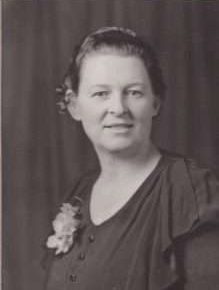
I was born 16 June, 1896 at Virgin, Washington County, Utah. When one month old, my parents took their family and moved to Eagar, Arizona. They went by team and wagon. My mother and small boys driving one team, and my father the other.. My father had separated from his first wife leaving her in Arizona, then coming to Utah. There, in Virgin, he met my mother. She was a widow with 4 little boys. When they left for Arizona, my mother had two little girls. Lillian and Anna, me being the baby.
They had many hardships on this trip. They crossed the Colorado River at Lee’s Ferry. The wagons were taken over on a flat bottom boat. My sister Lillian was sick most of the trip.
I’d better tell who my mother’s parents are. Samuel Stanworth, Born 7 March 1830, Burnley, Lancashire, England. Mother Nancy Nutter was born 10, August, 1830, Whitlow, Lancashire, England
We traveled to Eagar, Arizona. This town was named after my father and his two brothers. When they were young men, they took claims and earned the land from the government, then gave it to the people for a town site. Later when we were driven from our homes in Mexico, they sent my father word they would give him a building lot, but my father never went back there to live any more, till I was a baby. Then he went to a ranch called Water Canyon for farming and run a dairy. One day father and mother were busy with the threshers, thrashing grain. Mother said I came to her with a cup and asked for a drink of water, but she was so busy she paid no attention to me, so I took my cup and went out to the well. A little later, one of the men working there brought his horses to water. They snorted and backed away. The man looked in the well, which wasn’t very deep, and saw some clothing sticking out of the water. He ran to the house calling my mother, asking if the children were all there. She screamed and said Anna is gone.
This man went down the well after me on a well rope. They all said I was dead, but my father rolled me on a barrel, what seemed like an hour, before I finally showed signs of life.
The next Winter I took the whooping-cough, but wasn’t too bad, so one sunny day, my mother gave my sister Lillian and me some dried apricots, and told us to go out and play. Later on, a hired girl found me lying on the ground, black in the face. My mother started to scream. My father, who was working a block away, heard her and came on the run. He put his finger in my throat and found the apricot and turned it. I closed my jaws on his finger so tight, I almost bit it off. When I became older, my father told me my life had been spared twice, so I had a mission to perform in this life.
I was nearly five years old, when my father decided to move to Mexico. So again, we went by team and wagon, and was several weeks on the way. My mother now had two more children. Thomas, and Elizabeth. We were traveling through the tall pines through the Arizona Mountains.
One day my sister Lillian and myself had been seeing pine gum on the trees as we rode along, so kept teasing for it. So Mother said, “When we camp we’ll get you some. So, that night, when we camped, mother told Maurice and Will to take us out and get us some gum. So, they took us out in the timbers and found us each a chew of gum, and told us to go back to camp and they stayed to get their pockets full. We took hold of hands, turned and started back, but we didn’t go in the right direction. When dark arrived and we didn’t come back, but the boys were back to camp, father and the boys scattered out calling. My mother was frantic.
It was a moonlight night. We found an old road and thinking it would lead us back to camp, but we became tired and still no camp. Finally we saw an object coming toward us. It was a man on a horse. He was out in the timbers hunting cows. He got off his horse and came over to us and said, “Where are you little girls going.” We said to find camp. We told him that out father was Joel Eagar. Right now he remembered my father passing through the town he lived in the day before, so he said, “You little girls are lost. Come and go with me.” So, he turned us around, and took us back the way we came.
My mother was standing by the campfire holding the baby and crying. She said when she saw that man coming out of the timbers, with us, two little girls, it was the happiest day of her life.
So, we traveled on down through Douglas, Arizona, through both the American and Mexican Custom Houses, then on to the little town of Morelos, Old Mexico.
The Mexican government owned all the land. All we had to do was choose a piece of land and settle down on it. If we ever left, it went back to the government, so my father had two nice city lots and farms. Our first year was very hard. We ground all our bread on a coffee mill. I took my turn.
My father went to Mexico to take another wife, so he married Emily Jane Lee about two years after he got there. He had five children by her: Lee, Walter, Jetta, Frank and Ella. I lived with her, tended her babies, and washed most of the diaper for the five children. I also carried most of the water she used by bucket from the river several blocks away. Sometimes it was so hot the ground burned my feet till they’d blister. I’d run with the water for a bush or grass to stand on. If I couldn’t find any, I’d pour out a little water and stand in it. Sometimes my buckets would be half empty when I got home.
At 6 years old, I went to school with the White and Mexican Children. I had a Mexican girl named Maggie for a seat mate, and I loved her. We really had fun at recess. We had White teachers part of the time, and Mexican teachers the other half. We had many experiences I can’t write, but my first year in school I lived on a ranch and walked to school with my brothers. We traveled about 2 miles of Mesquite brush. My brothers liked to tease me, so would run from me and leave me running and screaming, scared to death.
My mother had 3 more children born in Mexico. There was Morelos, named after the town we lived in, because he was the first White child born there. Then there was Hazel and Roxey, making eleven children my mother had. Her oldest boy, Samuel died with pneumonia in Mexico, also the youngest girl Roxey died there.
My father’s last wife died and was buried in Mexico. My father and mother separated, so father took me when I was only 13 years old to help him raise his five little children. I had many hardships. The war broke out among the Mexicans, and the soldiers, a thousand of them, moved in our streets, setting up cannons over our house on the hill, and on our school house steps. Many is the night I was got out of bed to sell bread, melons, eggs or whatever I had. They always changed guards at midnight, so they were hungry, and they’d wake us up for food. I have really been scared to death many a time.
Finally the L.D.S. Church and the American government told us to get out of there. The day we got word, my father was on guard duty. We had to leave in a hurry, so my brother Thomas helped me harness up the team. My brother Will took my mother and family. My brother Thomas and me drove the other team. We left in a pouring down rain. That night was cold and bitter, I’ll never forget. My father caught up with us the next day. There was one hundred and fifty families when the Bishop caught up with us. He asked us all to go back. He owned a flour mill and a store, he hated to lose, so we all went back. About a week after the church sent word to leave and wait no longer. I was about sixteen years old when we came out.
When we reached Douglas, Arizona, the government had made a tent city for us to live in, and twice a week a large government wagon drew up. We all took pans out, got in line, and they gave us food to do till they came again. Finally, the government sent everyone where they wanted to go by train, or wagon. They paid our way. My mother’s family came here to Hurricane, Utah, while my father took his little family and me to Woodruff, Arizona by team and wagon. We stopped at every government post, Army post. My father had a letter from the government at Douglas saying we were Mexican refugees, so they gave us food. We had a terrible trip. There was three families and we were almost a month on the way. Our horses became so poor we’d have to stay places, sometimes for days while they rested, and fed on grass as we couldn’t haul hay.
My father was so weak that when we finally arrived there, his son-in-law, who married his daughter Sara, carried him in the house. We got a home and lived in Woodruff till I finished the 8th grade, then my father went to Snowflake, 90 miles away, and bought a little place and I went to school in the Snowflake Stake Academy. That winter, the president of the church, President Joseph F. Smith, came to Snowflake to dedicate the new Academy. That was the first president I ever saw.
I wish I had time to tell a little love story here, but I can’t get it in. I had many experiences and hardships going to school and raising a family, but my father was a wanderer, so went alone by team, and was on to Mesa, Arizona. There he rented a farm and sent for me and the children. I sold the home, took the children, and caught a ride to Holbrook, Arizona. Then took the train for Mesa. I had never traveled on a train, so was scared stiff with the worry of small children, but I got along fine, and landed safe with my father. It wasn’t long till my folks at Hurricane sent me money to come home. It had been about five years since I saw them. I was pretty homesick. It was a sad day the day my father took his children with him, and took me to the train. We all cried every step of the way. Again I was green and scared to travel on trains. I had quite a trip. The engine ran off the track, and we were left out in the desert for hours, but I finally landed in Modena, Utah, and went on in an old fashioned stage coach to St. George, where my brother George, my mother, Morelos and Hazel met me, and took me on home to Hurricane by wagon.
I lived with my mother and worked for the Dr. Wilkinson for a year, then my father could stand it no longer, and followed me to Hurricane, where he put up a tent and I cared for his family again for about a year. Then I was in a play, and Loren Covington was brought here to make stage scenery for the play. They ask him to take the part of a villain in the play, so we met and married the next winter, December 27, 1916, in the temple in St. George. We moved right out to Cane Beds, Arizona, and lived on a dry farm. We couldn’t make a living there, so I’d come to town and he’d go to the sheep herd to earn a little money, then back to the farm we’d go again. Clell and DuRell, our first two children were born during this time. Then I begged him to go to California. We bought us a home there and really enjoyed it there. Loren worked at the shipyards, building ships. In about two years, he took sick with a leaky valve in his heart, the after effects of the flu, so we sold out and came back to Hurricane two months after Justin was born. Then in the spring, back to the dry farm we went. We lived there in the summer, and in Hurricane in the winter for two years, then he moved me to St. George in his mother’s big house, and went back to Los Angeles to work again, as his health was fine then.
After 2 years in California, he came home and worked around St. George, till he got work in Hurricane. So we bought a home and Delbert was born there a few weeks after. In all the changes we made, I usually taught Primary. In two years our daughter Alice May was born, then about 3 years after that our son Oral ray was born. Our children went to school in Hurricane and Cain beds. They graduated from Hurricane High.
When Clell was in the 8th grade, we lived at Cane beds. That was a horrible winter. Snow so deep cars wouldn’t go. School was 3 miles away. I’d wrap the four boys legs in gunny sacks to keep out the cold, and they’d walk to school. Sometimes there was a blizzard before they’d come home. I done a lot of praying that winter for their safety. One time Delbert had pneumonia, and we couldn’t get a doctor out there. When one finally got some medicine out there, he said it was useless to give it to him as he wouldn’t be bright if he lived, so we never gave it to him, but he was healed by faith and prayer.
We finally bought us a home in Hurricane again, and we have lived here, now over 25 years. Two of our sons, Clell and Oral filled missions. The other boys the war took at 18 years old. I had 3 boys in the war. Delbert was seriously wounded, but his life was spared and he now has six lovely children. We now have 31 grandchildren.
Our children have made us very happy. They have all married in the temple, and are living and raising their children in honor. I am sure now, if they will all live good lives so they can hand the same kind of heritage to their children.
I had my father brought home from Woodruff, Arizona when he was 90 years old, and I took care of him till he died 10 years ago. I also helped care for my mother, who died a year after my father. We now live in our home alone, only we have the company of our children and grandchildren, so we’re hardly ever alone.
- Anna Covington, Pioneer Child & Mother
- First Name: Anna
- Middle Name: Eagar
- Last Name: Covington
- Spouse(s): Loren Covington
- Mother: Nancy Alice Nutter Stanworth
- Father: Joel Sixtus Eagar
- Birth Place: Virgin, Washington, Utah
- Pioneer Type: Early Pioneer
- Birth: 16 Jun 1896
- Arrived in Utah:
- Death: 19 Apr 1983
- Anna Eagar, Mother of:Loren Clell, DuRell Garth, Justin Max, Delbert Ross, Alice May, and Oral Ray Covington
- Virtues exhibited in this story: Charity, Commitment, Courage, Endurance, Faith, Love, Obedience, Sacrifice, Stewardship, Testimony, Trials
- Education: High School through the 8th Grade
- Profession: Nanny, Mother
- Church Callings: Primary Teacher


 Brother Joseph